You’ve heard that space is curved – that’s gravity. You’ve also been told that you cannot really understand curved space. Sure, you can come to know curvy mathematics by studying general relativity or differential geometry, but you cannot grasp curved space in your bones…for the obvious reason that, in our everyday human-level world, space is flat, and so we have a brain for thinking flat.
Or, at least, that’s what they say.
But there is at least one variety of curvy mathematics that your brain comprehends so completely that you don’t even know you know it. It concerns your visual field, and your innate understanding of the directions from you to all the objects in your environment.
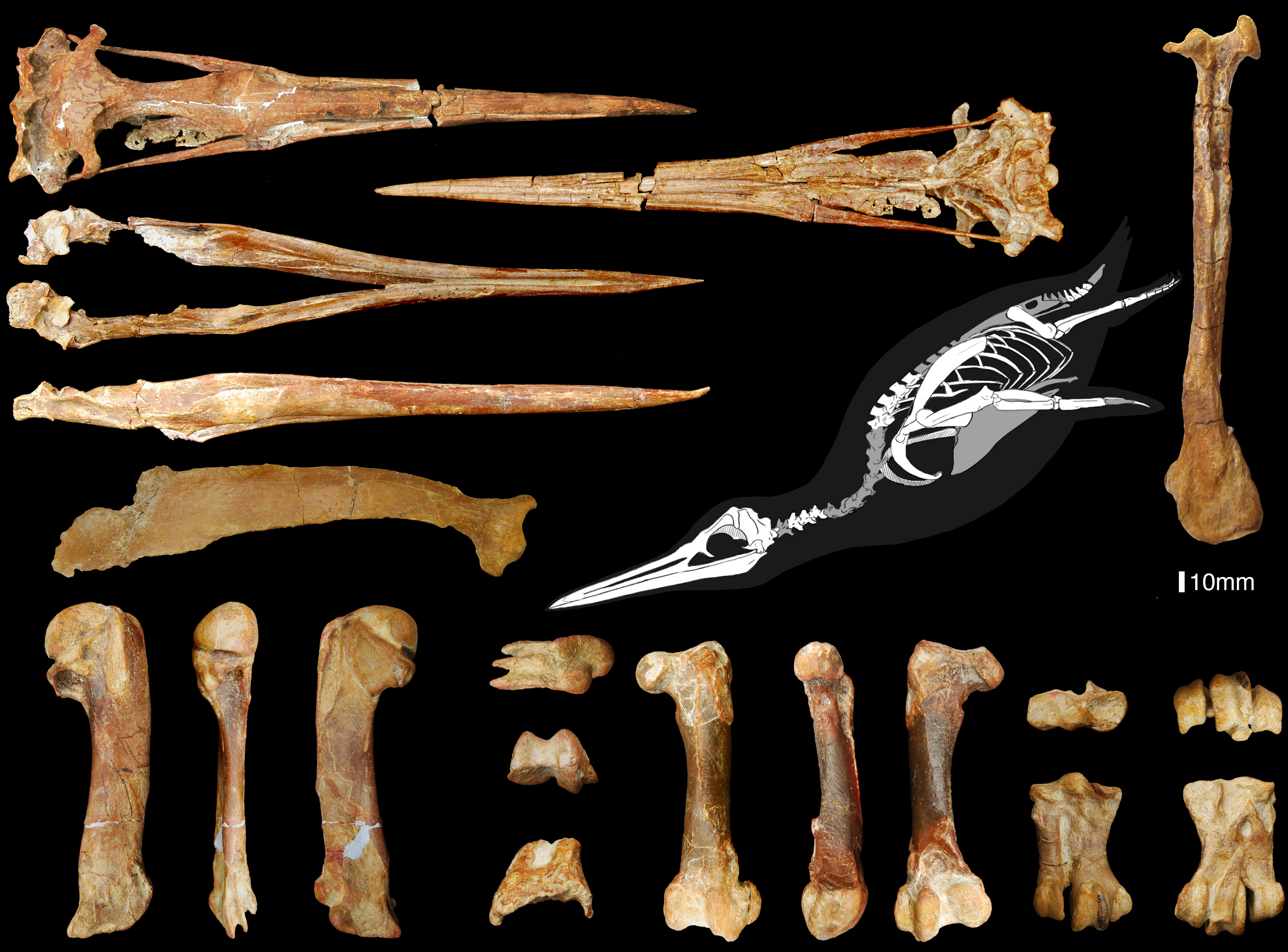
A 36-million-year-old penguin fossil from Peru shows the new giant penguin's feathers were reddish brown and grey, much different from the black tuxedoed look of living penguins - and it had scales.
The new species, Inkayacu paracasensis, or Water King, was nearly five feet tall - twice the size of an Emperor penguin, the largest penguin today. The fossil shows the flipper and feather shapes that make penguins such powerful swimmers evolved early, while the color patterning of living penguins is likely a much more recent innovation.

Georges Charpak, a French physicist and 1992 Nobel Prize winner, died yesterday.
Of Polish origin, Charpak gave crucial contributions to experimental physics, in particular for his invention of the multiwire proportional chamber in 1968.
Back then, the signal of passage of charged particles was recorded by bubble chamber images and images triggered by spark chambers - where the charge deposition would create a discharge in a very high electric field.
Proteins are the heavy lifters of cells, doing numerous tasks, but how the shape of a protein determines function remains one of the most important questions in the physics of biology.
Proteins are not the static, Lego-like objects you might see in an x-ray photograph in a textbook, they are made from long chains of amino acids scrunched into various blobs and a protein is always changing to slightly different structural arrangements due to thermal motion of its atoms. Even a modest-sized protein like myoglobin has an unimaginable number of possible arrangements of its atoms and each of these arrangements slightly changes its function.
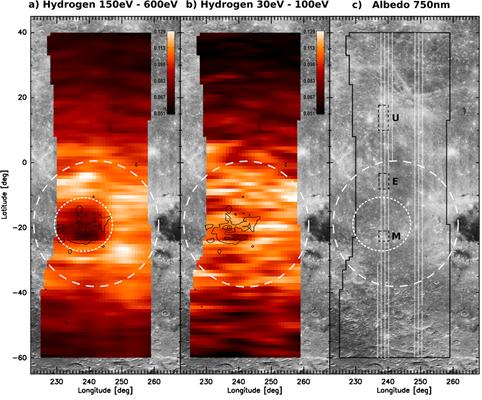
Scientists have discovered a new type of solar wind interaction with airless bodies in our solar system. Magnetized regions called magnetic anomalies, mostly on the far side of the Moon, were found to strongly deflect the solar wind, shielding the Moon’s surface, a discovery which will help us to understand solar wind behavior near the lunar surface and how water may be generated in its upper layer.
Researchers have created artificial neural networks that can distinguish between different kinds of tea leaves - most people can't do that. But they do it by analyzing the mineral content.
Their method makes it possible to distinguish between the five main tea varieties (white, green, black, Oolong and red) using chemometrics, a branch of chemistry that uses mathematics to extract useful information from data obtained in the laboratory.
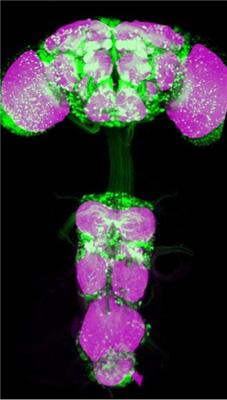
How the bundles of neurons in the brain control behavior remains an ongoing mystery and sexual behavior is among the biggest mysteries of all.
Not only do animals come in different shapes and sizes, but they all exhibit different behaviors as well - each species is born with its own unique set of innate behaviors but how they are controlled by the brain is not well understood. Drosophila melanogaster , the 'fruit fly', is a big help in this sort of research because sex is a behavior the fruit fly does well. Their reproductive prowess has ensured their place throughout the world.
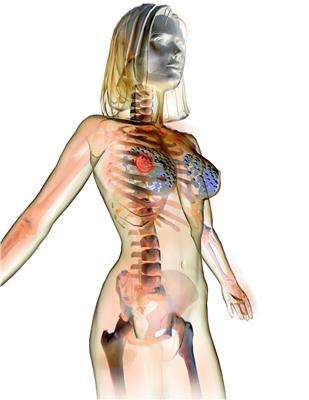
Breast cancer affects over 10% of women in Europe, the UK and USA, making it one of the most common cancers. Large population studies such as the Women’s Health Initiative and the Million Women Study have shown that progestins, synthetic sex hormones used in hormone replacement therapy (HRT) and in contraceptives, can increase the risk of breast cancers.
Medical researchers at the Institute of Molecular Biotechnology of the Austrian Academy of Sciences in Vienna have identified a key mechanism which allows these synthetic sex hormones to directly affect mammary cells.
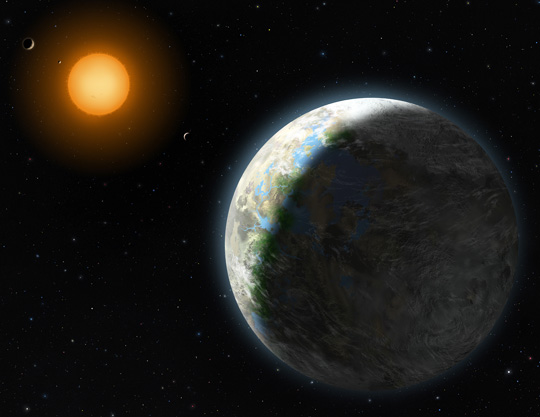
A team of planet hunters has announced the discovery of an Earth-sized planet (three times our mass) orbiting nearby star Gliese 581 at a distance that places it squarely in the middle of the star's 'habitable zone', where liquid water could exist on the planet's surface.
If confirmed, this would be the most Earth-like exoplanet yet discovered among the nearly 500 known extrasolar planets - and the first strong case for a potentially habitable one. To astronomers, a 'potentially habitable' planet is one that could sustain life, not necessarily one that humans would consider a nice place to live. Habitability depends on many factors, but liquid water and an atmosphere are among the most important.
"So did you watch "Big Trouble In Little China?" I asked Patrick. He did, he replied, while coding away.
"So you saw what I mean. Chinese people got a lot of Hells, which is bad, but at least they're apparently easy to find. Western religion has just one, but good luck locating it. In that movie they just go under some old guy's house and there it is and they get to fight Raiden(1) and stuff and save the world. If I want to find Hell, I am stuck going into "Revelations" and that isn't much help at all."