





With swine flu topping the agenda of business around the world, global risks specialist, Maplecroft has released three new maps and indices revealing the countries most at risk from an influenza pandemic.

The Influenza Pandemic Risk Index (IPRI) consists of three categories: Risk of Emergence, Risk of Spread and Capacity to Contain. Each index generates a list of countries most at risk and that require a tailored policy response on the part of government and business. Maplecroft's research focuses on global risks to business.

The map of Risk of Spread shows the United Kingdom most at risk to the spread of an influenza pandemic, ranking number 1 out of 213 countries.

People who want to take extra precautions against swine flu should look for masks with built-in filters, according to Dr Robin J Harman, a pharmaceutical and regulatory expert.

There has been much debate about the benefits of wearing a mask to prevent infection with swine flu. Ordinary surgical masks provide some protection from airborne particles, but the UK Department of Health has stated that 'basic face masks don't protect people from becoming infected'.(1)

High school biology teachers may be even more important than the curriculm, according to a University of Minnesota study published in the May issue of BioScience.

Co-authors Randy Moore and Sehoya Cotner, professors in the College of Biological Sciences, surveyed 1,000 students taking introductory biology classes at the University of Minnesota to learn how biology majors view evolution compared to non-majors. Results showed that the two groups' views were similar and revealed that high school biology teachers influence whether majors and non-majors college students accept evolution or question it based on creationism.
Dolphins have a clever trick for overcoming sleep deprivation, according to Sam Ridgway from the US Navy Marine Mammal Program and colleagues.   They are able to send half of their brains to sleep while the other half remains conscious. What is more, the mammals seem to be able to remain continually vigilant for sounds for days on end.

Does the dolphins' unrelenting auditory vigilance tire them and take a toll on the animals' other senses? Ridgway and his team set about testing two dolphins' acoustic and visual vigilance over a 5 day period to find out how well they functioned after days without a break.


Kidding, Fresh Kokanee: The Pathways of Salmon just seemed so bland. Just testing out a wee hypothesis. Human with an opposable thumb and all that? Still reading this? Good.

Thanks for that commercial break. And now back to Kokanee.

Arrayit Corporation, a manufacturer of products and services for disease prevention, treatment and cure, announced today that it is developing a microarray-based diagnostic test to detect the H1N1 swine flu virus.

The Arrayit test will allow researchers and clinicians to detect the presence of the virus in infected patients and livestock and to distinguish the threatening mutated strain from less harmful variants in humans and swine. Using its state-of-the-art manufacturing facility, Arrayit plans to begin mass production of its test kits over the next several weeks.

Many people, perhaps most, hate the idea that life might depend on chance processes. It is a human tendency to search for meaning, and what could be more meaningful than the belief that our lives have a greater purpose, that all life in fact is guided by a supreme intelligence which manifests itself even at the level of individual molecules? 

A previously unknown, large impact basin has been discovered by the MErcury Surface, Space ENvironment, GEochemistry, and Ranging (MESSENGER) spacecraft during its second flyby of Mercury in October 2008. The impact basin, now named Rembrandt, more than 700 kilometers (430 miles) in diameter.

If the Rembrandt basin had formed on the east coast of the United States, it would span the distance between Washington, D.C., and Boston.

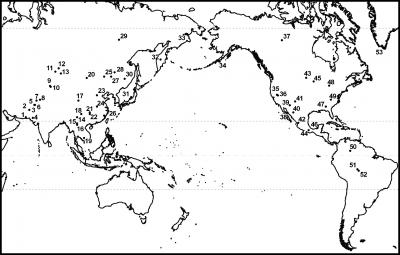
Did ancestors of Native Americans migrate to the New World in one wave or successive waves, from one ancestral Asian population or a number of different populations?   The topic has been debated for decades but after comparing DNA samples from people in dozens of modern-day Native American and Eurasian groups, an international team of scientists thinks it can put the matter to rest: Virtually without exception the new evidence supports the single ancestral population theory, according to the study  published in the May issue of the journal Molecular Biology and Evolution.

A French study of the 1918-1919 influenza pandemic, which analysed mortality rates in approximately three-quarters of the European population, has concluded that it is unlikely that the virus, often described as Spanish Flu, originated in Europe.

Published in the May issue of Influenza and Other Respiratory Viruses, the research shows a high degree of synchronicity in the 14 countries studied, including Spain, with the flu peaking in October to November 1918.

The study, carried out by a team from INSERM, the French National Institute for Health and Medical Research, provides invaluable background briefing for clinicians and media during the current pandemic alert.

Key facts highlighted by the research – which can be viewed free online - include:

