Genetic differences can influence one's risk of developing proteinuria, a condition that increases the risk of cardiovascular disease and chronic kidney disease (CKD), according to a study appearing in an upcoming issue of the Journal of the American Society of Nephrology (JASN). The results may be important for determining patients' health risks and for devising new medical treatments.
Approximately 12% of people in the United States have proteinuria (abnormal levels of protein lost in the urine), and African Americans and American Indians have higher risks of developing the condition than other groups. Researchers suspect that genetic variation likely accounts for part of their increased risks.
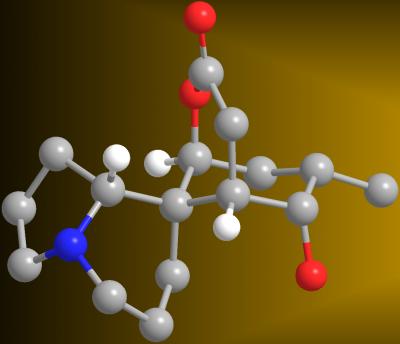
The club moss Lycopodium serratum is a creeping, flowerless plant purportedly used to treat a wide variety of ailments. It contains a brew of alkaloids that have attracted scientific and medical interest because of the use of the moss in homeopathy. However, the plant makes many of these compounds in extremely low amounts, hindering efforts to test their therapeutic value.
That is no longer a problem for what is arguably the most complex of these alkaloids, a compound called Serratezomine A: an alkaloid that could have anti-cancer properties and may combat memory loss. A team of synthetic chemists at Vanderbilt University reported in the Journal of the American Chemical Society that they have created an efficient way to make this molecule from scratch.
Today, five years after the inception of the DECIPHER database, researchers have published a report that reveals the developing role of the database in revolutionizing both clinical practice and genetic research.
The report explores the growing benefits of DECIPHER for researchers, clinicians and patients - highlighting how the data, provided by around 100 centres and shared openly worldwide, can benefit all three groups.
A study of gene expression in chickens, frogs, pufferfish, mice and people has revealed surprising similarities in several key tissues. Researchers writing in BioMed Central's open access Journal of Biology have shown that expression in tissues with a limited number of specialized cell types is strongly conserved, even between the mammalian and non-mammalian vertebrates.
Once thought to be only the realm of the blue-ringed octopus, researchers have now shown that all octopuses and cuttlefish, and some squid are venomous. The work indicates that they all share a common, ancient venomous ancestor and highlights new avenues for drug discovery.
Conducted by scientists from the University of Melbourne, University of Brussels and Museum Victoria, the study was published in the Journal of Molecular Evolution.
Dr Bryan Fry from the Department of Biochemistry at the Bio21 Institute, University of Melbourne said that while the blue-ringed octopus species remain the only group that aredangerous to humans, the other species have been quietly using their venom for predation, such as paralysing a clam into opening its shell.
Sleep is such an essential part of human existence that we spend about a third of our lives doing it -- some more successfully than others. Sleep disorders afflict some 50-70 million people in the United States and are a major cause of disease and injury. People who suffer from disturbed sleep have an increased risk of heart attack, stroke, hypertension, obesity, depression, and accidents. Nearly a fifth of all serious car crashes, in fact, are linked to sleeplessness.
Diagnosing sleep disorders is not necessarily easy. In standard "sleep studies," people spend one or more nights at hospitals or other inpatient centers, sleeping while sensors and electrodes attached to the head and torso record breathing, brain waves, heart rate, and other vital signs.
Over the past few weeks, more spam has been slipping through to my Gmail inbox. Consider: The oddly named Jule Cuc enthusiastically offers college Dip1omas [sic]: “At your own pace! No examination! No study! No classes!” Kieth l. Black is cautiously optimistic with his pitch: “Please your spouse more often than not,” while Marianne Daniels is mysteriously quaint: “Uplift your darling couch adventures”. Ironically, Bishop appears to be selling Viagra, though his email contains an esoteric reference to the diary of Samuel Pepys, in which he suggests that “meer sauce, or a pickle” are reasonable antidotes for souring Venison. A certain Elden Tyrimoh is miffed that I “again misplaced his number”.
Twin NASA spacecraft have provided scientists with a view of the speed, trajectory, and three-dimensional shape of powerful explosions from the sun known as coronal mass ejections, or CMEs. This new capability will dramatically enhance scientists' ability to predict if and how these solar tsunamis could affect Earth.
When directed toward our planet, these ejections can be breathtakingly beautiful and yet potentially cause damaging effects worldwide. The brightly colored phenomena known as auroras -- more commonly called Northern or Southern Lights -- are examples of Earth's upper atmosphere harmlessly being disturbed by a CME. However, ejections can produce a form of solar cosmic rays that can be hazardous to spacecraft, astronauts and technology on Earth.
Neanderthals, a distinct Middle Pleistocene population, inhabited a vast geographical area extending from Europe to western Asia and the Middle East from 30,000 to 100,000 years ago. Were they a homogenous group or separate sub-groups in which differences could be observed?
Paleoanthropological studies since the 1950s, based on morphological skeletal evidence, have offered some support for the existence of three different sub-groups: one in Western Europe, one in southern Europe and another in the Levant.
A UQ researcher has revealed a new treatment for a speech disorder that commonly affects those who have suffered a stroke or brain injury.
PhD graduate Dr Rachel Wenke has shown in a recent study that the Lee Silverman Voice Treatment® may be an effective option for dysarthria patients suffering from stroke and traumatic brain injury (TBI).
Dysarthria is a speech disorder which negatively affects a person's ability to communicate as they can be difficult to understand and may sound like they have slurred or unclear speech.
The disorder affects 75% of individuals with Parkinson's disease, up to 30% of those who have experienced a stroke and about 60% of individuals with TBI.