



Spanking, flagellation and cockbinding; researchers at the University of Northern Illinois have been very naughty in their attempt to quantify physiological responses to sadomasochistic activities.

 In their Archives of Sexual Behavior publication, the stress hormone cortisol along with the dominance associated testosterone hormone was measured in 58 sadomasochistic practicing couples before and after kinky sex fun time. 

Their results, along with a review of S&M literature suggests couples that practice S&M experience reduced levels of stress and feel an increase in relationship closeness.
The other day I posted on my FaceBook profile that I better hurry up to finish my presentation on epigenetic inheritance. One of my friends commented: “I have no idea what that means, but good luck to you!” Ironically, that is, in part, the point of my presentation: understanding what it all means. Let me explain.
Getting your teenager to drink a chocolate milkshake isn't hard in most families but it is a difficult treatment approach for families who have a daughter with anorexia nervosa.   Known as Behavioral Family Therapy or the Maudsley Approach, it calls on parents to supervise the eating habits of their anorexic child, feeding them high-calorie meals like milkshakes and macaroni and cheese until they regain a healthy weight.
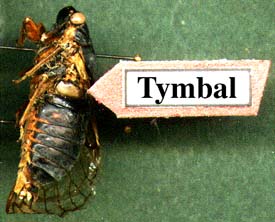
Welcome to what has become Inadvertent Cicada Week in this column.  Obviously, I'm fascinated by them.  This started around the summer of 2003, when I was completely addicted to a certain farm-simulator game for the Nintendo SP. 

During virtual summer on my virtual farm the game's music was overpowered by a jarring REEEREEEREEEREEEEEEE sound, intended to represent Japan’s singing cicadas.  When I finally managed to turn my Gameboy off to get some good ol’ grad student day-sleep in the relative stillness of central Pennsylvania, I found that the REEEREEEEEEEE noise had followed me.

     In the summer of 1981, a colleague at the NASA Ames Research Center in Mountainview, California, gave me a small black stone wrapped in aluminum foil that changed the course of my life.

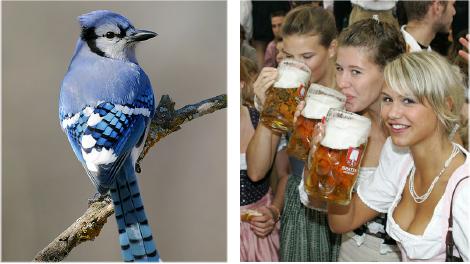
Some of the brightest colors in nature are created by tiny nanostructures with a structure similar to beer foam or a sponge, according to Yale University researchers.    Most colors in nature—from the color of our skin to the green of trees—are produced by pigments. But the bright blue feathers found in many birds, such as Bluebirds and Blue Jays, are instead produced by nanostructures. Under an electron microscope, these structures look like sponges with air bubbles.
 
If you’ve ever been sleep-deprived, you know how it correlates to baseball and the feeling that your brain is batting below the Mendoza Line and you just aren't seeing the ball very well.      Or you just feel muddled.

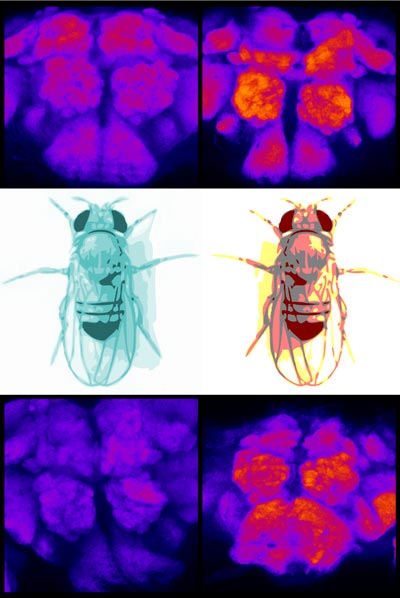
A study published in Science has molecular and structural evidence  saying proteins that build up in the brains of sleep-deprived fruit flies drop to lower levels in the brains of the well-rested - basically spring training, or a good cleaning, for your brain. The proteins are located in the synapses, those specialized parts of neurons that allow brain cells to communicate with other neurons. 
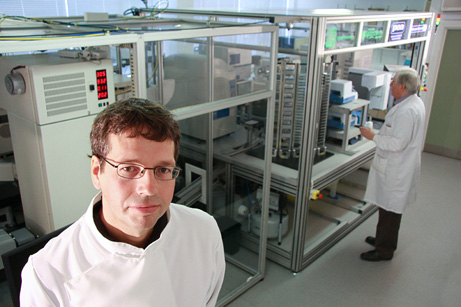
Scientists, this is your future research partner.    A 'Robot Scientist' named Adam has been created and the group behind it believe it is the first machine to have independently discovered new scientific knowledge. Adam is a computer system that fully automates the scientific process.
Yes, Charles Darwin did important things for science, but what we really want to know is how he squandered his money as a student.    Did he drink and smoke a lot?   Yeah, actually, which makes him all the more likable.   

200 years after the great naturalist's birth, his successors at Christ's College, Cambridge, have unearthed bills which record intimate details about the young Darwin's previously unknown day-to-day life during his student years.

The six record books were published online March 23rd at The Complete Work Of Charles Darwin Online (http://darwin-online.org.uk/), making them freely available to readers anywhere in the world.
Some of the symptoms of the autistic condition Asperger Syndrome, such as a need for routine and resistance to change, could be linked to levels of the stress hormone cortisol, suggests new research led by the University of Bath.

Normally, people have a surge of this hormone shortly after waking, with levels gradually decreasing throughout the day. It is thought this surge makes the brain alert, preparing the body for the day and helping the person to be aware of changes happening around them.

However, a study led by Dr Mark Brosnan and Dr Julie Turner-Cobb from the Department of Psychology at the University of Bath, and Dr David Jessop from the University of Bristol, has found that children with Asperger Syndrome (AS) do not experience this surge.

