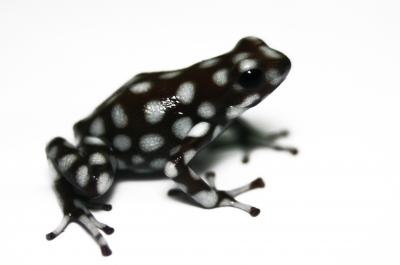
Colorful poison frogs in the Amazon owe their great diversity to ancestors that leapt into the region from the Andes Mountains several times during the last 10 million years, a new study from The University of Texas at Austin suggests.
This is the first study to show that the Andes have been a major source of diversity for the Amazon basin, one of the largest reservoirs of biological diversity on Earth. The finding runs counter to the idea that Amazonian diversity is the result of evolution only within the tropical forest itself.
It has been assumed that much of the evolution of biodiversity in the Amazon basin occurred over the last one to two million years, a mere snapshot in time.
Good eating habits can result when families eat together, say researchers from the School of Public Health, University of Minnesota, who report on one of the first studies to examine the long-term benefits of regular family meals for diet quality during the transition from early to middle adolescence. In general, the study found adolescents who participated in regular family meals reported more healthful diets and meal patterns compared to adolescents without regular family meals.
Ecstasy may help suffers of post-traumatic stress learn to deal with their memories more effectively by encouraging a feeling of safety, says new research.
Studies have shown that a type of psychological treatment called exposure therapy – where the patient repeatedly recalls the traumatic experience or is repeatedly exposed to situations that are safe but still trigger their traumatic feelings – can be effective in relieving stress responses in patients with post-traumatic stress disorder (PTSD) and other anxious conditions. The therapy works by helping the patient to re-learn the appropriate response to the trigger situation, a process known as extinction learning.
Natural burial is not just a 'green' option for eco-fixated non-religious people, according to researchers at the University of Sheffield. They'll be holding an event called "Natural Burial: Do we need a Headstone?" to be held in Sheffield on March 14 as part of the Economic and Social Research Council's (ESRC) Festival of Social Science.
The largest study of its kind to evaluate the effect of red versus white wine on breast-cancer risk concludes that both are equal offenders when it comes to increasing breast-cancer risk. The results of the study were published in the March issue of Cancer Epidemiology, Biomarkers and Prevention.
The researchers found that women who consumed 14 or more drinks per week, regardless of the type (wine, liquor or beer), faced a 24 percent increase in breast cancer compared with non-drinkers.
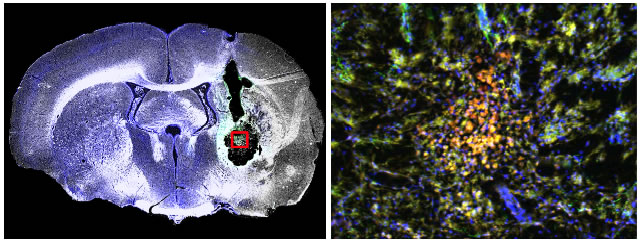
Effective stem cell treatment for strokes has taken a significant step forward as scientists writing in
Biomaterials reveal how they have replaced stroke-damaged brain tissue in rats using neural stem cells.
The work, carried out at the King's College London Institute of Psychiatry and University of Nottingham, shows that by inserting tiny scaffolding with stem cells attached, it is possible to fill a hole left by stroke damage with brand new brain tissue within 7 days.
Neural stem cells exist in the adult nervous system of all mammals, though they can also be derived from more primitive embryonic stem cells.
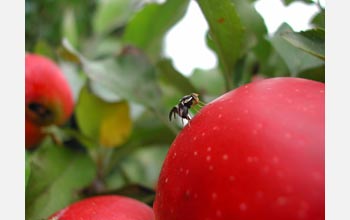
A team of researchers has reported the ongoing emergence of a new species of fruit fly and the sequential development of a new species of wasp. Jeff Feder, a University of Notre Dame biologist, and his colleagues say the introduction of apples to America almost 400 years ago ultimately may have changed the behavior of a fruit fly, leading to its modification and the subsequent modification of a parasitic wasp that feeds on it.
The result is a chain reaction of biodiversity where the modification of one species triggers the sequential modification of a second, dependent species. The National Science Foundation supports the research.
Neuroscientists at New York University and Harvard University say they have identified the neural systems involved in forming first impressions of others. The findings may show how we encode social information and then evaluate it in making these initial judgments, according to the study in Nature Neuroscience.
Making sense of others in a social interaction is not easy—each new person we meet may be a source of ambiguous and complex information. However, when encountering someone for the first time, we are often quick to judge whether we like that person or not. In fact, previous research has shown that people make relatively accurate and persistent evaluations based on rapid observations of even less than half a minute.
Researchers say they have discovered eight similar genes that, when mutated, appear to be responsible for medulloblastoma – the most common of childhood brain cancers.
About 250 Canadian children are diagnosed with various types of brain cancer every year. About 70 per cent of these survive. Brain tumors are the leading cause of childhood cancer deaths. The most common childhood brain cancer is medulloblastoma – a tumour that occurs at the back of the brain in the cerebellum. It is primarily a disease of very young children and is particularly deadly among babies under 18 months of age. In Canada, about 40 children are diagnosed with medulloblastoma every year and half of these will survive.
I have been downloading a cartload of books on my new Kindle lately, since I really enjoy the idea of walking into the subway carrying a rather inconspicuous, very light, yet incredibly large library with me. One of these books is Samir Okasha’s Philosophy of Science: A Very Short Introduction, which I’m reading because I intend to review and promote it.