Throughout history, scientists, philosophers, mathematicians and Phd students lacking funding for actual research have turned to the thought experiment in hopes of discovering something publishable, thereby retaining tenure and/or attracting the admiration of comely undergraduates.
The best thought experiments throw light into dark corners of the universe and also provide other scientists, philosophers, mathematicians and destitute Phd students a way to kill time while waiting for the bus. Below is a classic thought experiment, pillaged from my book The Geeks' Guide to World Domination (Be Afraid, Beautiful People). I'll post a new thought experiment each day this week.
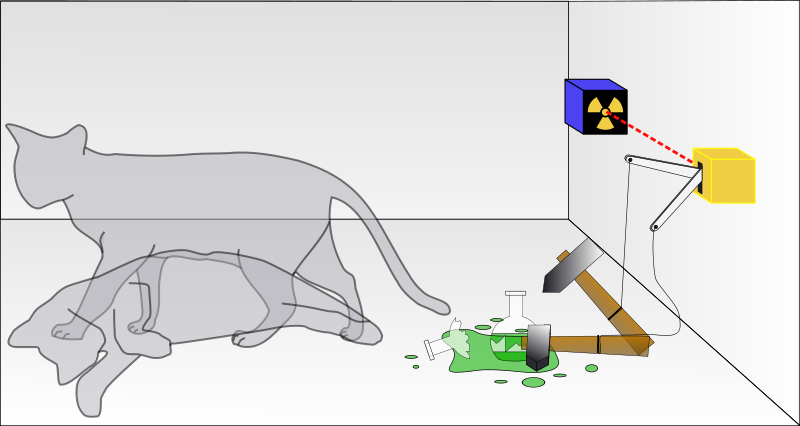
Schrödinger’s Cat
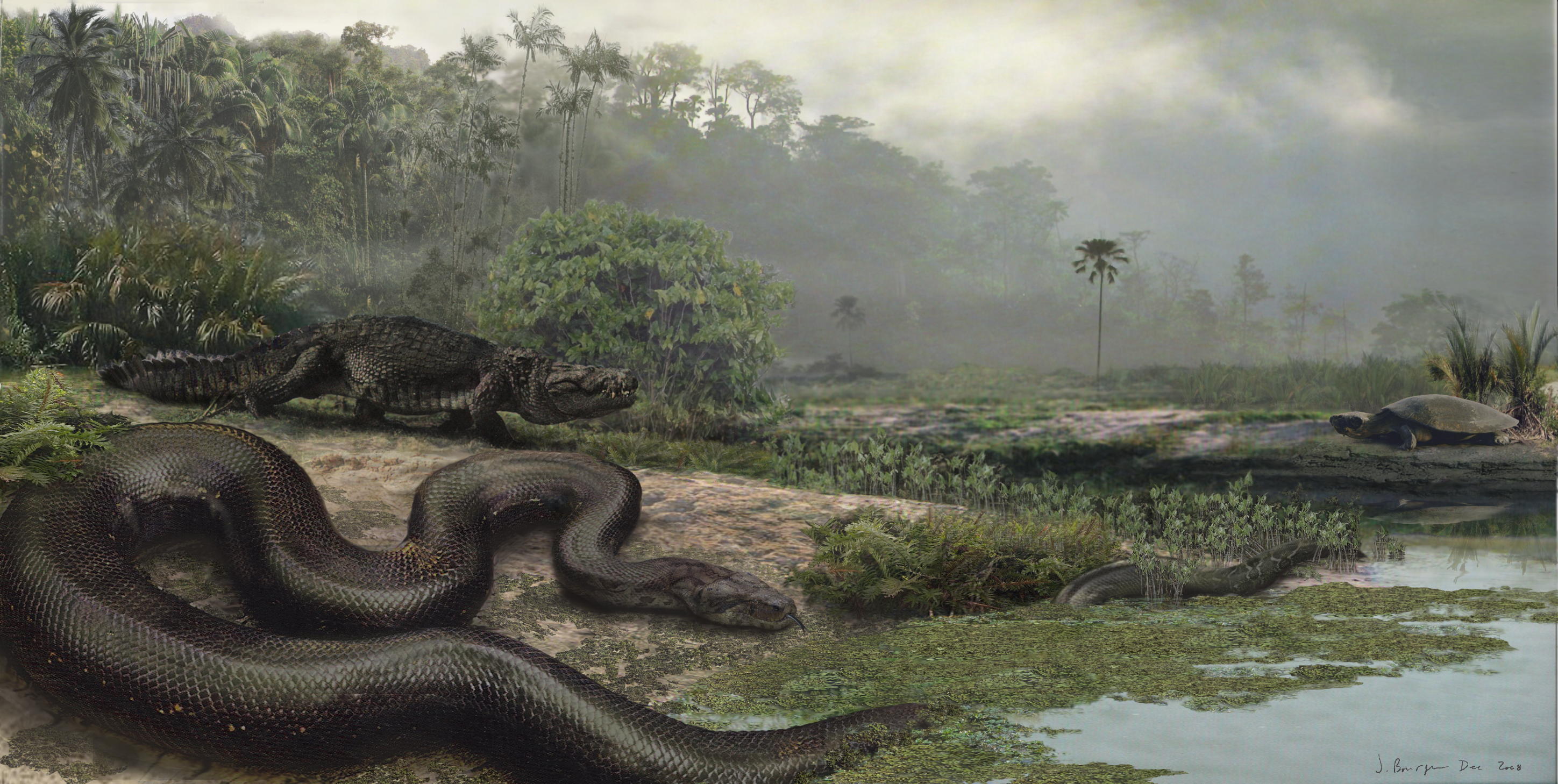
Excavations in Colombia co-organized by Carlos Jaramillo, staff scientist at the Smithsonian Tropical Research Institute in Panama and Jonathan Bloch, curator of vertebrate paleontology at the University of Florida's Florida Museum of Natural History, have unearthed fossil remains of a new snake species they named Titanoboa cerrejonensis.
Surrounded by huge trucks extracting coal from Cerrejon, one of the world's largest open-pit mines, researchers discovered fossilized bones of super-sized snakes and their prey, crocodiles and turtles, in the Cerrejon Formation, along with fossilized plant material from the oldest known rainforest in the Americas, which flourished at the site 58-60 million years ago.
As many as 2.4 million Americans have schizophrenia so a late or incorrect diagnosis and the lack of effective treatment options can destroy a sufferer's quality of life. Schizophrenia usually emerges between the ages of 18 and 30 but diagnosis before the disease manifests itself could be the key to developing more successful treatments, says Prof. Talma Hendler, of Tel Aviv University's Department of Psychology.
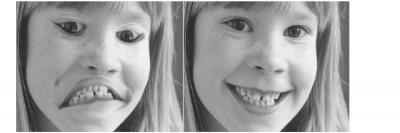
Until now, detecting mental illness before symptoms appear has been nearly impossible. Building on her groundbreaking work on facial recognition and brain imaging, Prof. Hendler is hoping to make early diagnosis a reality by identifying the physical markers of mental illness — particularly schizophrenia — inside the brain.
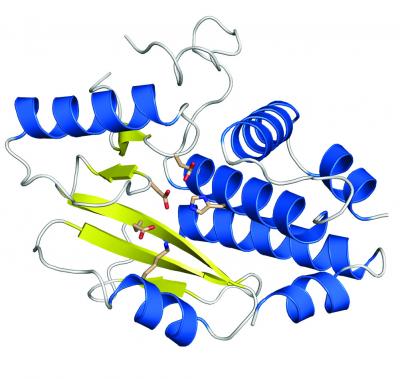
Influenza is and remains a disease to reckon with. Seasonal epidemics around the world kill several hundred thousand people every year. In the light of looming pandemics if bird flu strains develop the ability to infect humans easily, new drugs and vaccines are desperately sought. Researchers at the European Molecular Biology Laboratory (EMBL) and the joint Unit of Virus Host-Cell Interaction (UVHCI) of EMBL, the University Joseph Fourier (UJF) and the National Centre for Scientific Research (CNRS), in Grenoble, France, have now precisely defined an important drug target in influenza. In this week's Nature they publish a high-resolution image of a crucial protein domain that allows the virus to hijack human cells and multiply in them.
University of Minnesota researchers say they have identified the "master gene" behind blood vessel development. Using genetically engineered mice, researchers with the University of Minnesota Medical School's Lillehei Heart Institute were able to identify a protein, Nkx2-5, which activates a certain gene, and in turn, determines the fate of a group of cells in a developing embryo.
Better understanding of how this gene operates in the early stages of development may help researchers find better treatments for heart disease and cancer.
An international research team of scientists from UC Riverside, the Massachusetts Institute of Technology, Geoscience Australia, the University of Newcastle upon Tyne, the California Institute of Technology and the University of Nottingham, United Kingdom has found the oldest evidence for animals in the fossil record.
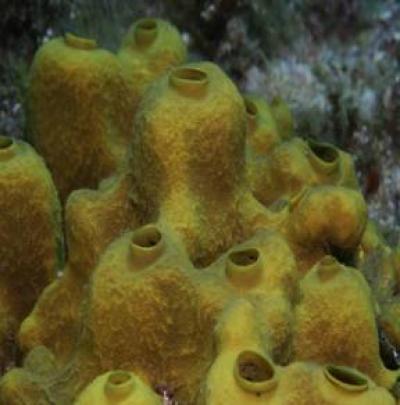
The researchers examined sedimentary rocks in south Oman, and found an anomalously high amount of distinctive steroids that date back to 635 million years ago, to around the end of the last immense ice age. The steroids are produced by sponges – one of the simplest forms of multicellular animals.
Autism affects as many as 1.5 million Americans, and the number is increasing, according to the Autism Society of America. It is estimated that 1 in 150 births involve children with some form of autism.
Autism can be caused by a variety of genetic factors, but a new Brown University study focused on one particular area — the Fragile X protein. If that protein is mutated, it leads to Fragile X syndrome, which causes mental retardation and is often accompanied by autism.
Women who stopped taking the postmenopausal hormone combination of estrogen plus progestin experienced a marked decline in breast cancer risk which was unrelated to mammography utilization change, according to a study from the Women's Health Initiative led by a Los Angeles Biomedical Research Institute (LA BioMed) investigator that was published today in The New England Journal of Medicine.
Breast cancer in the United States began to decline in 2003, after the Women's Health Initiative's initial findings that combined hormone therapy was related to higher risk of breast cancer and heart problems.
Scientists at the University of North Carolina at Chapel Hill School of Medicine say they have discovered a gene that when mutated causes obesity by dampening the body's ability to burn energy while leaving appetite unaffected.
The new research could potentially lead to new pharmacologic approaches to treating obesity in humans that do not target the brain, according to study senior author Yi Zhang, Ph.D., Howard Hughes Medical Institute investigator and professor of biochemistry and biophysics in the UNC School of Medicine. Zhang is also a member of the UNC Lineberger Comprehensive Cancer Center.
Show Me The Science Month Day 8
A tuatara may look like an iguana, but it's a reptile in a category all its own.
Tuataras are most closely related to lizards and snakes, but in some ways they are oddballs among reptiles, with unique characteristics among reptiles, like their affinity for cool weather, their nocturnal lifestyle, a third eye on top of the skull, and vertebrae that more closely resemble those of fish and amphibians than reptiles. Male tuataras also have another odd feature - they lack a certain
member, which means their reproductive behavior differs from other lizards.

Image courtesy of the Wikipedia Commons