A team led by a Montana State University professor has found a fungus that produces a new type of diesel fuel, which they say holds great promise. Calling the fungus' output "myco-diesel," Gary Strobel and his collaborators describe their initial observations in the November issue of Microbiology.
The discovery may offer an alternative to fossil fuels, said Strobel, MSU professor of plant sciences and plant pathology. The find is even bigger, he said, than his 1993 discovery of fungus that contained the anticancer drug taxol.
According to the international space agencies, 'space weather' like radiation from the sun and cosmic rays in a solar storm, is the single greatest obstacle to deep space travel. New research out today in Plasma Physics and Controlled Fusion shows how knowledge gained from the pursuit of nuclear fusion research may reduce the threat to acceptable levels, making man's first mission to Mars a much greater possibility.
The solar energetic particles, although just part of the 'cosmic rays' spectrum, are of greatest concern because they are the most likely to cause deadly radiation damage to the astronauts.
Does your office lighting make you feel weary and dreary?
The cure may be at hand!
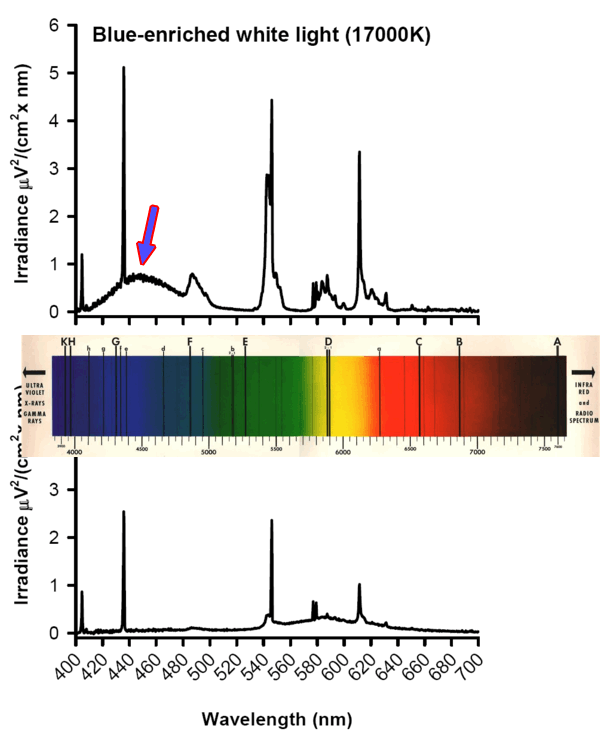
Recently, Professor Derk-Jan Dijk of the Surrey Sleep Centre has led a team testing out new bulbs with a colour temperature of 17,000 Kelvin and found that they increase alertness as compared with more traditional types of lighting. But this sounds rather alarming.
17,000 Kelvin would be the temperature of a star close to B3 in the main sequence, somewhere between
Alkaid and
Regulus in properties.
The luminance of these stars is largely in the ultravio
Take a close look at that cheap piece of scrap iron before you toss it in the trash. Wei-xian Zhang has a good use for it. Someday soon, much of the world might also. Zhang, a professor of civil and environmental engineering, recently concluded a five-year research project in which he and his colleagues at Tongji University in Shanghai used two million pounds of iron to
detoxify pollutants in industrial wastewater.
The fight against climate warming has an unexpected ally in mushrooms growing in dry spruce forests covering Alaska, Canada, Scandinavia and other northern regions, a new UC Irvine study finds. When soil in these forests is warmed, fungi that feed on dead plant material dry out and produce significantly less carbon dioxide than fungi in cooler, wetter soil. This came as a surprise to scientists, who expected warmer soil to emit larger amounts of carbon dioxide because extreme cold is believed to slow down the process by which fungi convert soil carbon into carbon dioxide.
Why are some species of plants and animals favored by natural selection? According to a UC Riverside-led research team, the answer lies in the rate of metabolism of a species – how fast a species consumes energy, per unit mass, per unit time. The researchers studied 3006 species, the largest number of species ever analyzed in a single study. The species list encompasses much of the range of biological diversity on Earth – from bacteria to elephants, and algae to sapling trees.
To the researchers' surprise, they found the mean metabolic rate of the species at rest fell on a narrow range of values – 0.3 to 9 Watts per kilogram.
Not all enzymes that are assumed to require an RNA component in order to function do actually contain RNA, according to a study that focused on the enzyme RNase P. Contrary to accepted scientific theory, the project team from Vienna has long believed that certain forms of RNase P do not contain any RNA. They say they have now succeeded in proving their point through a series of experiments and the results are published today in the journal CELL.
Although ribozymes are not quite living fossils, these enzymes, which function only in the presence of RNA, hail from a long gone age when biochemical processes were still controlled by RNA molecules. It was only later that proteins came onto the molecular scene.
Harvesting energy from the sun makes terrific sense until you factor in the economics of solar technology efficiency and the environmental impact of manufacturing panels and adding new power lines. But solar power is clearly the path to future energy independence once the obstacles have been overcome.
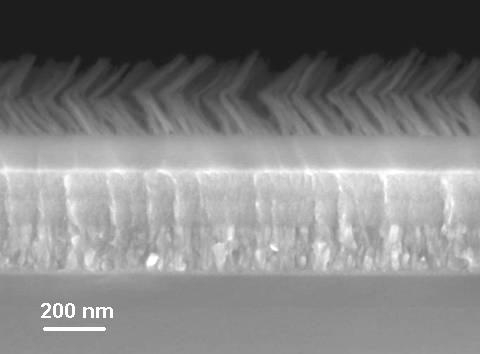
Researchers at Rensselaer Polytechnic Institute say they have made progress overcoming two of the major efficiency hurdles; the amount of sunlight captured by solar panels and the inability of solar panels to absorb the entire solar spectrum from nearly any angle.
A new University of Colorado at Boulder study indicates that not only do human hands harbor far higher numbers of bacteria species than previously believed, women have far more kinds of microbes on their palms than men. The results help understand human bacteria and should help establish a "healthy baseline" to detect microbial community differences on individuals that are associated with a wide variety of human diseases, said CU-Boulder ecology and evolutionary biology assistant professor Noah Fierer, lead study author.
University of Cincinnati (UC) researchers have discovered a gene that helps control the secretion of acid in the stomach—information that could one day aid scientists in creating more efficient treatment options for conditions such as acid reflux or peptic ulcers.
This data is published in the Nov. 3 edition of the Proceedings of the National Academy of Sciences (PNAS).
UC professor Manoocher Soleimani, MD, and colleagues found that when transporter Slc26a9—the gene responsible for the production of chloride in the stomach—is eliminated from the mouse model's system, acid secretion in the stomach stops.
Gastric acid, comprised mainly of hydrochloric acid (HCL), is the main secretion in the stomach and helps the body to break down and digest food.