








A new Institute of Physics report published Friday, 5 September, 2008, provides the most comprehensive evidence available to confirm that the Large Hadron Collider (LHC)’s switch-on, due Wednesday September 10th, poses no threat to anyone.

Nature’s own cosmic rays, they note, regularly produce more powerful particle collisions than those planned within the LHC, which will enable nature’s laws to be studied in controlled experiments.

The LHC Safety Assessment Group have reviewed and updated a study first completed in 2003, which dispels fears of universe-gobbling black holes and of other possibly dangerous new forms of matter, and confirms that the switch-on will be completely safe.

What is a gene?

You'll be forgiven if you have a few definitions. Even scientists define ‘a gene’ in different ways, so it may come as little surprise that the media also have various ways of 'framing' the concept of a gene.

But how journalists 'frame' what you might think are common terms has a very real impact on what readers think, and since more and more readers are becoming accustomed to making voting decisions based on science policy ones, how terms are used, and their context, has become ever more important.

Ferocious debates on genetically modified crops or stem cell research illustrate the importance that genetics and molecular biology have gained in everyday life so it's important that people understand the terms being used; and how they are sometimes misused.

A new study found that trained sexologists could infer a woman's history of vaginal orgasm by observing the way she walks. The study is published in the September 2008 issue of The Journal of Sexual Medicine.

Led by Stuart Brody of the University of the West of Scotland in collaboration with colleagues in Belgium, the study involved 16 female Belgian university students. Subjects completed a questionnaire on their sexual behavior and were then videotaped from a distance while walking in a public place. The videotapes were rated by two professors of sexology and two research assistants trained in the functional-sexological approach to sexology, who were not aware of the women's orgasmic history.

The National Medal of Science is the nation's highest honor for science and engineering.

President George W. Bush has named the recipients of the 2007 National Medal of Science, the nation's highest honor for science and engineering. Honorees will receive the medals at a White House ceremony on Sept. 29, 2008.

"The 2007 National Medal of Science laureates have contributed to American science with their superb research," said Arden L. Bement, Jr., director of the National Science Foundation (NSF). "Their legacies have impacted our lives in numerous ways, from developing new therapies for diseases such as cancer to contributing to the development of the Internet and wireless communications. Their accomplishments reflect the high significance of this award."

WASHINGTON -- A new NASA competition is challenging students in high school and college to research and describe a small, supersonic airliner that could enter commercial service in the next decade.

During the upcoming academic year, individuals and teams of high school students will prepare well-documented short papers describing what needs to be accomplished to make supersonic flight available to commercial passengers by 2020. Advanced curriculum high school students and college participants will prepare longer papers that depict a highly efficient, environmentally friendly commercial aircraft that would emit only low sonic booms and be ready for initial overland service in 2020.

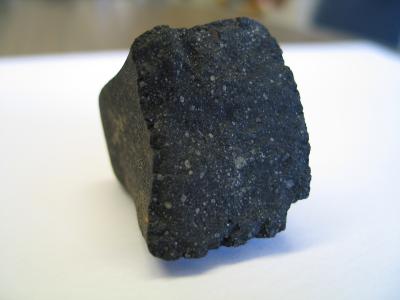
A strange mix of oxygen found in a stony meteorite that exploded February 8, 1969 over Pueblito de Allende, Mexico has puzzled scientists ever since. Small flecks of minerals lodged in the stone and thought to date from the beginning of the solar system have a pattern of oxygen types, or isotopes, that differs from those found in all known planetary rocks, including those from Earth, its Moon and meteorites from Mars.

Now scientists from UC San Diego and Lawrence Berkeley National Laboratory have eliminated one model proposed to explain the anomaly: the idea that light from the early Sun could have shifted the balance of oxygen isotopes in molecules that formed after it turned on. When they beamed light through carbon monoxide gas to form carbon dioxide, the balance of oxygen isotopes in the new molecules failed to shift in ways predicted by the model they report in the September 5 issue of Science.

Subtle genetic changes that confer an evolutionary advantage upon a species, such as the dexterity characteristic of the human hand, while difficult to detect and even harder to reproduce in a model system, have nevertheless generated keen interest amongst evolutionary biologists.

In findings published in Science, researchers have uncovered a specifically human 13-nucelotide change concealed in the vast three-billion-letter landscape of the human genome. Their experiments reveal this stretch of DNA to be a recently evolved regulator of gee expression that, when introduced into a mouse embryo system, influence the molecular machinery to yield human limb and thumb development patterns.

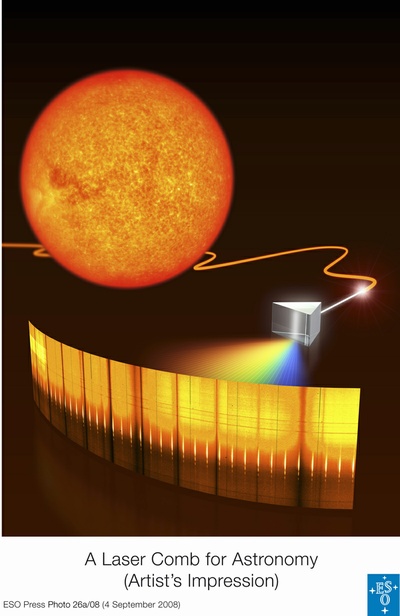
Astronomical instruments needed to answer crucial questions, such as the search for Earth-like planets or the way the Universe expands, have come a step closer with the first demonstration at the telescope of a new calibration system for precise spectrographs. The method uses a Nobel Prize-winning technology called a 'laser frequency comb', and is published in this week's issue of Science.

"It looks as if we are on the way to fulfil one of astronomers' dreams," says team member Theodor Hänsch, director at the Max Planck Institute for Quantum Optics (MPQ) in Germany. Hänsch, together with John Hall, was awarded the 2005 Nobel Prize in Physics for work including the frequency comb technique.

Binge drinking (5+ alcoholic beverages at one time) is associated with risky sexual behaviors. A new study is one of the few to examine this association by gender in an urban clinic for sexually transmitted diseases (STDs). Results show that binge drinking among women attending the clinic was linked to unsafe sexual practices – such as multiple partners and anal sex – and high rates of gonorrhea.

"The link between binge drinking and risky sexual behavior is complex," said Heidi E. Hutton, assistant professor of psychiatry and behavioral sciences at Johns Hopkins University School of Medicine as well as corresponding author for the study. "We wanted to examine one component of that relationship, whether binge drinking increased the risk of engaging in sexual behaviors and having STDs. We found gender differences in binge drinking among patients at an STD clinic, and also that binge drinking increased STD risk for women."

Bumblebees learn to avoid camouflaged predators by sacrificing foraging speed for predator detection, according to scientists from Queen Mary, University of London.

One of the bumblebee's main predators is the crab spider. Crab spiders hunt pollinating insects like bees and butterflies by lying in wait on flowers, and are particularly difficult for their prey to spot because they can change their colour to blend in with their surroundings.

Dr Tom Ings and Professor Lars Chittka from Queen Mary's School of Biological and Chemical Sciences wanted to discover whether bumblebees could learn to avoid these crab spiders. Their study, funded by the NERC and published in the journal Current Biology, shows how a run in with a spider affected the bees' foraging patterns.


