








On August 26th, a group of LHC critics filed a suit against CERN in the European Court of Human Rights, in Strasbourg . The authors of the suit are physicists, professors and students largely from Germany and Austria, who feel that the operation of the $10 billion Large Hadron Collider near Geneva, poses grave risks for the safety and well-being of the 27 member states of the European Union and their citizens. The Rule of Law, the suit states, is also threatened. The legal arguments that define the legitimacy of the suit have been crafted in German by a Professor of International Law, Adrian Hollaender.

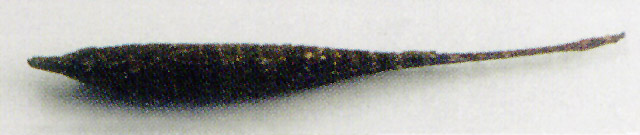
Shedding some genetically induced excess baggage may have helped the tiny Indostomus paradoxus fish thrive in freshwater and outsize its marine ancestors, according to a University of British Columbia study published in Science Express.

Measuring three to 10 centimetres long, stickleback fish originated in the ocean but began populating freshwater lakes and streams following the last ice age. Over the past 20,000 years - a relatively short time span in evolutionary terms - freshwater sticklebacks have lost their bony lateral plates, or "armour," in these new environments.

"Scientists have identified a mutant form of a gene, or allele, that prohibits the growth of armour," says UBC Zoology PhD candidate Rowan Barrett. Found in fewer than one per cent of marine sticklebacks, this allele is very common in freshwater populations.

All drugs used to treat psychosis are linked to an increased risk of stroke, and dementia sufferers are at double the risk, according to a study published on bmj.com today.

Previous research has shown that second generation (atypical) antipsychotic drugs can increase the chances of patients having a stroke. But the risk of stroke associated with first generation (typical) antipsychotics, and whether the risk differs in people with and without dementia, is not known.

Concerns about an increased risk of stroke among people taking atypical antipsychotic drugs were first raised in 2002, particularly in people with dementia. In 2004, the UK's Committee on Safety of Medicines recommended that these drugs should not be used in people with dementia, despite a lack of clear evidence.

There are no lost cities containing aliens and otherworldly technology but ancient settlements in the Amazon, now almost entirely obscured by tropical forest, were once large and complex enough to be considered "urban" as the term is commonly applied to both medieval European and ancient Greek communities, according to a paper in Science authored by anthropologists from the University of Florida and Brazil, and a member of the Kuikuro, an indigenous Amazonian people who are the descendants of the settlements' original inhabitants.

The paper also argues that the size and scale of the settlements in the southern Amazon in North Central Brazil means that what many scientists have considered virgin tropical forests are in fact heavily influenced by historic human activity. Not only that, but the settlements – consisting of networks of walled towns and smaller villages, each organized around a central plaza – suggest future solutions for supporting the indigenous population in Brazil's state of Mato Grosso and other regions of the Amazon, the paper says.

High impact activities such as jumping and skipping that can easily be incorporated into warm-ups before sports and physical education classes, have been shown to benefit bone health in adolescents. The 10 minute school-based intervention, provided twice a week for about eight months, significantly improved bone and muscle strength in healthy teenagers compared to regular warm-ups.

Physiotherapist Ben Weeks said the warm-up which included tuck jumps, star jumps, side lunges and skipping with gradually increasing complexity and repetitions, was specifically designed to apply a bone-stimulating mechanical load on the skeleton. Students worked up to about 300 jumps per session by the end of the study.

LLNL researchers care about the environment too. To keep Mother Nature safe while we blow stuff up, they have added unique green solvents (ionic liquids) to an explosive called TATB (1,3,5-triamino-2,4,6-trinitrobenzene) and improved the crystal quality and chemical purity of the material.

Most explosives belong to a general class of materials called molecular crystals, which have become important building blocks in a number of other applications ranging from drugs, pigments, agrochemicals, dyes and optoelectronics. Many of these materials, including TATB, are bound together by a strong network of hydrogen-bonds. This extended network often makes these materials nearly insoluble in common organic solvents, leading to poor quality and limited size crystals, which in turn hinders progress in many technological applications.

The advantage of using two eyes to see the world around us has long been associated solely with our capacity to see in 3-D. Now, a new study from a scientist at Rensselaer Polytechnic Institute has uncovered a truly eye-opening advantage to binocular vision: our ability to see through things.

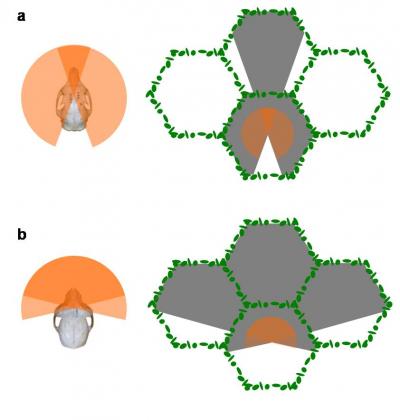
Most animals — fish, insects, reptiles, birds, rabbits, and horses, for example — exist in non-cluttered environments like fields or plains, and they have eyes located on either side of their head. These sideways-facing eyes allow an animal to see in front of and behind itself, an ability also known as panoramic vision.

Humans and other large mammals — primates and large carnivores like tigers, for example — exist in cluttered environments like forests or jungles, and their eyes have evolved to point in the same direction. While animals with forward-facing eyes lose the ability to see what's behind them, they gain 'X-ray vision', according to Mark Changizi, assistant professor of cognitive science at Rensselaer, who says eyes facing the same direction have been selected for maximizing our ability to see in leafy environments like forests.

Researchers conducting a study in mice have discovered that the brain must create new nerve cells for either exercise or antidepressants to reduce depression-like behavior. In addition, the researchers found that antidepressants and exercise use the same biochemical pathway to exert their effects.

These results might help explain some unknown mechanisms of antidepressants and provide a new direction for developing drugs to treat depression, said Dr. Luis Parada, chairman of developmental biology and senior author of a study in the Aug. 14 issue of the journal Neuron.

Transplantation of insulin-producing cell islets, so-called islets of langerhans is an appealing strategy for treatment of type 1 diabetes. But it turns out that these are short-lived, and the procedure needs to be repeated.

Now researchers at Linköping University and Uppsala University in Sweden can show that accumulation of protein aggregatess, amyloid, in the transplanted cells may be causing their death.

Until now it was not known why this insulin production ceases. The discovery now being published in The New England Journal of Medicine may change the course of diabetes research.

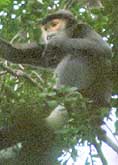
Just when you think modern technology reveals all, Mother Nature throws out a few surprises. According to a Wildlife Conservation Society(WCS) report, two surprisingly large populations of globally threatened primates have been found in Cambodia.

The report counted 42,000 black-shanked douc langurs along with 2,500 yellow-cheeked crested gibbons in Cambodia's Seima Biodiversity Conservation Area, an estimate that represents the largest known populations for both species in the world.

The two primate species are found in much lower numbers at other sites in Cambodia and in Vietnam. Prior to the recent discovery in the Seima Biodiversity Conservation Area, the largest known populations were believed to be in adjacent Vietnam, where black-shanked douc langurs and yellow-cheeked crested gibbons hover at 600 and 200 respectively. The total population of the two species remains unknown.

You may be wondering how something can be endangered if the population is unknown. Science has no answer for that.


