






When it comes to predicting the rate of inflation, consumers know what they spend and that helps them be as accurate as professional economists, according to research by a Kansas State University professor.

Lloyd B. Thomas, head of the department of economics, says that household surveys predict the inflation rate fairly accurately. While pros employ statistics like the unemployment rate, money supply growth and exchange rate changes, consumers participating in surveys are more likely to think about how much they spent at the grocery store that week.

"Surprisingly, the median household is just as good as the average professional economist," said Thomas. "I'm a little surprised because economists are using sophisticated models. But the consumers know what's happening with milk prices."

Researchers at the Yerkes National Primate Research Center, Emory University, have shown capuchin monkeys, just like humans, find giving to be a satisfying experience. This finding comes on the coattails of a recent imaging study in humans that documented activity in reward centers of the brain after humans gave to charity.

Empathy in seeing the pleasure of another's fortune is thought to be the impetus for sharing, a trait this study shows transcends primate species.

Frans de Waal, PhD, director of the Living Links Center at the Yerkes Research Center, and Kristi Leimgruber, research specialist, led a team of researchers who exchanged tokens for food with eight adult female capuchins. Each capuchin was paired with a relative, an unrelated familiar female from her own social group or a stranger (a female from a different group). The capuchins then were given the choice of two tokens: the selfish option, which rewarded that capuchin alone with an apple slice; or the prosocial option, which rewarded both capuchins with an apple slice. The monkeys predominantly selected the prosocial token when paired with a relative or familiar individual but not when paired with a stranger.

Overton's Rule says that the easier it is for a chemical to dissolve in a lipid (fat) the easier and faster it will be transported into a cell. The Rule was first outlined in the 1890s by Ernst Overton of the University of Zürich. He declared that substances that dissolve in lipids pass more easily into a cell than those that dissolve in water. He then set forth an equation that predicted how fast that diffusion would happen.

One of the key parameters in that equation is K which defines the lipophilicity (oil-liking nature) of the chemical. The higher the value of K, the faster the predicted cell permeation rate. For over a century, medicinal chemists have used this relationship to shape their studies and clinical trials.

A new study by research chemists at the University of Warwick has challenged that century old rule of pharmacology that defined how quickly key chemicals can pass across cell walls. The new observations of the Warwick researchers suggest that the real transport rates could be up to a hundred times slower than predicted by the century old Overton's Rule. This could have major implications for the development and testing of many future drugs.

DNA barcoding is a movement to catalog all life on earth by a simple standardized genetic tag, similar to stores labeling products with unique barcodes. The effort promises foolproof food inspection, improved border security, and better defenses against disease-causing insects, among many other applications.

But the approach as currently practiced churns out some results as inaccurately as a supermarket checker scanning an apple and ringing it up as an orange, according to a new Brigham Young University study.

With the International Barcode of Life project seeking $150 million to build on the 400,000 species that have been "barcoded" to date, this worthy goal warrants more careful execution, the BYU team says.

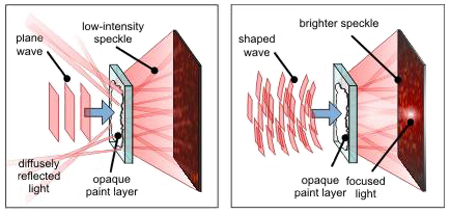
Materials such as milk, paper, white paint and tissue are opaque because they scatter light, not because they absorb it, but no matter how great the scattering, light was always able to get through the material in question, went the theory.

Researchers Ivo Vellekoop and Allard Mosk of the University of Twente have now shaped the waveform of light and confirmed this with experiments. By doing so they have found the predicted ‘open channels’ in material along which the light is able to move.

In materials that have a disordered structure, incident light is scattered in every direction possible. In an opaque layer, so much scattering takes place that barely any light comes out ‘at the back.’ However, even a material that causes a great deal of light scattering has channels along which light can propagate. This is only possible if the light meets strict preconditions so that the scattered light waves can reinforce one another on the way to the exit.

The perfect clean, renewable energy will utilize the sun's light energy for efficient conversion into fuels and electric power and so attention is focusing on one of the most ancient groups of organism, the cyanobacteria.

3.7 billion years ago photosynthesis evolved in cyanobacteria that used water molecules as a source of electrons to transport energy derived from sunlight, while converting carbon dioxide into oxygen. The light harvesting systems gave the bacteria their blue ("cyano") color, and paved the way for plants to evolve by "kidnapping" bacteria to provide their photosynthetic engines, and for animals by liberating oxygen for them to breathe, by splitting water molecules.

Humans are only now coming close to tweaking the photosynthetic reactions of cyanobacteria to produce fuels we want such as hydrogen, alcohols or even hydrocarbons, rather than carbohydrates.

The ostentatious, sometimes bizarre qualities that improve a creature's chances of finding a mate may also drive the reproductive separation of populations and the evolution of new species, say two Indiana University at Bloomington biologists.

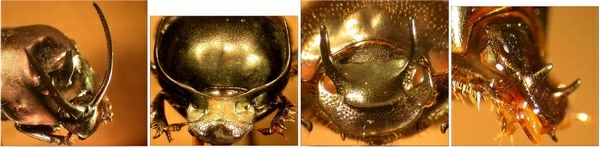
In the September 2008 issue of Evolution, Armin Moczek and Harald Parzer examine males from four geographically separated populations of the horned beetle species Onthophagus taurus. The beetles have diverged significantly in the size of the male copulatory organ, and natural selection operating on the other end of the animal -- horns atop the beetles' heads -- seems to be driving it.

Structures directly involved in mating are known as primary sexual characters, whereas combat structures like horns -- or seductive attributes like a cardinal's vibrant plumage or a bullfrog's deeply resonant baritone -- are known as secondary sexual characters.

Data from a recent study demonstrate the anti-inflammatory and pathogen protection benefits of Bifidobacterium infantis 35624 a probiotic bacterial strain of human origin.

New research in PLoS Pathogens says that the gastrointestinal benefits of probiotics extend to the entire body.

The inflammatory response is a key part of the immune system's battle against invaders. The normal response to infection is rapid and effective, however, the immune response may occasionally cause inflammation and damage to healthy tissue.

If you watched television broadcasts of the 2006 Winter Olympics in Torino, Italy, you likely got a bad impression of the Italian people, shows a new research study from BI Norwegian School of Management.

The Olympics is a venue that creates conflict in a country, they say, in that the competition to host the Games is increasingly tougher but the costs are staggering and the income from ticket sales, television rights, advertising, etc. does not even come close to covering all the expenses. An olympic championship attracts international attention, with international focus on both the organizing city and country but, as Chinese authorities are now painfully aware, the media attention in connection with hosting the Olympics can be a double-edged sword.

Troubled kids will always be a difficult area of social policy - in the 1980s the solution was thought to be introducing troubled kids to rural schools, but that tended to bring down the quality of the rural schools rather than raising troubled children up.

Yet it would be pessimistic and dooming some to permanent failure to make schools full of just troubled kids.

Still, the issue has not gone away. Troubled children hurt their classmates' math and reading scores and worsen their behavior, according to new research by economists at the University of California, Davis, and University of Pittsburgh.


