










It’s been used as a cleaning solution, as an antidote for gonorrhea, a sterilizer during surgery and now is used to fight off bacteria and halitosis. The oxidation of bacteria though the use of a rinse is one of the easiest ways to sterilize an environment, which is why the method has been used for odor control in the mouth since the naissance of Listerine in 1879 as a surgical antiseptic.

Mouthwash has grown from its humble origins to a product that fills a variety of needs. With it carries a variety of consequences. Dr. Philip M. Tierno, Jr. Director of Clinical Microbiology and Diagnostic Immunology at Tisch Hospital, New York University Medical Center surmises on some emerging issues having to do with mouthwash, including alcohol versus alcohol-free washes.

When mouthwash first came into existence there was no non-alcoholic variety. Even today many mouthwashes contain alcohol. However, continual use of a mouthwash containing alcohol can bring about some negative effects as well as positive—including cancer. Similar to those who contract mouth cancer associated with an over consumption of alcohol, riding oneself of bad breath with wash containing alcohol may also be a cancerous trigger.

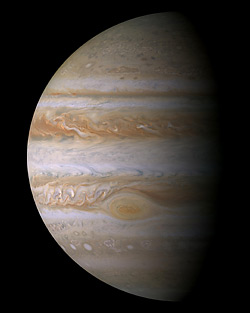
A strange, metal brew lies buried deep within Jupiter and Saturn, according to a new study by researchers at the University of California, Berkeley, and in London.

The study, published in this week's online edition of the journal Proceedings of the National Academy of Sciences, demonstrates that metallic helium is less rare than was previously thought and is produced under the kinds of conditions present at the centers of giant, gaseous planets, mixing with metal hydrogen and forming a liquid metal alloy.

Acid rain from atmospheric pollution can reduce methane emissions from rice paddies by up to 24 per cent according to research led by Dr Vincent Gauci of The Open University. This is potentially a beneficial side effect of the high pollution levels China - the world’s largest producer of rice - is often associated with. Methane is 21-23 times more powerful as a greenhouse gas than CO2.

“The reduction in pollution happens during a stage of the lifecycle when the rice plant is producing grain. This period is normally associated with around half of all methane emissions from rice and we found that simulated acid rain pollution reduced this emission by 24 per cent,” said Dr Gauci.

By combining stretchable optoelectronics and biologically inspired design, scientists have created a remarkable imaging device, with a layout based on the human eye.

As reported in the Aug. 7 issue of the journal Nature, researchers at the University of Illinois and Northwestern University have developed a high-performance, hemispherical "eye" camera using an array of single-crystalline silicon detectors and electronics, configured in a stretchable, interconnected mesh.

The work opens new possibilities for advanced camera design. It also foreshadows artificial retinas for bionic eyes similar in concept to those in the movie "Terminator" and other popular science fiction.

Sexual harassment from male guppies is so bad that long-suffering females will risk their lives to escape it, according to new research from Dr. Safi Darden and Dr. Darren Croft from Bangor University.

Male guppies spend most of their time displaying their brightly-coloured bodies to females in the hope of attracting a mate. The choosy females will usually only mate with the most attractive, high-quality males to ensure the production of strong offspring. If his courtship display is rejected, the male will often attempt to sneak a mating with his chosen female when she is not looking.

A University of Utah study is shedding light on an important, unsolved physics problem: the relationship between chaos theory – which is based on 300-year-old Newtonian physics – and the modern theory of quantum mechanics. The study demonstrated a fundamental new property – what appears to be chaotic behavior in a quantum system – in the magnetic "spins" within the nuclei or centers of atoms of frozen xenon, which normally is a gas and has been tested for making medical images of lungs.

The new study in Physical Review Letters was led by Brian Saam, an associate professor of physics and associate dean of the University of Utah's College of Science.

Quantum mechanics – which describes the behavior of molecules, atoms electrons and other subatomic particles – "plays a key role in understanding how electronics work, how all sorts of interesting materials behave, how light behaves during communication by optical fibers," Saam says.

In 1990, Theresa (Terri) Schiavo had a cardiac arrest that caused irreversible brain damage which led to a persistent vegetative state diagnosis. A few years later, this diagnosis became a source of conflict over the interruption of artificial nutrition.

The "Schiavo Case" was widely discussed from a medical, ethical and social standpoint in the United States and elsewhere. In an article to be published in the September 23 issue of Neurology, , a team of bioethicists composed of Dr. Éric Racine of the Institut de recherches cliniques de Montréal (IRCM) and experts from Stanford University, in California, and the University of British Columbia examines the media coverage featuring this famous case.

A team of researchers from Massachusetts General Hospital (MGH) has used brain imaging, genetics and experimental psychology techniques to identify a connection between brain reward circuitry, a behavioral measurement of preference and a gene variant that appears to influence both.

The report in the August 4 issue of Archives of General Psychiatry describes how variations in a gene involved with the brain's reward function are associated with the activity of a key brain structure and, in parallel, with the effort study participants 'invest' in viewing emotion-laden facial images. The findings have implications for how genes may influence healthy or dysfunctional behavior involving choices in many different areas.

Scientists at the University of Sheffield writing in the journal Bioinformatics,say they have shown how bacteria could be used as a future fuel, a milestone in producing truly sustainable fuels in the future.

Like all living creatures, bacteria sustain themselves through their metabolism, a huge sequence of chemical reactions that transform nutrients into energy and waste. With mathematical computer models the Sheffield team have mapped the metabolism of a type of bacteria called Nostoc. Nostoc fixes nitrogen and, in doing so, releases hydrogen that can then potentially be used as fuel. Fixing nitrogen is an energy intensive process and it wasn't entirely clear exactly how the bacterium produces the energy it needs in order to perform. Now the new computer system has been used to map out how this happens.

Overall alcohol use—particularly consumption of beer—is declining in the US, according to a new study published in the August 2008 issue of The American Journal of Medicine. Researchers examined 50 years of data and found several changes in alcohol intake but no change in alcohol use disorders.

Americans are drinking significantly less beer and more wine, while hard liquor use has remained fairly constant. More people now report that they are non-drinkers. People born later in the 20th century drink more moderately than older people. As we age, our individual alcohol consumption goes down.


