







Shark researchers from the University of New South Wales, Newcastle University, NSW Department of Primary Industries Fisheries (Australia) and University of California (USA) reveal unprecedented information about the feeding habits of the great white shark by analysing anatomical and biomechanical data from their skull and muscle tissues.

They generated 3-Dimensional models the skull of a 2.4-metre male great white shark on the basis of multiple x-ray images generated by a computerized tomography (CT) scanner.

Using novel imaging and finite element analysis (FEA), the team reconstructed the great white's skull, jaws and muscles, remodelling them as hundreds of thousands of tiny discrete, but connected parts.

COLD-fX, a patented extract of North American ginseng, discovered by a team of 25 University of Alberta scientists, is Canada's top selling cold and flu remedy for adults. It has been approved by Health Canada for use by adults and the FDA has cleared its sale as a new dietary ingredient (NDI) for adults in the U. S.

Positive findings of a safety study involving children and COLD-fX show promise for its future development for kids as a Canadian cold and flu remedy. The results appear in the August, 2008 issue of Pediatrics.

The randomized, double-blind, placebo controlled Canadian trial which was conducted in collaboration with the University of Alberta in Canada was designed to measure the safety and tolerability of COLD-fX for treatment of cold and flu in children.

It's a Catch-22 of the highest order. People with alcohol problems often use alcohol to get to sleep -- but it actually keeps them from getting good-quality sleep all night long.

At the same time, they're highly likely to suffer from full-blown chronic insomnia that keeps them from getting enough sleep night after night – and that condition has been shown to cut their chances of getting sober again.

Meanwhile, their doctors aren't likely to prescribe them insomnia medications, because most sleeping pills can be habit-forming or have adverse effects due to an alcohol-damaged liver.


The economy has clearly become the primary subject today in America. It has become so not only because of all the issues discussed in the prior column, but also because it has also become the number one issue for voters in this significant election year.


In the “Forecast for 2008” column on January 9th of this year I wrote:


The world's smallest species of snake, as thin as a spaghetti noodle and small enough to rest comfortably on a U.S. quarter, has been identified on the Caribbean island of Barbados.

The species, with adults averaging just under four inches in length, was discovered by Blair Hedges, an evolutionary biologist at Penn State. They list the discovery in the journal Zootaxa.

Hedges found the new snake -- a type of threadsnake -- in a tiny forest fragment on the eastern side of Barbados. He believes the species is rare because most of its potential habitat has been replaced by buildings and farms. "Habitat destruction is a major threat to biodiversity throughout the world," he said. "The Caribbean is particularly vulnerable because it contains an unusually high percentage of endangered species and, because these animals live on islands, they have nowhere to go when they lose their habitat."

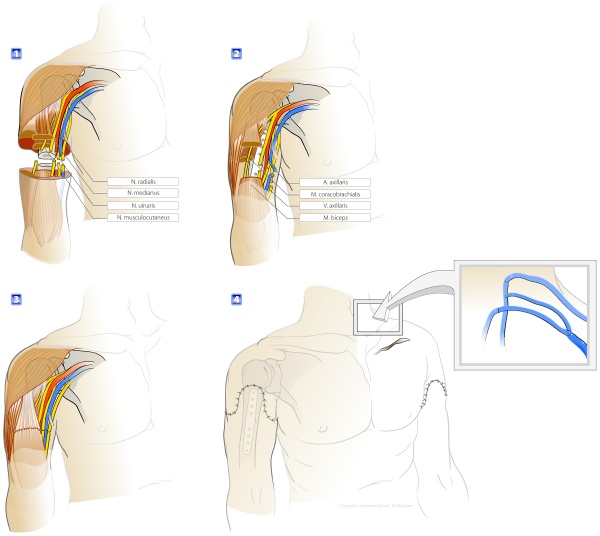
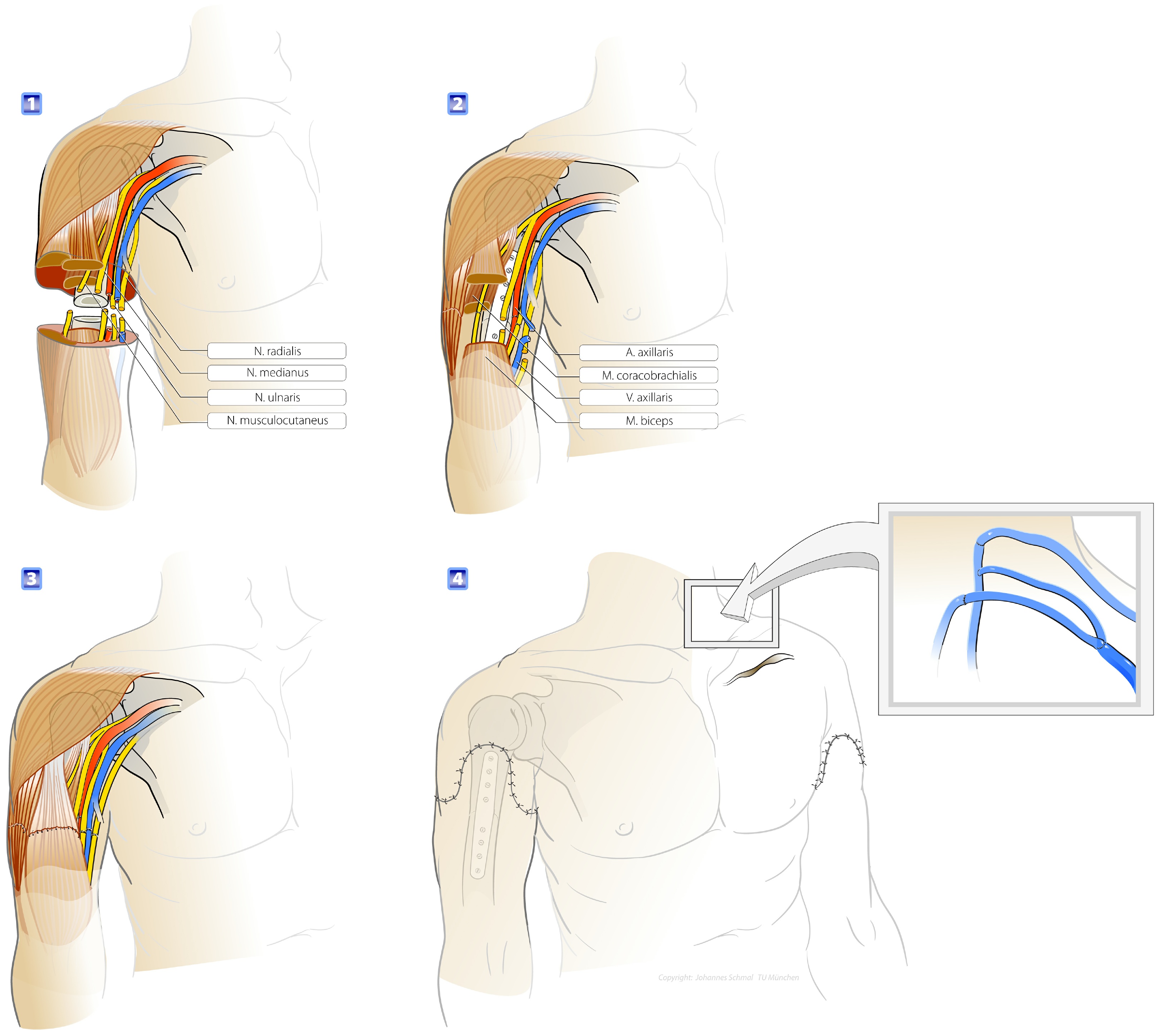
Thid past week the “Klinikum rechts der Isar” of the Technical University of Munich saw the first transplant of complete arms after several years of preparatory work.

The patient's name was not released, and all that is known about the the identity of the arm donor is that it was a young person who died shortly before the surgery.

The patient, doing well given the circumstances, was operated on by the Clinic for Plastic Surgery and Hand Surgery (Director Prof. Hans-Günther Machens). The procedure, with a team of 40 people participating, was headed by PD Dr. Christoph Höhnke (Head of the transplant team, Senior Physician of the Clinic for Plastic Surgery and Hand Surgery) and Prof. Edgar Biemer (long-standing ex-board member of the plastic surgery division).

Rapid natural climate change was happening 12,700 years ago, write geoscientists who say they have proved for the first time that an extremely fast climate change happened in Western Europe long before man-made changes in the atmosphere, and is causatively associated with a sudden change in the wind systems.

Achim Brauer, Peter Dulski and Jörg Negendank, (emeritus Professor) from the GFZ German Research Centre for Geosciences, Gerald Haug from the DFG-Leibniz Center for Surface Processes and Climate Studies at the University of Potsdam and the ETH in Zurich, and Daniel Sigman from the Princeton University did the study.

The proof of an extreme cooling within a short number of years 12,700 years ago was attained in sediments of the volcanic lake “Meerfelder Maar” in the Eifel, Germany. The seasonally layered deposits allow to precisely determine the rate of climate change.

Everyone has pressure to perform and fit in at work; name any demographic and they will say it is tougher for them than it is for others. Is it equally hard for everyone and are some groups making it even harder on themselves?

Sociologists Marlese Durr of Wright State University and her co-author Adia Harvey Wingfield of Georgia State University at the the annual meeting of the American Sociological Association (ASA) say it is tougher for black women professionals than white women, lesbian women, all men, Hispanics, Latinos, Asians and even the French in America because black professionals engage in two types of "emotional performance" in the workplace that they say others do not: General etiquette and 'racialized' emotion maintenance.

And black women professionals place even more pressure on themselves, they state. Whether it's stressful, inauthentic or downright draining, Durr claims that emotional labor is "a crucial part of black women's self-presentation in work and social public spaces." These efforts to fit in can, in effect, make African American women feel isolated, alienated, and frustrated.

Ohio State University researchers have developed a new method of measuring school quality based on schools’ 'impact on learning' and their results say that summer vacations and parent incomes have more to do with low test scores than the quality of the schools.

Using this 'impact' measure, about three-quarters of the schools now considered “failing” because of their low test scores would no longer would be failing.

A school system measuring tool where everyone is above average even if they have poor test scores and where good test scores can still mean failure? Is that legitimate or is it just Outcome Based Education for education?

New advances in DNA sequencing technology have been receiving a lot of press, but mostly in the context of how DNA sequencing is going to make personalized medicine possible. Your physician will some day be able to prescribe drugs and give you advice on disease prevention, all based on a reading of your DNA. Obviously that day is not here quite yet; however, the amazing power of next-generation DNA sequencing is already transforming what goes on in a biology lab.

To see this, we can take a look at an old technology and look at the changes it has gone through, from its pre-genome-era state in the 80's and 90's, to its transformation into a genome-scale tool around the turn of the millennium, to its latest incarnation during this emerging era of massive, cheap DNA sequencing. This technology, called chromatin immunoprecipitation (or ChIP), has been a critical tool in studies of how genes are regulated. ChIP, in its current, next-generation DNA sequencing form, is opening up some stunning new approaches to studying gene regulation.


