










Lovastatin, a drug used to lower cholesterol and help prevent cardiovascular disease, has been shown to improve bone healing in an animal model of neurofibromatosis type 1 (NF1). The research, reported today in BMC Medicine, will be of great interest to NF1 patients and their physicians.

Many NF1 patients suffer from bowing, spontaneous fractures and pseudarthrosis (incomplete healing) of the tibias (shinbones). Mateusz Kolanczyk from Stefan Mundlos' laboratory in the Max Planck Institute for Molecular Genetics, Berlin, led a team that investigated lovastatin's ability to prevent pseudarthrosis in a new animal model of human NF1 disease.

Researchers have discovered new genes linked to schizophrenia, it has been revealed.

In two papers published in Nature today (July 30), scientists identify four mutated gene regions that may hold the key to producing new tailor-made drugs to treat the devastating mental illness.

It is hoped the finds, which are likely to galvanize the field of psychiatric genetics, could also lead to earlier diagnosis of the disorder, which affects around one in every 100 people.

Researchers at Yale School of Medicine have found the brain's appetite center uses fat for fuel by involving oxygen free radicals—molecules associated with aging and neurodegeneration. The findings suggest that antioxidants could play a role in weight control.

The study's lead authors were Sabrina Diano and Tamas Horvath, who are an associate professor and professor, respectively, in the Departments of Obstetrics, Gynecology & Reproductive Sciences and Neurobiology. Horvath is also chair of the Section of Comparative Medicine.

"In contrast to the accepted view, the brain does use fat as fuel," said Horvath. "Our study shows that the minute-by-minute control of appetite is regulated by free radicals, implying that if you interfere with free radicals, you may affect eating and satiety."

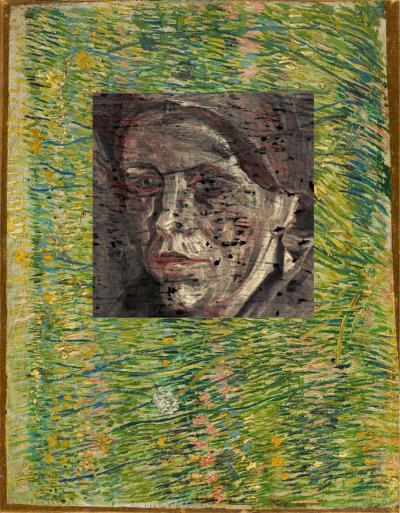
It is well-known that Vincent van Gogh often painted over his older works. Experts estimate that about one third of his early paintings conceal other compositions under them.

Using a new technique based on synchrotron radiation induced X-ray fluorescence spectroscopy, an international research team, including members from Delft University of Technology (The Netherlands) and the University of Antwerp (Belgium), has successfully applied this technique for the first time to the painting entitled Patch of Grass by Vincent van Gogh. Behind this painting is a portrait of a woman.

A strain of mice with the natural ability to repair damaged cartilage may one day lead to significant improvements in treatment of human knee, shoulder and hip injuries.

Researchers at Oregon Health & Science University have discovered males from a strain of mice called MRL/MpJ have the innate ability to repair their own knee cartilage. "We think there is something special about these mice," said Jamie Fitzgerald, Ph.D., assistant professor of orthopedics and rehabilitation in the OHSU School of Medicine. "They have the ability to regenerate cartilage."

From nursery rhymes to Shakespearian sonnets, alliteration has always been an important aspect of poetry whether as an interesting aesthetic touch or just as something fun to read. But a recent study suggests that this literary technique is useful not only for poetry but also for memory.

In several experiments, researchers R. Brooke Lea of Macalester College, David N. Rapp of Northwestern University, Andrew Elfenbein and Russell Swinburne Romine of University of Minnesota and Aaron D. Mitchel of the Pennsylvania State University had participants read works of poetry and prose with alliterative sentences to show the importance of repetitive consonants on memory.

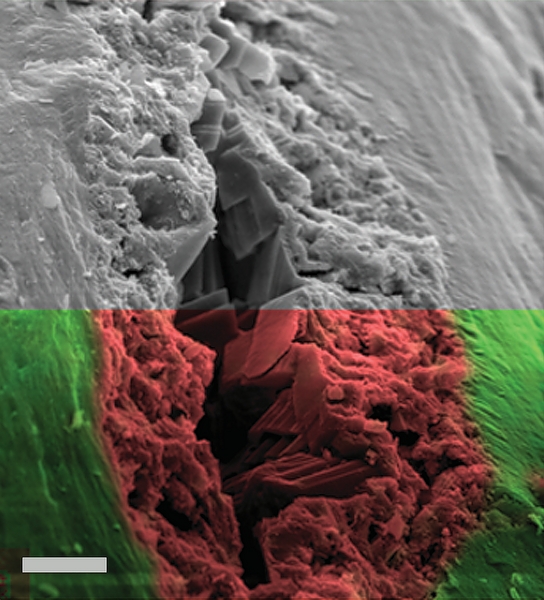
Paleontologists in 2005 hailed research that apparently showed that soft, pliable tissues had been recovered from dissolved dinosaur bones, a major finding that would substantially widen the known range of preserved biomolecules. But new research challenges that finding and suggests that the supposed recovered dinosaur tissue is in reality biofilm – or slime.

The original research, published in Science magazine, claimed the discovery of blood vessels and what appeared to be entire cells inside fossil bone of a Tyrannosaurus rex. The scientists had dissolved the bone in acid, leaving behind the blood vessel- and cell-like structures.

In a new study published in the online-open access journal PLoS ONE, Per Christiansen at the Zoological Museum in Copenhagen, Denmark, reports the finding that the evolution of skull and mandible shape in sabercats and modern cats were governed by different selective forces, and the two groups evolved very different adaptations to killing.

The cat family comprises some of the most specialized carnivores in the history of mammals, all exclusively eating flesh. The cat family consists of two major sub-groups: the feline cats (including all modern species) and the sabertoothed cats (which are all extinct). Skeletons from the two groups look broadly similar, but their skulls are often remarkably different, and suggest that members of the two groups underwent radically different adaptations to predation during the course of evolution.

The field of robotics makes consistent progress but the great success of so far has been in automating repetitive tasks in process control and assembly, yielding dramatic cuts in production.

The next step - towards cognition and more human-like behavior - remains elusive. It has been difficult to make robots that can truly learn and adapt to unexpected situations in the way humans can, while it has been equally challenging trying to develop a machine capable of moving smoothly like any animal. There is still no robot capable of walking properly without jerky slightly unbalanced movements.

A recent conference, jointly organized by the European Science Foundation (ESF) and the Japan Society for the Promotion of Science (JSPS) and held in Japan, was targeted at young researchers actively working in the fields of cognitive science and robotics.

Physicists from the University of Granada and University of Valencia, analyzing data sent by the Huygens probe from Titan, say they have “unequivocally” proved that there is natural electrical activity on Titan, the largest of Saturn's moons.

Scientists generally believe that the probability of organic molecules, precursors of life, being formed is higher on planets or moons which have an atmosphere with electrical storms.

Juan Antonio Morente, from the Department of Applied Physics at the University of Granada, told Servicio de Informacion y Noticias Cientificas(SINC) that Titan has been considered a “unique world in the solar system” since 1908 when, the Spanish astronomer, José Comas y Solá, discovered that it had an atmosphere, something non-existent on other moons.


