








Ronald B. Herberman, MD, the director of the University of Pittsburgh Cancer Institute and UPMC Cancer Centers, issued the following directive to thousands of University of Pittsburgh employees:

*******************************

FROM: Ronald B. Herberman, MD

Recently I have become aware of the growing body of literature linking long-term cell phone use to possible adverse health effects including cancer. Although the evidence is still controversial, I am convinced that there are sufficient data to warrant issuing an advisory to share some precautionary advice on cell phone use.

An international expert panel of pathologists, oncologists and public health specialists recently declared that electromagnetic fields emitted by cell phones should be considered a potential human health risk (see The Case for Precaution in Cell Phone Use, attached). To date, a number of countries including France, Germany and India have issued recommendations that exposure to electromagnetic fields should be limited. In addition, Toronto’s Department of Public Health is advising teenagers and young children to limit their use of cell phones, to avoid potential health risks.

Often people taking antidepressants - or really any drug - have to balance side effects versus benefit overall. Those crippled by depression and/or anxiety may be willing to give up a few things to dispel the gray clouds. For example, sex.

Doctors in a study published in JAMA estimate antidepressant treatment-associated sexual dysfunction occurs in 30 percent to 70 percent of people treated for major depression. Also, women experience major depressive disorder at nearly double the rate of men and also experience greater subsequent sexual dysfunction.

A group of scientists who set out to study sex pheromones in a tiny worm found that the same family of pheromones also controls a stage in the worms' life cycle, the long-lived dauer larva. The findings in Nature represent the first time that reproduction and lifespan have been linked through so-called small molecules.

Where scientists once focused on DNA and proteins as the major players in an organism's biology, they are now realizing that smaller, but more structurally diverse chemicals - simply called "small molecules" - are a significant part of a living thing's biology. "They're as important to biology as the genes are," says Frank Schroeder, last author of the paper and a scientist at the Boyce Thompson Institute.

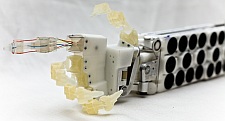
SENSOPAC, an EU-funded project whose goal is to create a robotic arm, hand and brain with human-like physical and cognitive capabilities, is bringing human-like robots closer to reality - their newest electronic brain is modelled on the human cerebellum.

Existing robots, such as those that help assemble cars or computers, can perform repetitive actions quickly and precisely. However, says Patrick van der Smagt, the coordinator of SENSOPAC, “they are not very intelligent or flexible and they don’t do very much sensing.”

While the movies have convinced many people that humanoid robots, such as C-3PO or WALL-E are realistic, van der Smagt knows all too well how difficult it is to build robots with even basic human abilities.

For the first time, a team of international researchers has found a way to view the accretion disks surrounding black holes and verify that their true electromagnetic spectra match what astronomers have long predicted they would be.

A black hole and its bright accretion disk have been thought to form a quasar, the powerful light source at the center of some distant galaxies. Using a polarizing filter, the research team, which included Robert Antonucci and Omer Blaes, professors of physics at the University of California, Santa Barbara, isolated the light emitted by the accretion disk from that produced by other matter in the vicinity of the black hole.

A recent study shows that popular fish oil supplements have an effect on the healing process of small, acute wounds in human skin. But whether that effect is detrimental, as researchers initially suspected, remains a mystery.

The omega-3 fatty acids found in fish oils are widely considered to benefit cardiovascular health and other diseases related to chronic inflammation because of their anti-inflammatory properties. But insufficient inflammation during the initial stage of wound healing may delay the advancement of later stages.

Wealthy nations willing to collectively spend about $1 billion annually could prevent the emission of roughly half a billion metric tons of carbon dioxide per year for the next 25 years, says a new study. It would take about that much money to put an end to a tenth of the tropical deforestation in the world, which would lead to lower greenhouse gas emissions, they say, and reduce global carbon emissions by between 2 and 10 percent.

The calculation is one of several estimates described by a team of scientists and economists this week in the online edition of Proceedings of the National Academy of Sciences. The calculations, based on three different forestry and land-use models, provide the best estimates so far of how much it would cost developed nations to participate in a program called "avoided deforestation" to reduce worldwide carbon emissions.

A report by scientists from The Netherlands published in The FASEB Journal identifies a compound in human saliva that greatly speeds wound healing. This research may offer hope to people suffering from chronic wounds related to diabetes and other disorders, as well as traumatic injuries and burns.

In addition, because the compounds can be mass produced, they have the potential to become as common as antibiotic creams and rubbing alcohol.

Specifically, scientists found that histatin, a small protein in saliva previously only believed to kill bacteria was responsible for the healing.

The results of a new study suggest that past climate changes and sea level fluctuations may have promoted the formation of new species in the Amazon region of South America.

The Amazon basin is home to the richest diversity of life on earth - some place had to be it - yet the reasons why are not well understood. A team of American and Brazilian researchers studied three species of leafcutter ants from Central and South America to determine how geography and climate affect the formation of new species.

Climate changes during the last ice age affected where Amazonian species, such as leafcutter ants, were able to live, restricting some to isolated "refugia" that could cause them to evolve into new species.

Mark Mulac was once an avid lover of iced tea, downing up to six glasses a day. Unfortunately, he was forced to go cold turkey. Iced tea helped to bring on an excruciating bout of kidney stones that led to surgery at Loyola University Hospital in Maywood, Ill.

Iced tea contains high concentrations of oxalate, one of the key chemicals that lead to the formation of kidney stones, a common disorder of the urinary tract that affects about 10 percent of the population in the United States.

Kidney stones are crystals that form in the kidneys or ureters, the small tubes that drain the urine from the kidney to the bladder. Men are four times more likely to develop kidney stones than women, and their risk rises dramatically once they reach their 40s.


