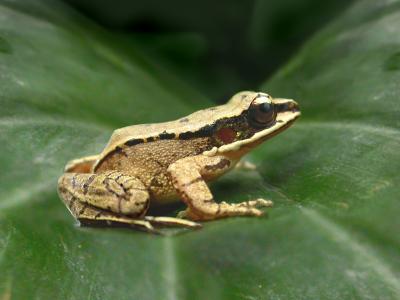








Researchers have discovered that a frog that lives near noisy springs in central China can tune its ears to different sound frequencies, much like the tuner on a radio can shift from one frequency to another. It is the only known example of an animal that can actively select what frequencies it hears, the researchers say.

The findings, from a collaborative effort led by the University of Illinois and the University of California at Los Angeles, appear this week in Proceedings of the National Academy of Sciences. The research team also included scientists from the Chinese Academy of Sciences and the Massachusetts Eye and Ear Infirmary (at Harvard Medical School).

Volunteering for environmental protection activities can be physically and mentally sustaining for older people, according to the latest issue of Public Policy & Aging Report (PPAR). In fact, this demographic group is in a unique position to have a noticeable impact on its surroundings.

For those looking to fill meaningful roles in the community after retirement, volunteerism provides opportunities for social integration. The programs of environmental organizations routinely bring together people of different generations. Many of these involve healthy physical activity, such as the testing of rivers or clean up of natural areas, for example.

The ongoing increase in the number of older U.S. citizens, coupled with a senior population seeking meaningful participation in society, can greatly serve environmental protection efforts.

Environmental factors can transform the ratio of females to males in plant populations according to new research out of the University of Toronto.

The study conducted by Ivana Stehlik, a lecturer, Jannice Friedman, a PhD candidate, and Spencer Barrett, a professor, involved a novel approach using genetic markers (known DNA sequences) to identify the sex of seeds. The team investigated six natural populations of the wind-pollinated herb Rumex nivalis in the Swiss Alps and mapped the distance between females and neighbouring males. They then measured the amount of pollen captured by female flowers and collected seeds from the plants when they were mature.

Cyanobacteria, also referred to as blue-green algae or pond scum, is found in nearly every habitat, from oceans to fresh water to bare rocks to soil, and is a source of many unique chemical structures.

Researchers at the University of Illinois at Chicago (UIC) College of Pharmacy are collaborating with the Ohio State University and two other organizations to discover new cancer therapies derived from natural sources such as pond scum and plants from tropical rainforests.

UIC researchers, led by principal investigator Jimmy Orjala, assistant professor of pharmacognosy, will collect small samples of pond scum throughout the Midwest and grow them in liquid solutions in a temperature-controlled laboratory.

Researchers in Madagascar have confirmed the existence of a population of greater bamboo lemurs more than 400 kilometers (240 miles) from the only other place where the Critically Endangered species is known to live, raising hopes for its survival.

The discovery of the distinctive lemurs with jaws powerful enough to crack giant bamboo, their favorite food, occurred in 2007 in the Torotorofotsy wetlands of east central Madagascar, which is designated a Ramsar site of international importance under the 1971 Convention on Wetlands.

Updated information on the species will be presented at the upcoming International Primatological Society 2008 Congress in Edinburgh, Scotland, on Aug. 3-8, as part of a new assessment of the world's primates that shows the state of mankind's closest living relatives.

The nerve connections that keep a fly's gaze stable during complex aerial manoeuvres, enabling it to respond quickly to obstacles in its flight path, are revealed in new detail in research published today.

Scientists from Imperial College London have described the connections between two key sets of nerve cells in a fly's brain that help it process what it sees and fast-track that information to its muscles. This helps it stay agile and respond quickly to its environment while on the move.

The study is an important step towards understanding how nervous systems operate, and could help us improve our knowledge of more complex animals. It could also be used to improve technical control systems in autonomous air vehicles - robots that stay stable in the air without crashing and with no need for remote control.

A researcher at MIT's Picower Institute for Learning and Memory has pinpointed stem cells within the spinal cord that, if persuaded to differentiate into more healing cells and fewer scarring cells following an injury, may lead to a new, non-surgical treatment for debilitating spinal-cord injuries.

The work in PLoS Biology is by Konstantinos Meletis, a postdoctoral fellow at the Picower Institute, and colleagues at the Karolinska Institute in Sweden. Their results could lead to drugs that might restore some degree of mobility to the 30,000 people worldwide afflicted each year with spinal-cord injuries.

In a developing embryo, stem cells differentiate into all the specialized tissues of the body. In adults, stem cells act as a repair system, replenishing specialized cells, but also maintaining the normal turnover of regenerative organs such as blood, skin or intestinal tissues.

An abundant chromosomal protein that binds to damaged DNA prevents cancer development by enhancing DNA repair, researchers at The University of Texas M. D. Anderson Cancer Center report online this week in PNAS. The protein, HMGB1, was previously hypothesized to block DNA repair, senior author Karen Vasquez, Ph.D., associate professor in M. D. Anderson's Department of Carcinogenesis at the Science Park - Research Division in Smithville, Texas.

Identification and repair of DNA damage is the frontline defense against the birth and reproduction of mutant cells that cause cancer and other illnesses.

Pinpointing HMGB1's role in repair raises a fundamental question about drugs under development to block the protein, Vasquez said. The protein also plays a role in inflammation, so it's being targeted in drugs under development for rheumatoid arthritis and sepsis.

A bizarre title, but nothing to do with the fact that I am constitutionally lazy. Rather, it is related to the war I and a colleague are attempting to wage against the way physics is (in the UK at least) treated as a form of applied mathematics. It also has direct application to astrophysics – I know one student who went to study physics at university in 2002, in large part attracted by astronomy, but after a second year including astrophysics was saying "I hate stars." He was quite reasonable at maths, but it is the way that the subject was presented that put him off.

Carbon dioxide has been getting a bad rap for the last few years, what with "Waterworld" and the IPCC's preference for French nuclear plants, but laser resurfacing appears to be an effective long-term treatment for facial wrinkles, according to a report in the July/August issue of Archives of Facial Plastic Surgery. So at least aging rich women will look good when the planet dies.

The carbon dioxide laser vaporizes water molecules inside and outside of cells, causing thermal damage to the surrounding tissue, the authors write as background information in the article. In response to this insult, the skin produces more of the protein collagen, which fills in wrinkles. "In addition to structural changes, the healing process frequently leads to pigmentary [coloring] changes," the authors write. "These changes in skin pigmentation may be desirable, such as when patients wish to remove solar evidence of aging; however, changes in pigmentation after treatment can often be a troubling adverse effect."


