







University of Alberta scientists contend they have the answer to mass extinction of animals and plants 93 million years ago. The answer, research has uncovered, has been found at the bottom of the sea floor where lava fountains erupted, altering the chemistry of the sea and possibly of the atmosphere.

Earth and Atmospheric Science researchers Steven Turgeon and Robert Creaser found specific isotope levels of the element osmium, an indicator of volcanism in seawater, in black shale—rocks containing high amounts of organic matter—drilled off the coast of South America and in the mountains of central Italy.

New evidence that the brain regions responsible for vision are capable of adapting in adults offers new hope for those with an untreated condition commonly known as lazy eye. Also called amblyopia, the condition is the most prevalent cause of visual impairment in a single eye, affecting about six million people in the United States alone.

"If not detected early enough—before seven to twelve years of age—the condition has been considered untreatable because the brain wasn't thought to be plastic enough," said Benjamin Thompson of McGill University in Canada. "The main message here is to show that there really is plasticity in the adult visual system. There is real momentum now to find a treatment for adult amblyopia."

Every moment we live, cells in our bodies are dying. One type of cell death activates an immune response while another type doesn't. Now researchers at Washington University School of Medicine in St. Louis and St. Jude's Children's Research Hospital in Memphis have figured out how some dying cells signal the immune system. They say the finding eventually could have important implications in the treatment of autoimmune diseases and cancer.

In the July 18 issue of the journal Immunity, the researchers report a molecule, called high mobility group box-1 protein (HMGB1), which cells release when they die, seems to determine whether the immune system is alerted. But what happens to HMGB1 after it's made and whether the immune system ever gets the signal depends on how the cell dies.

Researchers at Queensland University of Technology have had good results with a trial vaccine for chlamydia, a disease which is decimating koala populations in the wild.

Chlamydia in koalas was a significant cause of infertility, urinary tract infections, and inflammation in the lining of the eye that often led to blindness.

Professors Peter Timms and Ken Beagley from Queensland University of Technology's Institute of Health and Biomedical Innovation (IHBI) said the vaccinated koalas, which are at Brisbane's Lone Pine Koala Sanctuary, were mounting a good response to the vaccine.

“If you want to be happy for the rest of your life you need to make an ugly woman your wife,” or “if your rent is late and you might have to litigate, don’t worry, be happy,” are a few of the ways some popular singers verbalize ways to stay happy. The role that genes and environment play on happiness and the choices a person makes in life have been regularly investigated in studies involving criminals and twins.

A genetic variation which evolved to protect people of African descent against malaria has now been shown to increase their susceptibility to HIV infection by up to 40 per cent, according to new research published today in Cell Host & Microbe. The work analyzed data from a 25-year study of thousands of Americans of different ethnic backgrounds.

Conversely, the same variation also appears to prolong survival of those infected with HIV by approximately two years.

The discovery marks the first genetic risk factor for HIV found only in people of African descent, and sheds light on the differences in genetic makeup that play a crucial role in susceptibility to HIV and AIDS.

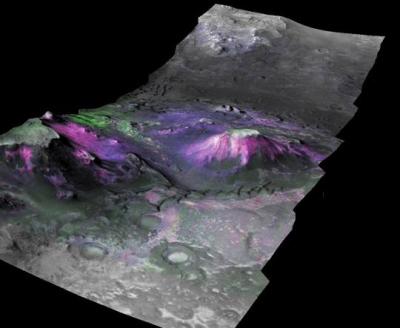
Mars once hosted vast lakes, flowing rivers and a variety of other wet environments that had the potential to support life, according to two new studies based on data from the Compact Reconnaissance Imaging Spectrometer for Mars (CRISM) and other instruments on board NASA's Mars Reconnaissance Orbiter (MRO).

"The big surprise from these new results is how pervasive and long-lasting Mars' water was, and how diverse the wet environments were," says Scott Murchie, CRISM's principal investigator at the Johns Hopkins University Applied Physics Laboratory (APL), in Laurel, Md.

The key to good health is to be physically active. The key to being active is ... to be born that way?

The well-documented importance of exercise in maintaining fitness has created the idea that individuals can manage their health by increasing their activity. But what if the inclination to engage in physical activity is itself significantly affected by factors that are predetermined? Two new studies suggest that the inclination to exercise may be strongly affected by genetics.

Controlled experiments into the effects of genetics on human activity have yet to be attempted, but recent studies on mice – the standard test species for mammalian genetics – have found genetic influences.

Hydrogen has three times more potential energy by weight than petrol, making it the highest energy-content fuel available. Research into using bacteria to produce hydrogen has been revived thanks to the rising profile of energy issues.

Researchers have combined the efforts of two kinds of bacteria to produce hydrogen in a bioreactor, with the product from one providing food for the other.

According to the outline in Microbiology Today, this technology has an added bonus: leftover enzymes can be used to scavenge precious metals from spent automotive catalysts to help make fuel cells that convert hydrogen into energy.

In the remote desert highlands of southern Yemen, a team of archaeologists have discovered new evidence of ancient transitions from hunting and herding to irrigation agriculture 5,200 years ago.

As part of a larger program of archaeological research, Michael Harrower from the University of Toronto and The Roots of Agriculture in Southern Arabia (RASA) team explored the Wadi Sana watershed documenting 174 ancient irrigation structures, modeled topography and hydrology, and interviewed contemporary camel and goat herders and irrigation farmers.


