







In a new study published today, scientists at the Burnham Institute for Medical Research have shown that neural stem cell development may be linked to Autism. The study demonstrated that mice lacking the myocyte enhancer factor 2C (MEF2C) protein in neural stem cells had smaller brains, fewer nerve cells and showed behaviors similar to those seen in humans with a form of autism known as Rett Syndrome.

Rett syndrome afflicts more girls than boys and results in poor brain development, repetitive hand motions, altered anxiety behaviors and the inability to speak. Patients with Rett Syndrome also suffer from seizures and other debilitating neurological symptoms.

This work represents the first direct link between a developmental disorder of neural stem cells and the subsequent onset of autism.

A survey of 17 countries has found that the United States has the highest levels of illegal cocaine and cannabis use. The study, by Louisa Degenhardt (University of New South Wales, Sydney, Australia) and colleagues, is based on the World Health Organization's Composite International Diagnostic Interview (CIDI) and is published in this week's PLoS Medicine.

The authors found that 16.2% of people in the United States had used cocaine in their lifetime, a level much higher than any other country surveyed (the second highest level of cocaine use was in New Zealand, where 4.3% of people reported having used cocaine). Cannabis use was highest in the US (42.4%), followed by New Zealand (41.9%).

The study's main limitations are that it's a survey (it is unclear whether people accurately report their drug use when interviewed), only 17 countries were included and within those countries there were different rates of participation.

A new assistive technology developed by engineers at the Georgia Institute of Technology could help individuals with severe disabilities lead more independent lives.

The novel system allows individuals with disabilities to operate a computer, control a powered wheelchair and interact with their environments simply by moving their tongues. The tongue-operated assistive technology, called the Tongue Drive system, was described on June 29 at the 2008 Rehabilitation Engineering and Assistive Technology Society of North America (RESNA) Annual Conference in Washington, D.C. An article about this system is also scheduled to appear in an upcoming issue of the Journal of Rehabilitation Research and Development. This research was funded by the National Science Foundation and the Christopher and Dana Reeve Foundation.

Dye-sensitized solar cell technology was invented by Ecole Polytechnique Fédérale de Lausanne (EPFL) professor Michael Grätzel at EPFL in the 1990s and always seemed to have great promise as a cheap alternative to expensive silicon solar cells.

Dye-sensitized cells imitate the way that plants and certain algae convert sunlight into energy. The cells are made up of a porous film of tiny (nanometer-sized) white pigment particles made from titanium dioxide. The latter are covered with a layer of dye which is in contact with an electrolyte solution. When solar radiation hits the dye it injects a negative charge in the pigment nanoparticle and a positive charge into the electrolyte resulting in the conversion of sunlight into electrical energy.

The cells are inexpensive, easy to produce and can withstand long exposure to light and heat compared with traditional silicon-based solar cells but even state-of-the-art dye-sensitized cells only have an overall light conversion efficiency greater than 11%, about half that of silicon cell technology.

When lasers illuminate material it usually warms up, so laser beams are used for cutting sheet steel, for welding or even as scalpels. But this effect can also be reversed. When the frequency of the laser beam makes the irradiated material just not absorbing its light and slightly more energy (of the photons, as physicists call the light particles) is needed for that, this photons “take” this missing energy from the oscillation energy of the material’s atoms.

Such oscillation energy (“phonons”) is equivalent to the vibration of atoms which is also called temperature and which is slightly reduced by this: the material is cooled down. A team of scientists from Technische Universität Dortmund and Ruhr-Universität Bochum has just carried out the first detailed experimental study regarding this process (known as “photoluminescence up-conversion”) in semiconductor nanostructures. Based on this, the development of a vibration-free cooling of semiconductors might be possible.

A research team of scientists from Wageningen University and Research Centre in the Netherlands has succeeded in further unravelling and manipulating the glycosylation of proteins in plants.

The scientists expect that this knowledge will allow plants to be applied more often in the production of therapeutic proteins, an important type of medicine.

The discovery fits in with technology developed by the Wageningen UR research institute Plant Research International for the production of biopharmaceuticals in plants.

Proteins in plants, animals and people are equipped with various sugar chains in a process known as glycosylation. The sugar chains are of significance to the functioning of many proteins.

Rates of sexually transmitted infections have doubled among the over 45 population in less than a decade, reveals research in the journal Sexually Transmitted Infections.

Sexual behavior studies tend to ignore older age groups and focus on young people, say the authors. The period of analysis spanned eight years between 1996 and 2003 inclusive. Researchers monitored the numbers of sexually transmitted infections (STI) diagnosed in 19 sexual health clinics and reported to the Health Protection Agency's Regional Surveillance Unit in the West Midlands.

In total, 4445 STI episodes were identified among people aged 45 and older during that time. Most of these were in straight men and women.

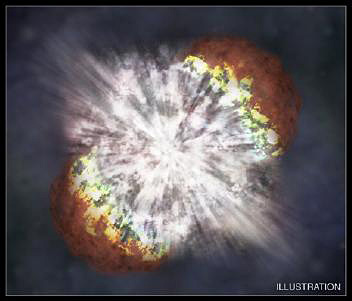
Astronomers recently announced that they have found a novel explanation for a rare type of super-luminous stellar explosion that may have produced a new type of object known as a quark star.

Three exceptionally luminous supernovae explosions have been observed in recent years. One of them was first observed using a robotic telescope at the California Institute of Technology's (Caltech) Palomar Observatory.

Data collected with Palomar's Samuel Oschin Telescope was transmitted from the remote mountain site in southern California to astronomers via the High-Performance Wireless Research and Education Network (HPWREN), funded by the National Science Foundation (NSF). The Nearby Supernova Factory research group at the Lawrence Berkeley Laboratory reported the co-discovery of the supernova, known as SN2005gj.

When tomatoes ripen in our gardens, we watch them turn gradually from hard, green globules to brightly colored, aromatic, and tasty fruits. This familiar and seemingly commonplace transformation masks a seething mass of components interacting in a well-regulated albeit highly complex manner.

For generations, agriculturalists and scientists have bred tomatoes for size, shape, texture, flavor, shelf-life, and nutrient composition, more or less, one trait at a time. With the advent of molecular biology, mutagenesis and genetic transformation could produce tomatoes that were more easily harvested or transported or turned into tomato paste. Frequently, however, optimizing for one trait led to deterioration in another. For example, improving flavor could have a negative effect on yield.

A Low Carbon Society (LCS) is defined by proponents as one that will make an equitable contribution to the global effort of reducing greenhouse gases to a safe level, combining both a high level of energy efficiency and security.

They say the results of modelling activities and workshops have demonstrated that reducing global carbon emissions by 50% is technologically and economically feasible. Energy efficiency, consumer responses and the choice of technologies for electricity generation play crucial roles in cutting CO2 levels.

Thus they say the LCS is not a utopian vision, but is both technically and economically achievable and they publish their findings from the Japan-UK Low Carbon Society project in a special edition of Climate Policy.


