Large amounts of ozone, 50% more than predicted by the most recent climate models, are being destroyed in the lower atmosphere over the tropical Atlantic Ocean. This discovery by a team of scientists from the UK's National Centre for Atmospheric Science and Universities of York and Leeds has particular significance because ozone in the lower atmosphere acts as a greenhouse gas and its destruction also leads to the removal of the third most abundant greenhouse gas; methane.

The findings come after analysing the first year of measurements from the new Cape Verde Atmospheric Observatory, recently set up by British, German and Cape Verdean scientists on the island of São Vicente in the tropical Atlantic. Alerted by these Observatory data, the scientists flew a research aircraft up into the atmosphere to make ozone measurements at different heights and more widely across the tropical Atlantic. The results mirrored those made at the Observatory, indicating major ozone loss in this remote area.

There are more men involved in high-profile international business deals than women, and that may be hurting companies, according to the results of a new Tel Aviv University study on the role of gender in management, which found that women may be more skilled at business negotiations than their masculine counterparts.

Dr. Yael Itzhaki, an adjunct lecturer at Tel Aviv University's Faculty of Management, carried out simulations of business negotiations among 554 Israeli and American management students at Ohio State University, in New York City, and in Israel. She is also the founder of Netta, a non-profit organization that promotes the advancement of women in the workplace through its programs and research.

The results of her Ph.D. thesis project indicated that in certain groupings, women offered better terms than men to reach an agreement. And women were good at facilitating interaction between the parties, she says.

Dr. Sarah Hake and her colleagues, George Chuck, Hector Candela-Anton, Nathalie Bolduc, Jihyun Moon, Devin O'Connor, China Lunde, and Beth Thompson, have taken advantage of the information from sequenced grass genomes to study how the reproductive structures of maize are formed. Dr. Hake, of the Plant Gene Expression Center, USDA-ARS, who is the 2007 recipient of the Stephen Hales Prize, will be presenting this work at the opening Awards Symposium of the annual meeting of the American Society of Plant Biologists in Mérida, Mexico, June 27th.

Maize was first domesticated in the highlands of Mexico over 6,000 years ago and is now one of the most important crop plants in the world. It is a member of the grass family, which also hosts the world's other major crops including rice, wheat, barley, sorghum, and sugar cane.

Maize has a rich genetic history, which has resulted in thousands of varieties or landraces. Scientists at CIMMYT, Centro Internacional de Mejoramiento de Maíz y Trigo, the International Maize and Wheat Improvement Center, work to preserve the ancient varieties that represent adaptations to different environmental conditions such as different soils, temperature, altitude, and drought. These traits are expressions of different genes and groups of genes that scientists hope to utilize to keep up with changing climatic conditions and global food supply.


It seems pregnancy may confer some protection against bladder cancer - in mice. Female mice that had never become pregnant had approximately 15 times as much cancer in their bladders as their counterparts that had become pregnant, according to new findings by investigators at the University of Rochester Medical Center.

The researchers led by Jay Reeder, Ph.D., are focusing on a fact that has puzzled doctors and scientists for decades: Why does bladder cancer, the fifth most common malignancy in the nation, affect about three times as many men as women?

Scientists long blamed men's historically higher rates of smoking and greater exposure to dangers in the workplace, but the gap has persisted even as women swelled the workforce and took up smoking in greater numbers.

Researchers at Bonn University and the ETH Zürich have discovered that oregano, with its active ingredient beta-caryophyllin (E-BCP, docks on specific receptor structures in the cell membrane - the so-called cannabinoid-CB2 receptors, and produces a change in cell behavior: for example, it will inhibit the cell´s production of phlogogenic signal substances.

E-BCP is a typical ingredient of many spices and food plants. Hence it is also found in plants such as basil, rosemary, cinnamon, and black pepper. Every day, we consume up to 200 milligrams of this annular molecule.

The researchers administered E-BCP to mice with inflamed paws and in seven out of ten cases there was a subsequent improvement in the symptoms. E-BCP might possibly be of use against disorders such as osteoporosis and arteriosclerosis.

People who are bicultural and speak two languages may actually shift their personalities when they switch from one language to another, according to new research in the Journal of Consumer Research.

"Language can be a cue that activates different culture-specific frames," write David Luna (Baruch College), Torsten Ringberg, and Laura A. Peracchio (University of Wisconsin-Milwaukee).

The authors studied groups of Hispanic women, all of whom were bilingual, but with varying degrees of cultural identification. They found significant levels of "frame-shifting" (changes in self perception) in bicultural participants—those who participate in both Latino and Anglo culture. While frame-shifting has been studied before, the new research found that biculturals switched frames more quickly and easily than bilingual monoculturals.

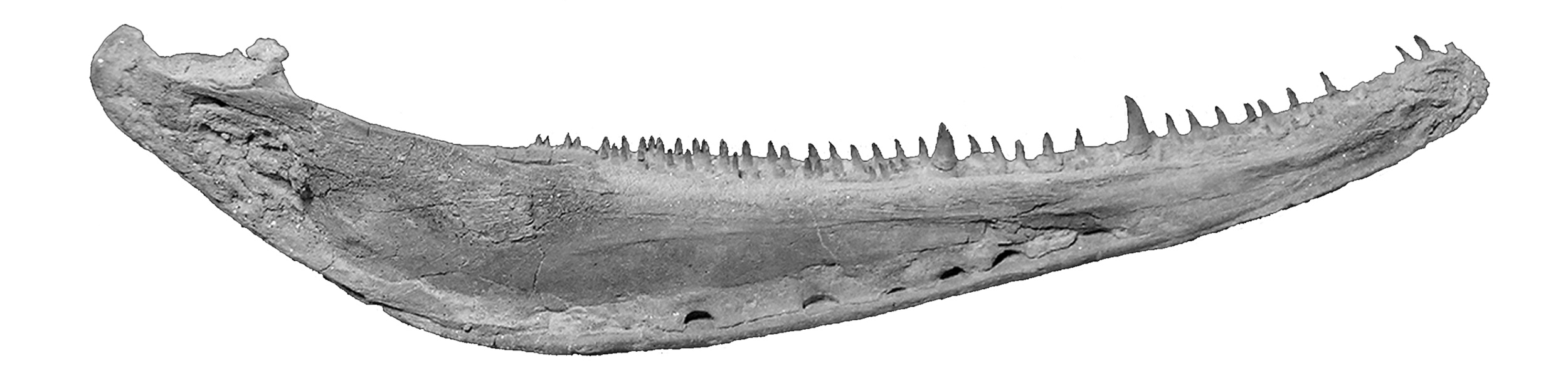
New exquisitely preserved fossils from Latvia cast light on a key event in our own evolutionary history, when our ancestors left the water and ventured onto land. Swedish researchers Per Ahlberg and Henning Blom from Uppsala University have reconstructed parts of the animal and explain the transformation in the new issue of Nature.

It has long been known that the first backboned land animals or "tetrapods" - the ancestors of amphibians, reptiles, birds and mammals, including ourselves - evolved from a group of fishes about 370 million years ago during the Devonian period. However, even though scientists had discovered fossils of tetrapod-like fishes and fish-like tetrapods from this period, these were still rather different from each other and did not give a complete picture of the intermediate steps in the transition.

A new analysis of Martian soil data led by University of California, Berkeley, geoscientists suggests that there was once enough water in the planet's atmosphere for a light drizzle or dew to hit the ground, leaving tell-tale signs of its interaction with the planet's surface.

The study's conclusion breaks from the more dominant view that the liquid water that once existed during the red planet's infancy came mainly in the form of upwelling groundwater rather than rain.

To come up with their conclusions, the UC Berkeley-led researchers used published measurements of soil from Mars that were taken by various NASA missions: Viking 1, Viking 2, Pathfinder, Spirit and Opportunity. These five missions provided information on soil from widely distant sites surveyed between 1976 and 2006.

A classified assessment by the National Intelligence Council (NIC) says climate change could threaten U.S. security in the next 20 years by causing political instability, mass movements of refugees, terrorism, or wars over water. The House Intelligence Committee will get a briefing today on the main findings and the full report will be released Monday, June 30th.

It's the perfect storm of buzzwords. This might be check and mate for environmental activists. Relating global warming to terrorism is a masterstroke of logical and cultural hand trickery but what can Big Oil do, deny there is terrorism? No one is more impacted by sea level rise than the Dutch so look for that military build-up in Holland over the next few years. The Belgians have it coming.

The assessment itself is confidential, because the other 6 billion of us won't be impacted by global warming or world wars over water, but thankfully some analyses used as raw material will be open, including a series of studies done by Columbia University's Center for International Earth Science Information Network (CIESIN). On commission from NIC, CIESIN ranked countries by looking at three climate risks: sea-level rise, increased water scarcity, and an aggregate measure of vulnerability based on projected temperature change, compared with nations' ability to adapt.

The sexual and feminist revolutions were supposed to free women to enjoy casual sex just as men always had but according to Professor Anne Campbell from Durham University in the UK (1), the negative feelings reported by women after one-night stands suggest that they are not well adapted to fleeting sexual encounters.

Men are more likely to reproduce and therefore to benefit from numerous short-term partners. For women, however, quality seems to be more important than quantity. Also for women, finding partners of high genetic quality is a stronger motivator than sheer number, and it is commonly believed that women are more willing to have casual sex when there is a chance of forming a long-term relationship.