








We all know that coffee can cure everything.

Now it turns out that even a coffee roasting process - torrefaction - could give biomass a power boost, increasing the energy content of some energy crops by up to 20 percent, making biofuels merely bad instead of awful.

The study, carried out by engineers from the University of Leeds, examined the combustion behavior of crops grown specifically for energy creation when put through the mild torrefaction thermal process usually associated with coffee production.

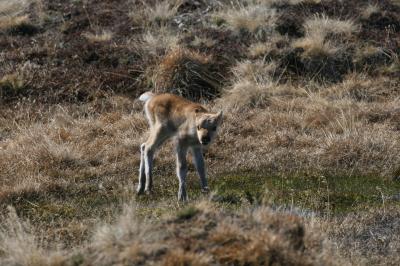
Plant-eating animals in highly seasonal environments, such as the Arctic, are struggling to locate nutritious food as a result of climate change, according to research in Proceedings of the Royal Society B.

The research, which focused on caribou, suggests that not only are these animals arriving at their breeding grounds too late in the season to enjoy the peak availability of food - the focus of previous research by Post - but they also are suffering from a reduced ability to locate the few high-quality plants that remain before these plants, too, become unavailable.

The team focused their research on caribou in West Greenland as an example of an herbivore species in a seasonal environment. Closely related to wild reindeer, caribou are dependent on plants for all their energy and nutrients. In the spring, they switch from eating lichens buried beneath the snow to munching the new growth of willows, sedges, and flowering tundra herbs. As the birth season approaches, they are cued by increasing daylight to migrate into areas where this newly-emergent food is plentiful.

Astronomers have seen the aftermath of spectacular stellar explosions known as supernovae before, but until now no one has witnessed a star dying in real time. While looking at another object in the spiral galaxy NGC 2770, using NASA’s orbiting Swift telescope, Carnegie-Princeton fellows* Alicia Soderberg and Edo Berger detected an extremely luminous blast of X-rays released by a supernova explosion.

They alerted 8 other orbiting and on-ground telescopes to turn their eyes on this first-of-its-kind event.

“We were in the right place, at the right time, with the right telescope on January 9th and witnessed history,” remarked Soderberg. “We were looking at another, older supernova in the galaxy, when the one now known as SN 2008D went off. We would have missed it if it weren’t for Swift’s real-time capabilities, wide field of view, and numerous instruments.”

New research by the Gladstone Institutes of Cardiovascular Disease (GICD) and the University of California, San Francisco (UCSF), has revealed the genetic determinants of fat storage in cells, which may lead to a new understanding of and potential treatments for obesity, diabetes, and heart disease. While scientists have long understood that lipid droplets contribute to fat build up in cells, the genes involved in droplet biology have been a focus of extensive research.

In a study published in Nature, scientists in the laboratories of Drs. Robert V. Farese, Jr., of Gladstone and UCSF, and Peter Walter, of UCSF, devised a genetic screen to identify genes responsible for fat storage in cell of fruit flies, and potentially other species.

New research in the Society of Chemical Industry’s Journal of the Science of Food and Agriculture shows that oregano oil works as well as synthetic insecticides to combat infestation by a common beetle, Rhizoppertha dominica, found in stored cereals.

Not only does oregano oil work as well as synthetic versions but it has none of the associated side effects of synthetic insecticides on the environment.

Growing resistance to synthetic insecticides combined with potential environmental damage and new government directives on changes to the way chemicals are registered means that scientists are increasingly looking at natural alternatives that can be produced in the large scale quantities needed for agricultural industry use.

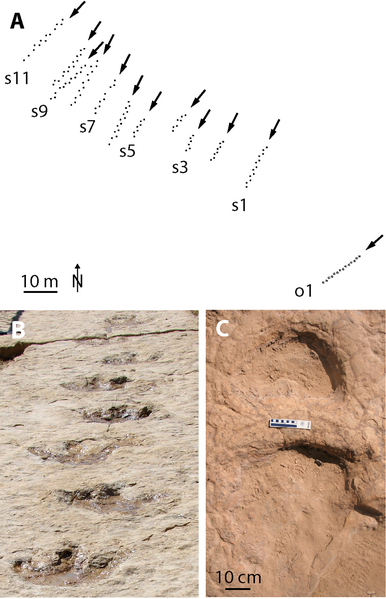
Scientists have reported evidence of a large ornithopod dinosaur, as well as a herd of 11 sauropods, walking along a Mesozoic coastal mudflat in what is now the Republic of Yemen - the first dinosaur tracks on the Arabian Peninsula.

The finding also is an excellent example of dinosaur herding behavior, the researchers report. The site preserved footprints of 11 small and large sauropods — long-necked, herbivorous dinosaurs that lived in the Jurassic and Cretaceous periods — traveling together at the same speed.

“No dinosaur trackways had been found in this area previously. It’s really a blank spot on the map,” said Anne Schulp of the Maastricht Museum of Natural History in The Netherlands. He conducted the study with Ohio University paleontologist Nancy Stevens and Mohammed Al-Wosabi of Sana’a University in Yemen.

In the perpetual fight over evolution in public schools, there is good news and bad news. The good news is that supporters of science education have largely been successful in shutting down creationist attempts to undermine evolution through state legislatures and state school boards. While there is still mischief going on in many state legislatures, these efforts rarely go anywhere, thanks to vigilance by supporters of good science education. An essay in PLoS Biology today argues that, at the state level, things are going well:

At this time, not a single state uses its content standards to explicitly promote ID or creationism. School boards are monitored by organizations like the National Center for Science Education, by state academies of science, and by local scientific and professional organizations. As a result, few state school boards can formally consider measures like the one adopted in Dover without scrutiny and challenge from organizations representing the scientific profession.

But here comes the bad news:

There are many reasons to believe that scientists are winning in the courts, but losing in the classroom.

A segment on ABC’s Good Morning America May 19 caught my attention, so much so that I spent a good chunk of time attempting to find research to back up the claims. The idea itself seems to be obvious – if you have a neurological disorder affecting your brain, you should examine the brain in order to figure out exactly what’s going on to figure out how to best treat the problem, right? I am not a neurologist, so my thinking could be flawed. A comment by the doctor featured in the segment made sense to me, though: diagnosing children with behavioral disorders like ADHD and autism without looking at their brains is like trying to diagnose heart problems without actually looking at the heart.

Sensitivity to reward loss is an indicator of animal emotion and welfare, say scientists at Bristol University Veterinary School.

Rats housed in standard conditions show a stronger response to the loss of an expected food reward than those housed in enriched conditions, perhaps indicating a more negative emotional state, according to the new research by published in this week's issue of Royal Society Biology Letters.

The researchers have developed a new approach to the measurement of animal emotional states based on findings from human psychology that emotions affect information processing. In general, people are more sensitive to reward losses than gains, but depressed people are particularly sensitive to losses. The researchers wanted to know whether animals' sensitivity to reward loss might also be related to their emotional state.

Discovered nearly 20 years ago, carbon nanotubes have been described as the wonder material of the 21st Century. Light as plastic and stronger that steel, they are being developed for use in new drugs, energy-efficient batteries and futuristic electronics. A major study published today suggests some forms of carbon nanotubes, the poster children for the “nanotechnology revolution”, could be as harmful as asbestos if inhaled in sufficient quantities.

The study used established methods to see if specific types of nanotubes have the potential to cause mesothelioma — a cancer of the lung lining that can take 30-40 years to appear following exposure. The results show that long, thin multi-walled carbon nanotubes that look like asbestos fibers, behave like asbestos fibers.

Since their discovery, questions have been raised about whether some of these nanoscale materials may cause harm and undermine a nascent market for all types of carbon nanotubes, including multi- and single-walled carbon nanotubes. Leading forecasting firms say sales of all nanotubes could reach $2 billion annually within the next four to seven years, according to an article in the U.S. publication Chemical & Engineering News.


