







A nationwide consortium has completed the first sequence-based map of structural variations in the human genome, giving scientists an overall picture of the large-scale differences in DNA between individuals. The project gives researchers a guide for further research into these structural differences, which are believed to play an important role in human health and disease.

The project involved sequencing the genomes of eight people from a diverse set of ethnic backgrounds: four individuals of African descent, two of Asian descent, and two of European background.

The researchers created what's called a clone map, taking multiple copies of each of the eight genomes and breaking them into numerous segments of about 40,000 base pairs, which they then fit back together based on the human reference genome. They searched for structural differences that ranged in size from a few thousand to a few million base pairs. Base pairs are one of the basic units of information on the human genome.

Whose Genome?

Whose Genome?

Apr 30 2008 | comment(s)

The term "genome" is oft-heard but seldom defined, and indeed has more than one meaning. Little wonder, then, that discussions about genome sequences and comparisons thereof can leave otherwise interested audiences more frustrated than enlightened. "What is a genome?" and "whose genome was sequenced?" are legitimate questions, and what follows is an attempt at clarification that is, by necessity, as much philosophical as scientific.

Definition #1: In a broad sense, a genome can be considered as the collective set of genes, non-coding DNA sequences, and all their variants that are located within the chromosomes of members of a given species.

Here we go again, just this morning the Florida House of Representatives passed a bill that directs teachers to engage in “critical analysis” of evolution in public schools. The bill’s chief sponsor, Republican Alan Hays of Umatilla, says that evolution “has holes in it,” and that “no one has any record -- no fossils have been found.” That will come as a big shock to the thousands of natural history museums around the world, displaying hundreds of thousands of fossils.

Fungi produce a number of natural products. Some are potent toxins, like the amanitins primarily responsible for the toxicity of the death cap fungus. Others are life-saving drugs such as penicillin. Because of that diversity, the genetics of fungi have generated much interest in recent years.

Many fungi have a wealth of genes encoding for far more natural products than they actually produce, says Robert Cichewicz and colleagues at the University of Oklahoma, Norman. The explanation is thought to be that when fungi do not need certain compounds, they inhibit the transcription of the DNA that codes for the proteins that make them, preventing their biosynthesis.

Knowing what these mystery compounds are could be very important for the development of new medicines, as well as for helping us to understand the ecological roles that fungi play, he says.

In a new study published in Organic & Biomolecular Chemistry they have shown that metabolic pathways that are normally ‘silent’ can be re-activated to make new compounds.

Research by Yale scientists shows that males and females have essentially unisex brains — at least in flies — according to a recent report in Cell designed to identify factors that are responsible for sex differences in behavior.

The researchers showed that a courting “song and dance” routine that only male flies naturally perform — one wing is lifted and wiggled to make a humming “song” — can also be triggered in female flies by artificially stimulating particular brain cells that are present in both sexes. It isn’t what you’ve got — it’s how you use it, the authors say.

“It appears there is a largely bisexual or ‘unisex brain.’ Anatomically, the differences are subtle and a few critical switches make the difference between male and female behavior,” said senior author Gero Miesenboeck, formerly of Yale University and now at the University of Oxford.

A group of scientists from the Nutrition and Food Science Department from the Faculty of Pharmacy of the University of Granada have reported the beneficial effects of extra virgin olive oil on human health, determining in vitro and in vivo the antioxidant power that the examined extra virgin olive oil samples present. With this work, researchers have found a more effective method to establish the antioxidant capacity of extra virgin olive oil.

Research has been directed by doctors M. Carmen López Martínez, Herminia López García de La Serrana and José Javier Quesada Granados, and its main author is Cristina Samaniego Sánchez. The scientists have prepared four methods that let us know know the antioxidant capacity and the beneficial effect of the extra virgin olive oil obtained from olives of the Picual variety.

Scientists at The Australian National University are a step closer to understanding the rare Hartnup disorder after discovering a surprising link between blood pressure regulation and nutrition that could also help to shed light on intestinal and kidney function.

The team from the University’s School of Biochemistry and Molecular Biology together with colleagues from the University of Sydney set out to study nutrient uptake in the intestine and discovered an essential role of a protein called ACE2 in the process. ACE proteins cut off a small part of a precursor molecule generating a hormone, which regulates blood pressure. ACE inhibitors are widely prescribed drugs that reduce the risk of heart failure and protect against the long-term effects of diabetes.

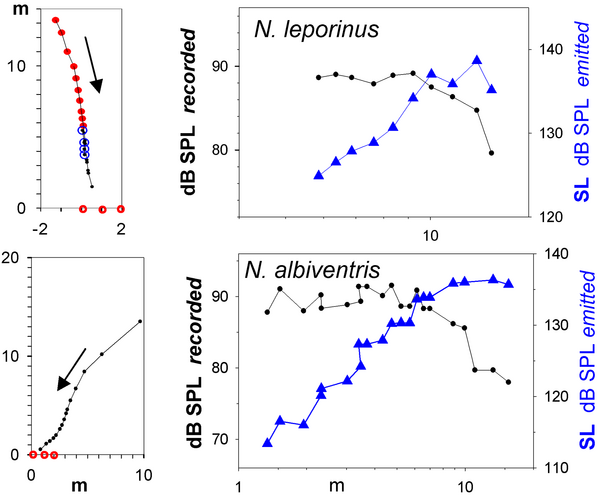
Using microphone arrays and photographic methods to reconstruct flight paths of bats in the field when they find and capture prey in air using their sonar system, Annemarie Surlykke from the Institute of Biology, SDU, Denmark, and her colleague, Elisabeth Kalko, from the University of Ulm, estimated the emitted sound intensity and found that bats emit exceptionally loud sounds exceeding 140 dB SPL (at 10 cm from the bat's mouth), which is the highest level reported so far for any animal in air.

For comparison, the level at a loud rock concert is 115-120 dB and for humans, the threshold of pain is around 120 dB.(1)

Metastasis, the spread of cancer throughout the body, can be explained by the fusion of a cancer cell with a white blood cell in the original tumor, according to Yale School of Medicine researchers, who say that this single event can set the stage for cancer’s migration to other parts of the body.

The studies, spanning 15 years, have revealed that the newly formed hybrid of the cancer cell and white blood cell adapts the white blood cell’s natural ability to migrate around the body, while going through the uncontrolled cell division of the original cancer cell. This causes a metastatic cell to emerge, which like a white blood cell, can migrate through tissue, enter the circulatory system and travel to other organs.

Researchers at the National Institute of Standards and Technology (NIST) and the Max Planck Institute for Physics in Germany believe they can achieve a significant increase in the accuracy of one of the fundamental constants of nature by boosting an electron to an orbit as far as possible from the atomic nucleus that binds it. The experiment could put the modern theory of the atom to the most stringent tests yet.

It could also mean more accurate identifications of elements in everything from stars to environmental pollutants.

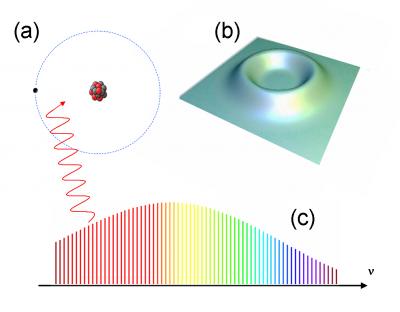
The physicists’ quarry is the Rydberg constant, the quantity that specifies the precise color of light that is emitted when an electron jumps from one energy level to another in an atom. The current value of the Rydberg constant comes from comparing theory and experiment for 23 different kinds of energy jumps in hydrogen and deuterium atoms.

