






A study by scientists from the Max Planck Institute for Human Cognitive and Brain Sciences in Leipzig, in collaboration with the Charite University Hospital and the Bernstein Center for Computational Neuroscience in Berlin says that several seconds before we consciously make a decision its outcome can be predicted by unconscious activity in the brain.

The researchers from the group of Professor John-Dylan Haynes used a brain scanner to investigate what happens in the human brain just before a decision is made. "Many processes in the brain occur automatically and without involvement of our consciousness. This prevents our mind from being overloaded by simple routine tasks. But when it comes to decisions we tend to assume they are made by our conscious mind. This is questioned by our current findings."

Even in new designs, it's not a bad idea to see how old Mother Nature does it. Using that principle, a group of researchers at the U.S. Department of Energy’s Ames Laboratory is mimicking bacteria to synthesize magnetic nanoparticles that could be used for drug targeting and delivery, in applications such as magnetic inks, high-density memory devices and magnetic seals in motors.

Commercial room-temperature synthesis of ferromagnetic nanoparticles is difficult because the particles form rapidly, resulting in agglomerated clusters of particles with less than ideal crystalline and magnetic properties. Size also matters. As particles get smaller, their magnetic properties, particularly with regard to temperature, also diminish.

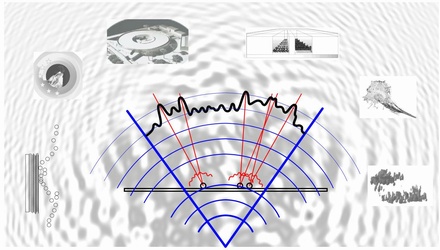
A team of European scientists has triggered electrical activity in thunderclouds for the first time - deliberately.

They did it by aiming high-power pulses of laser light into a thunderstorm. Next, they say, could be man-made lightning.

At the top of South Baldy Peak in New Mexico during two passing thunderstorms, the researchers used laser pulses to create plasma filaments that could conduct electricity akin to Benjamin Franklin's silk kite string. No air-to-ground lightning was triggered because the filaments were too short-lived, but the laser pulses generated discharges in the thunderclouds themselves.

The nature vs. nurture debate is familiar to most people, and modern conclusions usually predict a balance between the two. A new paper shows that there is a similar balance between inherited genes - nature - and the environment - nurture - in determining thousands of traits in yeast.

As we approach the age of personal genomics, in which each of us knows something about the genetic variations we carry, it is important to understand how genes and the environment interact in order to draw medically sound conclusions from the information available, e.g. whether exercise can reduce risks that are increased because of a genetic predisposition towards a certain illness.

Everything interacts with its environment - from the smallest sub-atomic particle to the largest galaxy. We are no different.

Interaction insinuates dynamic inter-relationship. Knowledge can be defined as "post-active" comprehension. The dynamic inter-relationship involved in the comprehension necessary to achieve knowledge is the tension between opposites, or what may be called reciprocal reciprocation (RR).

A RR consists of two diametrically opposing concepts which cannot exist without each other. They are mutually exclusive in concept and definition, yet mutually inclusive in the operation of comprehension.

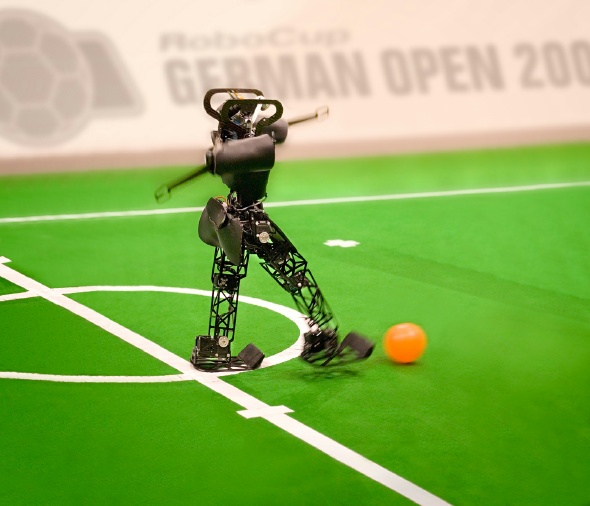
Robot soccer is an ambitious high-tech competition for universities, research institutes and industry. Several major tournaments are planned for 2008, the biggest of which is the ‘RoboCup German Open.’

From April 21-25, over 80 teams of researchers from more than 15 countries are expected to face off in Hall 25 at the Hannover Messe. In a series of soccer matches in several leagues, they will be putting the latest technologies on display. The tournament is being organized and carried out by the Fraunhofer Institute for Intelligent Analysis and Information Systems IAIS in Sankt Augustin.

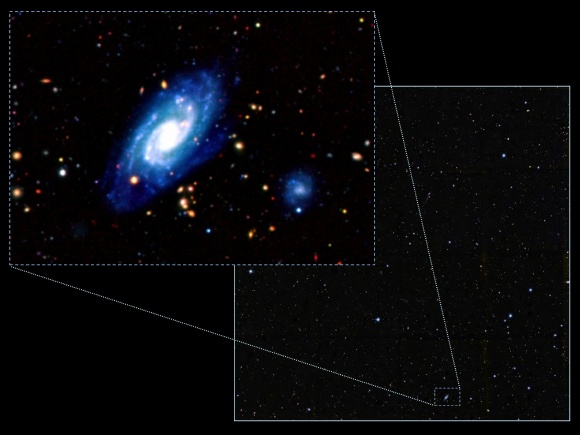
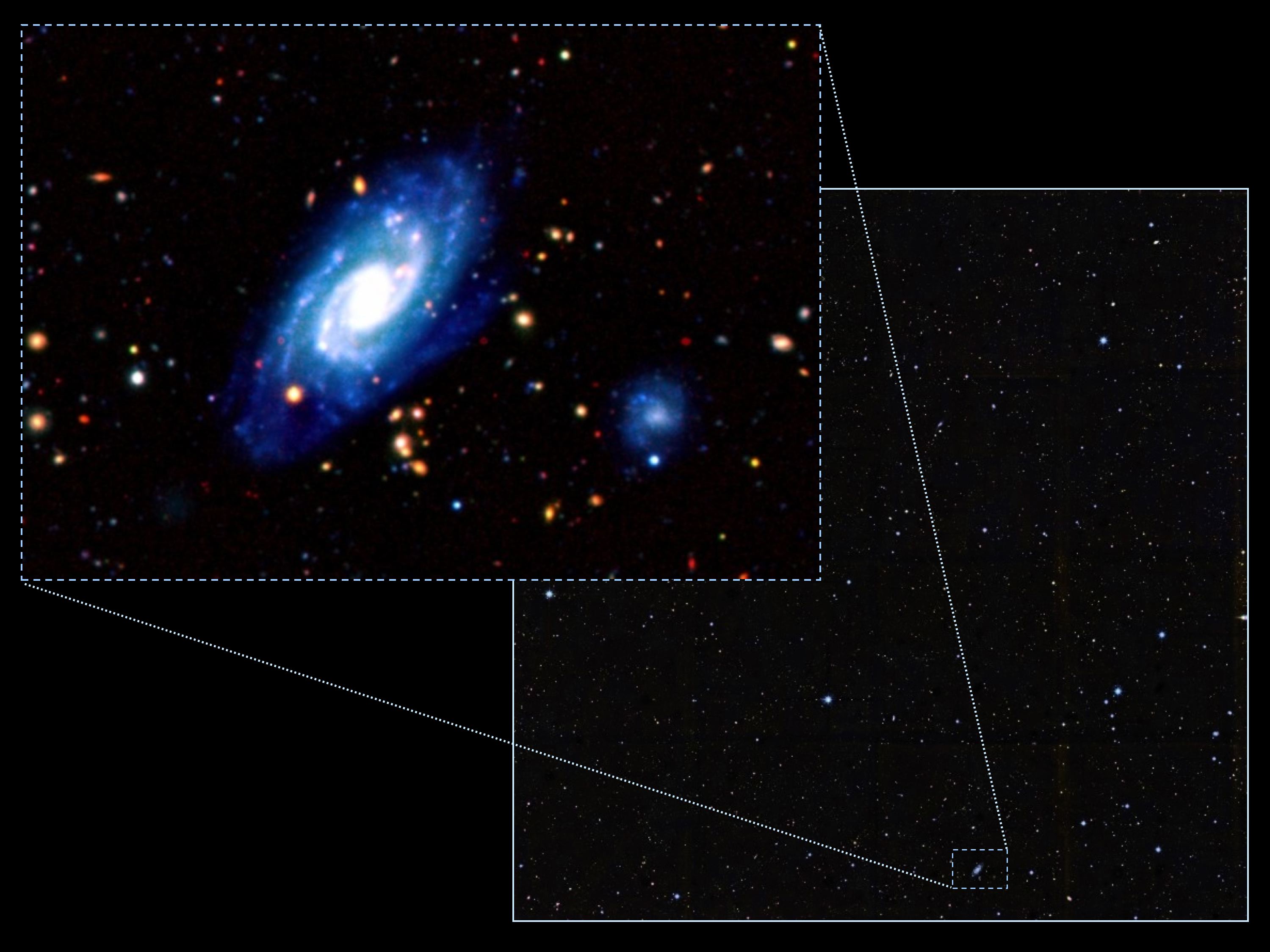
UK astronomers have produced the most sensitive infrared map of the distant Universe ever undertaken. Combining data over a period of three years, they have produced an image containing over 100,000 galaxies over an area four times the size of the full Moon. Some of the first results from the project were presented by Dr Sebastien Foucaud from the University of Nottingham at the RAS National Astronomy Meeting in Belfast.

Due to the finite speed of light, these observations allow astronomers to look back in time over 10 billion years, producing images of galaxies in the Universe's infancy. The image is so large and so deep that thousands of galaxies can be studied at these early epochs for the first time. By observing in the infrared, astronomers can now peer further back in time, since light from the most distant galaxies is shifted towards redder wavelengths as it travels through the expanding Universe.

In research published in Nature, researchers at Rockefeller University and the University of Tokyo state that insects have adopted a strategy to detect odors that is radically different from those of other organisms -- an unexpected and controversial finding that may dissolve a dominant ideology in the field.

They state that insects use fast-acting ion channels to smell odors, a major break with current ideology, and that this means Darwin's tree of life will need to be redrawn.

Since 1991, researchers assumed that all vertebrates and invertebrates smell odors by using a complicated biological apparatus much like a Rube Goldberg device. For instance, someone pushing a doorbell would set off a series of elaborate, somewhat wacky, steps that culminate in the rather simple task of opening the door.

The amount of oxygen available to a baby in the womb can affect their susceptibility to developing particular diseases later in life. Research presented at the annual Society for Endocrinology BES meeting in Harrogate shows that your risk of developing cardiovascular disease can be predetermined before birth, not only by your genes, but also by their interaction with the quality of the environment you experience in the womb.

Researchers at the University of Cambridge, led by Dr Dino Giussani, examined the role that oxygen availability in the womb plays in programming your susceptibility to different diseases. His group found that babies that don’t receive enough oxygen in the womb (e.g. due to pre-eclampsia or placental insufficiency) are more likely to suffer from cardiovascular disease when they are adult.

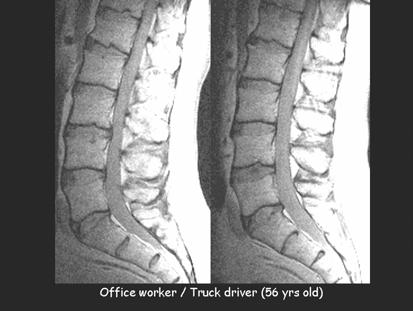
What do you learn by looking at the spines of hundreds of Finnish twins? If you are the international team of researchers behind the Twin Spine Study, you find compelling proof that back pain problems may be more a matter of genetics than physical strain.

The findings of the Twin Spine Study, an ongoing research program started in 1991, have led to a dramatic paradigm shift in the way disc degeneration is understood. Last month a paper presenting an overview of the Twin Spine Study’s multidisciplinary investigation into the root causes of disc degeneration received a Kappa Delta Award from the American Academy of Orthopaedic Surgeons, arguably the most prestigious annual award in musculoskeletal research.

