




Regeneration, the replacement of damaged or lost body parts, is a shared trait among some animal species – as any youngster who has cut an earthworm in half can attest to. But the repair of damaged tissue and organs in higher animals is also one of the primary goals of current stem cell research.

The common aquarium pet, zebrafish, is an excellent genetic model system, capable of regenerating its spinal cord, retina, heart and fins. A group of researchers writing in Genes & Development focused on fin regeneration, as it entails the coordination of a large number of different cells types to recreate the functional organ.

Their study reveals that microRNA depletion is a necessary step in tissue regeneration – a discovery with interesting implications for their use in regenerative medicine.

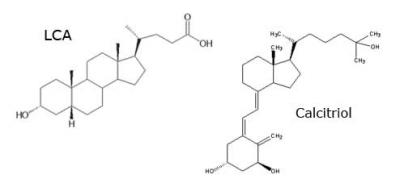
Bile acid derivatives can turn on the vitamin D receptor (VDR) without causing excess calcium buildup, researchers report, a finding that could lead to vitamin D therapies for conditions beyond just bone and skin disorders.

While calcium balance may be the most well-known role of vitamin D, this molecule –through VDR binding– regulates many functions including immunity and cell growth and thus has diverse therapeutic potential. However, while vitamin D-based drugs are effective against some cancers and microbial infections, the risk of excess blood calcium has limited their clinical use.

Recently, mathematician Daniel J. Madden and retired physicist Lee W. Jacobi found solutions to a puzzle that has been around for centuries - an infinite number of solutions for a puzzle known as 'Euler’s Equation of degree four.'

The equation is part of a branch of mathematics called number theory. Number theory deals with the properties of numbers and the way they relate to each other. It is filled with problems that can be likened to numerical puzzles.

“It’s like a puzzle: can you find four fourth powers that add up to another fourth power" Trying to answer that question is difficult because it is highly unlikely that someone would sit down and accidentally stumble upon something like that,” said Madden, an associate professor of mathematics at The University of Arizona in Tucson.

There are a number of interconnected factors that lead to the success or failure of any business so it is usually considered an impossible task to predict whether a company will sink or swim numerically but researchers in Taiwan using the principles of evolutionary biology say they have devised an approach to spotting when a company is likely to fail.

Ping-Chen Lin of the National Kaohsiung University of Applied Sciences in Kaohsiung and Jiah-Shing Chen of the National Central University, Jhongli, in Taiwan, also explain how their metric of the financial status of any company can be of interest not only to its owners and employees but to a range of creditors, stockholders, banks, and individual investors.

Writing in the Journal of the American Medical Association, a medical team from the University of Leicester say they have established a predictor for pregnant women who may have miscarriages and those who won’t.

The researchers measured the levels of a naturally occurring ‘cannabis’ (an endocannabinoid) known as anandamide in women who presented with a threatened miscarriage (bleeding in early pregnancy with a viable baby) and found that those who at the time of the test had significantly higher levels of anandamide subsequently miscarried.

It's taken weeks to get here but we've covered 13.7 billion years of cosmic quirks. We've gone from The Big Bang and the Birth of Culture through Supersynchrony And The Evolution Of Mass Culture to The Big Burp And The Evolution of Elements.

We've seen the beginning of mass behavior among quarks, the proto-memory of atoms, and a strange preview of culture long before life arose.

A new mathematical object was revealed yesterday during a lecture at the American Institute of Mathematics (AIM). Two researchers from the University of Bristol exhibited the first example of a third degree transcendental L-function. These L-functions encode deep underlying connections between many different areas of mathematics.

The news caused excitement at the AIM workshop attended by 25 of the world's leading analytic number theorists. The work is a joint project between Ce Bian and his adviser, Andrew Booker. Booker commented that, "This work was made possible by a combination of theoretical advances and the power of modern computers."

Fifty years have passed since the United States Department of Agriculture and the U.S. Army invented DEET to protect soldiers from disease-transmitting insects and in the process made civilian life outdoors nicer as well.

Despite its effectiveness, and decades of research, scientists never knew precisely how it worked.

By pinpointing DEET's molecular target in insects, researchers at Rockefeller University have shown that DEET acts like a 'chemical cloak', masking human odors that blood-feeding insects find attractive. This research makes it possible to improve the repellent properties of DEET and also make it a safer chemical.

New data has indicated that in rats, "male" hormones drive the decision to become a male during a window of time before male genitalia develop, and that blocking "male" hormones during this time caused male genitalia birth defects.

These defects were associated with a decreased ano-genital distance, leading to the suggestion that measuring human neonatal AGD could provide a noninvasive method to predict those at risk of developing male genitalia birth defects.

Cryptorchidism, the absence in the scrotum of one or both testes (usually because of the failure of the testis to descend), and hypospadias, the abnormal positioning of the opening of the urethra, are common birth defects of the male genitalia and are risk factors for the adult-onset disorders of low sperm count and testicular cancer.

Better regulation is urgently needed for genetic tests, particularly those marketed directly to the public, argue researchers in this week’s BMJ.

In the past 18 months, studies have identified dozens of inherited DNA variations associated with common conditions such as heart attacks, diabetes and asthma, write Professor David Melzer and colleagues

In many cases, these findings provide insight on the cause of the disease, but clinical applications are still mostly unclear. Much work is now needed to identify and evaluate each potential clinical application. Yet, although the work of translating discovery into evidence based practice is just beginning, several companies have already marketed tests, many directly to the public.

