




Once considered rare, mitochondrial diseases are now thought to affect as many as one person in 5,000. New research in this area hopes to open up more opportunities for predicting a child's risk of developing a mitochondrial disease which can cause muscle weakness, diabetes, strokes, heart failure and epilepsy.

All human and animal cells contain many mitochondria, which are involved in energy production within the body. Mitochondria have their own genetic information, known as mitochondrial DNA, or mtDNA, which is inherited.

The newly discovered asteroid 2007 TU24 is passing within 1.4 lunar distances, or 334,000 miles, of Earth today.

The asteroid, estimated at between 150 and 600 meters in diameter, was discovered by the University of Arizona’s Catalina Sky Survey in October 2007. It poses no threat to Earth, but its near approach gives astronomers a golden opportunity to learn more about potentially hazardous near-Earth objects. And conspiracy theorists a chance to speculate on NASA.

Some people are genuinely concerned about this asteroid causing an End of Life event on Earth. Not to worry.

Scientific and Technical Aerospace Reports (STAR) is an online publication listing citations and abstracts of NASA and worldwide aerospace-related research. Updated biweekly, STAR highlights the most recent additions to the NASA scientific and technical information knowledge base.


for more information visit : http://www.sti.nasa.gov/Pubs/star

A University of Rochester scientist discovered that the toxins in cigarette smoke wipe out a gene that plays a vital role in protecting the body from the effects of premature aging. Without this gene we not only lose a bit of youthfulness – but the lungs are left open to destructive inflammation and diseases such as chronic obstructive pulmonary disease (COPD) and lung cancer.

By identifying the Sirtuin (SIRT1) gene’s role in pulmonary disease, scientists also hope to find ways to restore it and jump-start lung healing. They’ve begun testing the powerful antioxidant resveratrol, which is extracted from red grape skins, to develop a treatment to target SIRT1 and reverse lung damage, or at least enhance the way standard COPD therapies work.

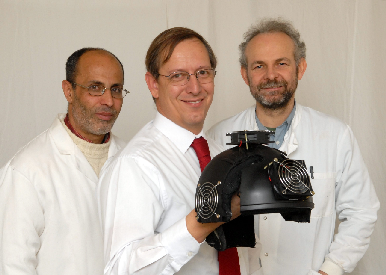
Pioneering research at the University of Sunderland has shown that regular exposure to safe low level infra-red light can improve learning performance and kick-start the cognitive function of the brain.

The results are a scientific breakthrough as to date medical treatments for dementia can only slow down brain deterioration and now human trials are to start to see if the treatment could provide a cure to illnesses like Alzheimers.

Independent research carried out at Sunderland has demonstrated that low power infra-red (1072nm) can improve the learning performance. The low levels of infra-red light used are completely safe and occur naturally in sunlight.

In transportation, road traffic contributes the most to global warming, aviation is second, railways are negligible and shipping actually has a net cooling effect on the earth’s climate, according to a study published recently.

But we can't simply switch to shipping and cure global warming. Shipping emits large portions of SO2 and NOx, which both have cooling effects, but this effect will diminish as the gases don’t live long in the atmosphere. After a few decades, the long-lived CO2 will dominate, giving shipping a warming effect in the long run.

From Bora Zivkovic's A Blog around the Clock:

You’re more likely to give things a favorable evaluation when you’re happy and a negative evaluation when you’re sad. But how does mood influence your choices among items?

A new study in the February issue of the Journal of Consumer Research people finds that consumers in a good mood are more likely than unhappy consumers to choose the first item they see, especially if all the choices are more or less the same.

“It is surprising that little research has been done to examine how affect influences comparisons and choices,” say Cheng Qiu (University of Hong Kong) and Catherine W. M. Yeung (National University of Singapore).

We've been waiting for a good personal jet pack system since seeing Sean Connery strap on that Bell-Textron thing in the opening sequence of Thunderball.

Thunderbolt Aerosystems founder Carmelo "Nino" Amarena must have seen that movie too because when he decided to try and shorten the grueling commute to his Bay Area office, he came up with what he says is a practical and economical personal air vehicle - one that won't blow up on your back like those hydrogen peroxide-powered prototypes of the early 1960s.

Don't get too excited just yet if you're a big guy. While the new version can stay aloft for up to 75 seconds, a 300% increase over what other systems offer, and go 65 MPH, it's limited to a 160 lb. man and a laptop. See it in action here:

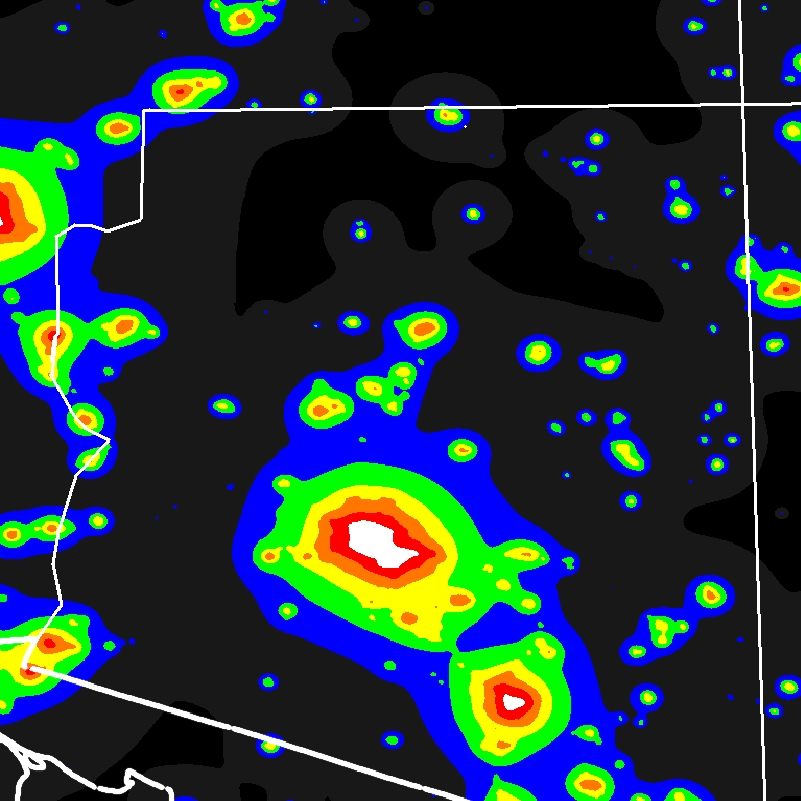
A new report by the Arizona Arts, Sciences, and Technology Academy (AASTA) found that research in astronomy, planetary sciences, and space sciences (APSS) pumped over $250 million into Arizona’s economy in 2006 alone.

That's real money but it's not all balloons and ponies for Arizona. There are threats to that economic engine and it's what you can probably guess - the instability of federal funding and competition from other locations - but it's also things you might not guess, like light pollution from residential and commercial development and lingering memories of environmental and political activism.

