






Traditional gene therapy has focused on supplying a normal copy of a faulty gene. RNAi turns off a problematic gene. These contrasting approaches share some of the same techniques and challenges, including delivery of a therapeutic gene or siRNA into cells. RNA interference (RNAi) represents an innovative new strategy for using small RNA molecules to silence specific genes associated with disease processes.

At least six clinical trials using RNA interference (RNAi) have been approved, “with many more coming down the pipeline,” according to the Editorial by Mark A. Kay, MD, PhD, an Associate Editor of Human Gene Therapy and the Dennis Farrey Family Professor in Pediatrics and Professor of Genetics at Stanford University School of Medicine.

Quick use of fingertips is common for anyone text messaging on their cell phone but researchers at the University of Southern California say that this seemingly trivial action is the result of a complex neuro-motor-mechanical process orchestrated with precision timing by the brain, nervous system and muscles of the hand.

USC Viterbi School of Engineering biomedical engineer Francisco Valero-Cuevas is working to understand the biological, neurological and mechanical features of the human hand that enable dexterous manipulation and makes it possible for a person to grasp and crack an egg, fasten a button, or fumble with a cell phone to answer a call.

Scientists at the University of Liverpool have found that field mice have evolved a unique way of ensuring faster fertilization, a phenomenon which could explain some cases of infertility in humans.

The team, in collaboration with Charles University, Prague, found that field mice sacrifice some of their immunity protection in favor of a more rapid fertilization process. This occurs due to the absence of a protein, called CD46. Present in both animals and humans, it helps protect the body’s cells from attack by its immune system. Over time, field mice have lost the ability to produce this protein, resulting in instability of a cap-like structure, called the acrosome, present over the head of the sperm.

People love to find things on Mars. Sometimes it's a face, and sometimes it's a really happy face. Other times it's pyramids or even DNA.

This time, it's Bigfoot.

The Mars exploration rover, Spirit, took this picture in late 2007. Launched in June, 2003, Spirit is a solar-powered explorer that is walking along the surface of Mars to see what we can learn about its geological history.

Malaria is a leading killer in Africa and other developing countries, claiming more than 1 million lives each year, most of them children.

A small clinical trial conducted by an international team of researchers in Mali has found that a candidate malaria vaccine was safe and elicited strong immune responses in the 40 Malian adults who received it.

The trial was the first to test this vaccine candidate, which is designed to block the malaria parasite from entering human blood cells, in a malaria-endemic country. Based on these promising results, the research team is now conducting trials of this vaccine in 400 Malian children aged 1 to 6 years.

I was puttering around the attic of the Cashominium, trying to sort through some old boxes, and I came across something you all might find interesting. Before any of this makes sense, I need to give you a little family background.

Like many, the Cash family has been here a long time (a long time for America, anyway - here a hundred years is a long time and in Europe a hundred miles is a long distance, so it's all perspective) but we are not blueblooded fancy-pants Mayflower descendants or anything like that. We arrived just over 160 years ago.

The price of oil topped $100 on January 2 and again on January 3. During the days since I have received emails and phone calls from regular readers, complimenting me on my correct prediction.
http://www.sciencedaily.com/releases/2008/01/080109173722.htm

The above address is a post on Science Daily about an antimatter cloud. This should be of interest to the hard core science types and SiFi fans like myself.

The post describes an antimatter cloud that surrounds the galactic center. This cloud is about 10,000 light-years across. The European Space Agency’s "Integral" satellite has provided clues to the possible origin of this antimatter cloud. This post is well worth reading.

Researchers at the University of Sheffield writing in Proceedings of the Royal Society B have shown that mothers are choosing to have fewer children in order to give their children the best start in life, but by doing so are going against millenia of human evolution. The research sheds new light on the decline of modern day fertility.

Researchers Duncan Gillespie, Dr Virpi Lummaa and Dr Andrew Russell, all from the University’s Department of Animal and Plant Sciences, studied Finnish church records from the 18th and 19th centuries and traced the reproductive histories of 437 women, their 2888 children and 6470 grandchildren.

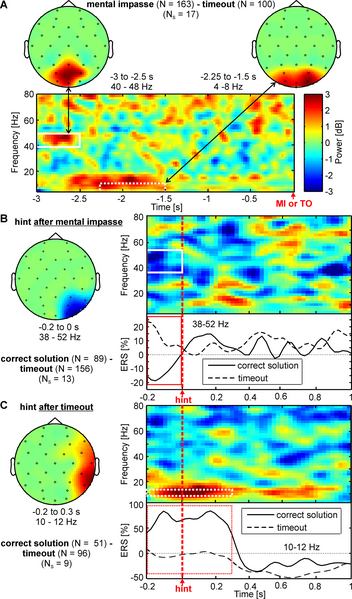
Cognitive insight, those flashes of brilliance when a mental breakthrough happens, are widely recognized but very little is known about their constituent cognitive components and underlying neural mechanisms. It is also unclear why trying too hard does more harm than good.

In a study published in PLoS ONE, researchers at Goldsmiths College, London, investigated brain rhythms and their dynamics while human volunteers solved verbal problems.

Often, the participants reached a state of mental block and could not progress further.

