Bisexuality in women appears to be a distinctive sexual orientation and not a transitional stage that some women adopt "on their way" to lesbianism or as a temporary phase in otherwise heterosexual behavior, according to new research in Developmental Psychology.

The study of 79 non-heterosexual women over 10 years found that bisexual women maintained a stable pattern of attraction to both sexes.

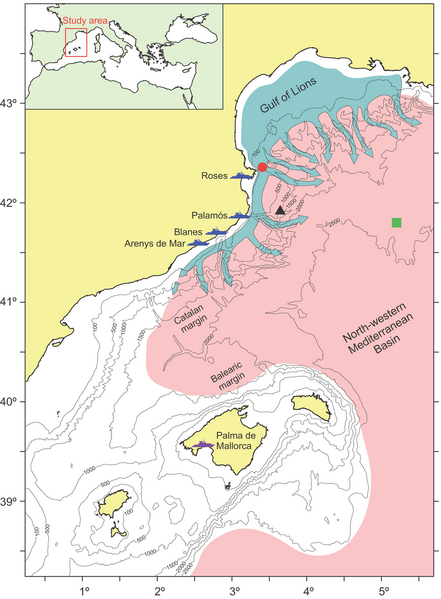
In an PLoS ONE article, Joan B. Company and colleagues at the Institut de Ciències del Mar (CSIC) in Spain describe a mechanism of interaction across ecosystems showing how a climate-driven phenomenon originated in shelf environments controls the biological processes of a deep-sea living resource.

The progressive depletion of world fisheries is one of the key socio-economical issues of the forthcoming century. However, amid this worrying scenario, Company’s study demonstrates how a climate-induced phenomenon occurring at a decadal time-scale, such as the formation of dense shelf waters and its subsequent downslope cascading can repeatedly reverse the general trend of overexploitation of a deep-sea living resource.

It's possible to generate energy by growing plant material and burning it. If managed well, most of the carbon released by burning the material will be captured by the growing plants, and so have a low impact on overall levels of atmospheric carbon dioxide.

A better solution is using the growing plants to help solve other environmental problems.

One set of systems currently running in Sweden grows willow trees and irrigates them with sewage effluent. This helps purify the sewage outflow at the same time as providing fuel.

A fundamental difference in the way males and females respond to chronic liver disease at the genetic level helps explain why men are more prone to liver cancer, according to MIT researchers.

“This is the first genome-wide study that helps explain why there is such a gender effect in a cancer of a nonreproductive organ, where you wouldn't expect to see one,” said Arlin Rogers, an MIT experimental pathologist and lead author of a paper that appeared last month in the journal Cancer Research.

Men develop liver cancer at twice the rate of women in the United States. In other countries, especially in Asia, the rate for men can be eight or 10 times that for women.

Members of the National Science Board today delivered to the President and the Congress Science and Engineering Indicators 2008 (SEI'08), the Board's biennial report on the state of science and engineering research and education in the United States. Called the "gold standard," it is the most comprehensive source of information on research and development conducted by universities, industry, the federal government and the international science and engineering enterprise.

The highlights; we spend a lot overall but not enough on basic research, the public supports science and spending, and researchers are perhaps a little too reliant on federal funding.

In addition to SEI'08, the Board, concerned that the data revealed disturbing trends with serious policy implications, published a companion piece, Research and Development: Essential Foundation for U.S. Competitiveness in a Global Economy. In this policy statement and in presentations in the U.S. House of Representatives, National Science Board Chairman Steven Beering, Subcommittee Chairman on SEI'08 Louis Lanzerotti and SEI'08 Subcommittee Member Arthur Reilly stressed the need for increased government and industry sharing of funding for basic research.

"These indicators come at an important time," said Chairman Beering. "The confluence of a range of indicators raises key questions about future U.S. high-technology industry's competitiveness in international markets and implications for highly skilled jobs at home."

The Board made three major recommendations:

By the time Congress mandated ethanol subsidies and usage in 2005, it was difficult to find anyone in the environmental community who thought it was a good idea - even Al Gore, who championed it for almost two decades, is against it now.

Worse, while in vogue it overshadowed something that was both more cost- and energy-effective; algae.

Microbiologists have always known that algae contains oil that can be turned into diesel fuel - and in better quantities than other alternatives. Soybeans produce about 50 gallons of oil per acre per year, and canola produces about 130. Algae, however, can produce about 4,000 gallons per acre a year. Algae requires only sunshine and non-drinkable water to grow.

In a ceremony at the National Federation of the Blind, NASA unveiled a new book that brings majestic images taken by its Great Observatories to the fingertips of the blind. The book will be available to the public through a wide variety of sources, including NASA libraries, the National Federation of the Blind, Library of Congress repositories, schools for the blind, libraries, museums, science centers and Ozone Publishing.

"Touch the Invisible Sky" is a 60-page book with color images of nebulae, stars, galaxies and some of the telescopes that captured the original pictures. Each image is embossed with lines, bumps and other textures. These raised patterns translate colors, shapes and other intricate details of the cosmic objects, allowing visually impaired people to experience them.

Probiotics, foods containing live 'friendly' bacteria that some evidence suggests helps in digestion, have a tangible effect on the metabolism, according to the results of a new study in the journal Molecular Systems Biology.

The research is the first to look in detail at how probiotics change the biochemistry of bugs known as gut microbes, which live in the gut and which play an important part in a person’s metabolic makeup.

In November 2007, Donald Kennedy, then-editor of the prestigious journal Science, announced that for the next five issues, each of the research articles would include a brief "author's summary" written in plain language.

Researchers from the Monell Chemical Senses Center have attempted to count the number of genes that contribute to obesity and body weight - and it isn't a pretty number.

The findings suggest that over 6,000 genes, almost 25 percent of the genome, could help determine an individual’s body weight.

“Reports describing the discovery of a new ‘obesity gene’ have become common in the scientific literature and also the popular press,” notes Monell behavioral geneticist Michael G. Tordoff, PhD, an author on the study. “Our results suggest that each newly discovered gene is just one of the many thousands that influence body weight, so a quick fix to the obesity problem is unlikely.”