


One of the most common human parasites, Toxoplasma gondii, uses a hormone lifted from the plant world to decide when to increase its numbers and when to remain dormant, researchers at Washington University School of Medicine in St. Louis have found.

The scientists report this week in Nature that they successfully blocked production of the molecule, known as abscisic acid (ABA), with a plant herbicide. Low doses of the herbicide prevented fatal T. gondii infection in mice.

"As a target for drug development, this pathway is very attractive for several reasons," says author L. David Sibley, Ph.D., professor of molecular microbiology. "For example, because of its many roles in plant biology, we already have several inhibitors for it.

Many researchers have tried to create a mathematical model of how cells pack together to form tissue, but most models have many different complicated factors, and no model is universal.

Researchers at Northwestern University have now created a functional equation -- using only two parameters -- to show how cells pack together to create the eyes of Drosophila, better known as the fruit fly. They hope that the pared-down equation can be applied to different kinds of tissues, leading to advances in regenerative medicine.

Sascha Hilgenfeldt, associate professor of engineering sciences and applied mathematics and of mechanical engineering in the McCormick School of Engineering and Applied Science, teamed up with Richard W.

The new journal Evolution: Education and Outreach is now available online and free to download. My contribution to the first issue is "Evolution as fact, theory, and path". Feel free to distribute this and any other papers from the journal as widely as you like, but please link to the journal website rather than re-posting papers.

There are now several available articles that discuss this important subject:
Alzheimer's disease (AD) affects as much as 10% of the world population above 65 years of age but after years of research it is still not understood exactly how the disease appears and, even less, how to treat it. But work just published in The EMBO Journal opens the door to new ways for disease intervention by showing that lipids found throughout the brain can dissolve the large insoluble protein plaques characteristic of the disease, releasing their soluble protofibrillar components, and also that it is the soluble components and not the insoluble plaques that provoke neural death.
A recent issue of Genome Research contains a report of the cat genome sequence (Pontius et al. 2007), adding Felis catus to the rapidly growing collection of animal genome sequences. One of the reasons that the number of mammal sequences is increasing so quickly is that there have been reduced standards for sequence coverage. To wit, the cat is one of 24 mammal species approved by NHGRI for "low redundancy" sequencing, meaning that the sequence will be covered only 2-fold (vs. up to 7x coverage in dog, chimp, human, mouse, and rat).
Of all the 'Greatest Scientific Breakthroughs' of 2007 heralded in the pages of various newspapers and magazines this past month, perhaps the most unsung one is the entrance of next-generation DNA sequencing onto the stage of serious research. Prior to this year, the latest sequencing technologies were limited in their usefulness and accessibility due to their cost and a steep technical learning curve. That's now changing, and a group of recent research papers gives us a hint of just how powerful this new technology is going to be. Not only will next-generation sequencing be the biggest change in genomics since the advent of microarray technology, but it may also prove to be the first genome-scale technology to become part of every-day medical practice.

Recently there has been some discussion in the blogosphere about student-advisor relationships in science.

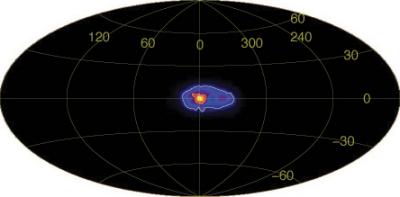
Four years of observations from the European Space Agency’s Integral (INTErnational Gamma-Ray Astrophysics Laboratory) satellite may have cleared up one of the most vexing mysteries in our Milky Way: the origin of a giant cloud of antimatter surrounding the galactic center.

As reported by an international team in the January 10 issue of Nature, Integral found that the cloud extends farther on the western side of the galactic center than it does on the eastern side.

When people in a University of North Carolina at Chapel Hill study were told that anorexia nervosa had a biological or genetics-based cause they were less likely to put any personal accountability on anorexics than when they were told it was personal or cultural.

That makes sense. A disease that is egalitarian and exculpatory like a genetics or biological mutation is different than a syndrome. We can't blame kids with Autism for having Autism, though we do teach them to moderate their behavior - and that's a key point.

Anorexia nervosa is characterized by an obsessive desire to be thin and results in self-starvation and related medical complications.

The last fish you ate probably came from the Bering Sea. At present, the Bering Sea provides roughly half the fish caught in U.S. waters each year and nearly a third caught worldwide.

While the basic dynamics of a 'greenhouse ocean' are not well understood, marine ecologists writing in Marine Ecology Progress Series expressed concern that, if their predictions are true, a warming ocean would lead to a much different ecology there.

“All the fish that ends up in McDonald’s, fish sandwiches — that’s all Bering Sea fish,” said USC marine ecologist Dave Hutchins.

