




Methadone is a possible cause of sudden cardiac death even when it isn’t overdosed but is taken at therapeutic levels primarily for relief of chronic pain or drug addiction withdrawal, a new study by Oregon Health & Science University researchers suggests.

The study’s findings, described in the January 2008 issue of The American Journal of Medicine, are based on an evaluation of all sudden cardiac deaths in the greater Portland, Ore., metropolitan area between 2002 and 2006 where detailed autopsies were performed.

The analysis was based on a comparison of two case groups. One group consisted of 22 sudden cardiac deaths in which toxicology screens turned up 1 milligram or less of methadone — defined as a therapeutic level.

As Americans increasingly seek a “quick fix” to physical and mental ailments, psychoanalysts can be caught in the crossfire of a debate about the potential benefits and drawbacks of including medication in their treatment plans.

A panel discussion entitled “The Uses of Medications in Psychoanalysis: What We Know; What is Uncertain,” will be led by internationally renowned psychoanalyst Glen O. Gabbard, M.D., at the American Psychoanalytic Association’s 2008 Winter Meeting on Friday, January 18, 2008, from 2-5 p.m. at the Waldorf Astoria Hotel in New York.

Taking the position for a cautious approach to the inclusion of medications in analysis will be Stephen D. Purcell, M.D. Adele Tutter, M.D., Ph.D., is more optimistic about the inclusion of medications in treatment.

Even a few days into New Year’s resolutions to exercise more, people are finding reasons to skip workouts even though the benefits of a healthy lifestyle are well-known: In addition to weight loss, exercise has been linked to reducing symptoms of depression and also to lower risk of heart disease.

If the temptation to sit on the couch and watch TV instead of going for a short jog is just too great you’re not alone, but preferring to be sedentary is not an innate human trait. Most children are quite active and people generally stay active all the way through high school but many stop being active when they reach college.

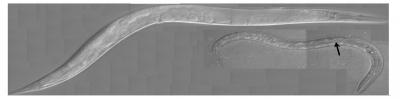
Muscles usually contract when a neurotransmitter molecule is released from nerve cells onto muscle cells. But University of Utah scientists discovered that bare subatomic protons can act like larger, more complex neurotransmitters, making gut muscles contract in tiny round worms so the worms can poop.

“There are relatively few molecules that serve as neurotransmitters to trigger electrical changes in cells. Protons are the only new members of this group in nearly 20 years,” says biology Professor Erik Jorgensen, scientific director of the Brain Institute at the University of Utah and senior author of the study in the Jan.

You've read plenty of articles recently about visual invisibility but acoustic invisibility was considered beyond the reach of science.

Now Duke University engineers say a three-dimensional sound cloak is possible, at least in theory, by making sound waves travel distortion-free around an acousic veil the way microwaves do for a visual one.

"We've devised a recipe for an acoustic material that would essentially open up a hole in space and make something inside that hole disappear from sound waves," said Steven Cummer, Jeffrey N. Vinik Associate Professor of Electrical and Computer Engineering at Duke's Pratt School of Engineering.

NASA will debut a new book for blind readers at a media event and reception Jan. 15. The agency will unveil "Touch the Invisible Sky," which gives blind readers the ability to experience cosmic images from the agency's space-based observatories and other telescopes on the ground.

The event begins at 10 a.m. EST at the National Federation of the Blind, 1800 Johnson Street, Baltimore. Media will have the opportunity to ask the authors questions and view science experiments related to NASA's Great Observatories.

"Touch the Invisible Sky" is accessible to both blind and sighted readers. The book presents celestial objects as they appear through visible-light telescopes and in different spectral regions that are invisible to the naked eye.

It's political primary season and you know what that means, right? Right, it's time to rent movies and think about something else.

But you wouldn't be here if you could watch just any movies, you'd be a Huffington Post reader or Glenn Beck listener or whatever it is those people do that gets so much more attention than actual quality writing, like this site. You have more sense than that so you like movies with scientists; and especially scientists who could be hottie supermodels, mostly because they don't know anything about science.

In compiling a list like this, I am torn and maybe you will be also. Great science movies and attractive women don't always go together.

Continued from Part 2:
I interviewed Gary Taubes by phone a few weeks ago, shortly after he gave a talk about the main ideas of his new book — Good Calories, Bad Calories — at UC Berkeley. The interview lasted about 2 hours. This is part 3.

SETH: You wrote that New York Times piece, and from my take on it, you had a bunch of evidence, and then you got a book contract. Is it fair to say that you found out that what you wrote in the piece was mostly right?

Stress, to put it bluntly, is bad for you. It can kill you, in fact. A study reveals that stress causes deterioration in everything from your gums to your heart and can make you more susceptible to everything from the common cold to cancer. Thanks to new research crossing the disciplines of psychology, medicine, neuroscience, and genetics, the mechanisms underlying the connection are rapidly becoming understood.

The first clues to the link between stress and health were provided in the 1930s by Hans Selye, the first scientist to apply the word “stress”— then simply an engineering term— to the strains experienced by living organisms in their struggles to adapt and cope with changing environments.

Researchers at UT Southwestern Medical Center are uncovering how brain cells are affected in Fragile X syndrome, the most common cause of inherited mental retardation and the most common genetic cause of autism.

“I think we’ve discovered a core mechanism underlying Fragile X syndrome," said Dr. Kimberly Huber, assistant professor of neuroscience and senior author of a study appearing in Wednesday’s edition of the Journal of Neuroscience.

Dr. Huber’s research with mice focuses on how Fragile X syndrome affects communication between cells in the hippocampus, a region of the brain that is involved in learning and memory.

