






A thin polymer bio-film that seals surgical wounds could make sutures a relic of medical history.

Measuring just 50 microns thick, the film is placed on a surgical wound and exposed to an infrared laser, which heats the film just enough to meld it and the tissue, thus perfectly sealing the wound.

Known as Surgilux, the device’s raw material is extracted from crab shells and has Food and Drug Administration approval in the US.

Every advance in memory storage devices presents a new marvel of just how much memory can be squeezed into very small spaces. Considering the potential of nanolasers being developed in Sakhrat Khizroev’s lab at the University of California, Riverside, things are about to get a lot smaller.

As reported in the latest issue of Technology Review, Khizroev is leading a team exploring lasers so tiny that they point to a future where a 10-terabit hard drive is only one-inch square.

A new study published in this week’s Christmas issue of the BMJ says that humor appears to develop from aggression caused by male hormones.

Does it mean men are funnier? Or that more aggressive people are funnier? It means men, especially aggressive men, think they are funnier, according to Professor Sam Shuster.

Planetary scientists have puzzled for years over an apparent contradiction on Mars. Abundant evidence points to an early warm, wet climate on the red planet, but there’s no sign of the widespread carbonate rocks, such as limestone, that should have formed in such a climate.

Now, a detailed analysis in the Dec. 21 issue of Science by MIT’s Maria T. Zuber and Itay Halevy and Daniel P. Schrag of Harvard University provides a possible answer to the mystery. In addition to being warmed by a greenhouse effect caused by carbon dioxide in the atmosphere, as on Earth, the early Mars may have had the greenhouse gas sulfur dioxide in its atmosphere. That would have interfered with the formation of carbonates, explaining their absence today.

Is the State of Texas about to offer Master of Science degrees in creationism? The Institute for Creation Research (ICR), an organization that officially believes the earth sprang into existence less than 10,000 years ago, has applied to offer a state-approved Master's program in science education. Last week, an official advisory committee recommended that the State of Texas approve the ICR's request to offer Master's degrees (read about it here and here). If this request is granted, the ICR has two years in which it can offer state-approved Master's degrees while seeking accreditation for its program from a recognized, outside accreditation organization. Coming on the heels of news that one of the state's science education officials was forced out of her job because she was not "neutral" about standing up for evolution education, this latest event suggests that creationism is about to again become a big issue in the Texas educational system.

With powerful instruments scouring the heavens, astronomers have found more than 240 planets in the past two decades, none likely to support Earth-like life, but as astronomers become more adept at finding planets orbiting other stars it’s natural to wonder if anybody is looking back. A team of astronomers has speculated at just what those alien eyes might see using technologies similar to those available to Earth’s astronomers.

“They would only be able to see Earth as a single pixel, rather than resolving it to take a picture,” said Eric Ford, a UF assistant professor of astronomy and one of five authors of the paper.

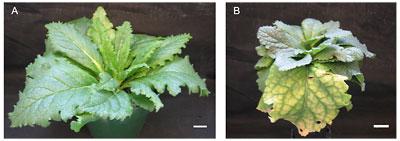
In normal plants, when sugars (made from water and carbon dioxide during photosynthesis) accumulate in the leaves, photosynthesis slows down, and the plant does not take in as much carbon dioxide from the air. Likewise, when the sugars move out of the leaves, the rate of photosynthesis and carbon intake increases.

How do many plants ship sugars from their leaves to flowers, roots, fruits and other parts of their structure? Using genetic engineering techniques, Cornell researchers have finally proven a long-standing theory of how this occurs.

The findings not only deepen understanding of basic plant biology but could one day allow researchers to genetically engineer plants with increased photosynthetic rates, yields and carbon dioxide intake.

Record-breaking amounts of ice-free water have deprived the Arctic of more of its natural "sunscreen" than ever in recent summers. The effect is so pronounced that sea surface temperatures rose to 5 C above average in one place this year, a high never before observed, says the oceanographer who has compiled the first-ever look at average sea surface temperatures for the region.

Such superwarming of surface waters can affect how thick ice grows back in the winter, as well as its ability to withstand melting the next summer, according to Michael Steele, an oceanographer with the University of Washington's Applied Physics Laboratory. Indeed, since September, the end of summer in the Arctic, winter freeze-up in some areas is two months later than usual.

Hydrogen is the fuel of the future. Unfortunately, one problem remains: Hydrogen is a gas and cannot easily be pumped into a tank like gasoline. Storage in the form of solid hydrides, chemical compounds of hydrogen and a metal or semimetal, are good storage materials in principle, but have not been well suited to automotive applications.

An American research team at the Ford Motor Company in Dearborn and the University of California, Los Angeles, has now developed a novel hydride that could be a useful starting point for the development of future automotive hydrogen-storage materials.

Did you know even bacteria get old? Scientists traditionally assumed that bacteria were immortal, since these single-celled organisms split into two apparently identical daughter cells, which in turn divide, and so on. We now believe that this is not true. Eric Stewart of Northeastern University, and his colleagues took fluorescent images of individual E. coli cells over ten generations. Each generation the E. coli cells divide down the middle, giving each daughter cell one new tip and an old tip from its mother, or grandmother, or some older ancestor.


