





Even comparatively low levels of air pollution boost the chances of an early death, suggests new research.

The researchers base their findings on long term monitoring of air quality in different electoral wards around Britain during different time periods, and national data on causes of death.

More than 5000 adults aged 30 and above were included in the study.

To assess more closely the impact of pollution on health, they divided the data into four chunks, spanning a total of 16 years each, starting in 1966-70 and ending in 1994-8.

The cause of low birth weights among African-American women has more to do with racism than with race, according to a report by an associate professor of pediatrics at the University of Illinois at Chicago.

Richard David says the quest for a "pre-term birth gene" that is now underway will be of no value in explaining low birth weights.

David and co-author James Collins Jr., professor of pediatrics at Northwestern University, compared birth weights of three groups of women: African American, whites and Africans who had moved to Illinois. Most African-American women are of 70 to 75 percent African descent.

Many scientists assume people have sex for simple and straightforward reasons such as to experience sexual pleasure or to reproduce, but new research at The University of Texas at Austin reveals hundreds of varied and complex motivations that range from the spiritual to the vengeful.

After conducting one of the most comprehensive studies on why people have sex, psychology researchers David Buss and Cindy Meston uncovered 237 motivations, which appear in the August issue of Archives of Sexual Behavior.

Excavations of an underwater Stone Age archaeological settlement dating back 8000 years are taking place at the National Oceanography Centre, Southampton.

Maritime archaeologists from the Hampshire and Wight Trust for Maritime Archaeology (HWTMA) have been working at the site just off the Isle of Wight coast. Divers working at depths of 11 metres have raised sections of the seabed, which have been brought to the NOCS laboratories for excavation.

The ALMA (Atacama Large Millimeter/submillimeter Array) Project is a giant, international observatory currently in construction on the high-altitude Chajnantor site in Chile, and composed initially of 66 high-precision telescopes, operating at wavelengths of 0.3 to 9.6 mm.

ALMA will be the forefront instrument for studying the cool universe - the relic radiation of the Big Bang, and the molecular gas and dust that constitute the very building blocks of stars, planetary systems, galaxies, and life itself.

Because ALMA will observe in the millimetre and submillimetre wavelengths the atmosphere above the telescope must be transparent. This requires a site that is high and dry.

Cows are having a difficult month.

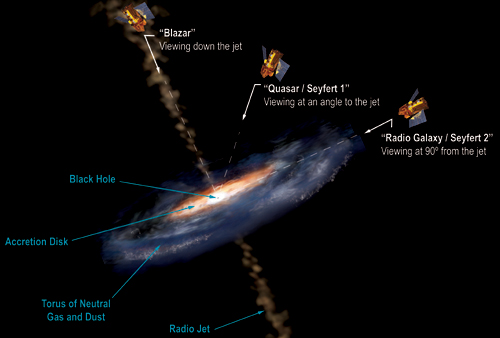
You’d think that astronomers would have found all the different classes of active galaxy nuclieu (AGN ) - after all, AGN such as quasars, blazars, and Seyfert galaxies are among the most luminous objects in our Universe, pouring out the energy of billions of stars from a region no larger than our solar system.

But a team has discovered that a relatively common class of AGN has escaped detection until now.

Human experimental psychologists (also called cognitive psychologists) are in a curious position. Their subject — the human brain — is obviously the most complicated thing studied by any science. Its components (neurons) are not only very numerous and densely-connected they are also very inaccessible. Moreover brains soak up their environments in a way that other objects of study do not. It isn’t impossible to do experiments, but it isn’t easy. You can’t keep a supply of humans in your lab, for example. The difficulty of human experimental psychology is the main reason I decided to study animal experimental psychology. But the complexity of the brain is not only a difficulty but also an advantage: It means there is the most to be learned.

Scientists here have developed new dye-sensitized solar cells (DSSCs) that get their pink color from a mixture of red dye and white metal oxide powder in materials that capture light.

Currently, the best of these new pink materials convert light to electricity with only half the efficiency of commercially-available silicon-based solar cells -- but they do so at only one quarter of the cost, said Yiying Wu, assistant professor of chemistry at Ohio State.

And Wu is hoping for even better.

"We believe that one day, DSSC efficiency can reach levels comparable to any solar cell," he said. "The major advantage of DSSCs is that the cost is low. That is why DSSCs are so interesting to us, and so important."

Limiting and labeling trans fats in food is not enough, according to Walter Willett, an epidemiologist and nutrition professor at the Harvard School of Public Health, who argues to food manufacturers that they should be banned altogether.

Willett was among dozens of speakers on the opening day of the Institute of Food Technologists Annual Meeting & Food Expo here, the world’s largest annual food science forum and exposition.

While some trans fats occur naturally in foods, most are the result of cooking or baking with hydrogenated oils. Those oils provide creamy textures that are enjoyable to eat and affect positively the shelf life and stability of many foods like baked goods.

