Cell migration, which is involved in wound healing, cancer and tumor growth, and embryonic growth and development, has been a topic of interest to mathematicians and biologists for decades. 

We don't know what dark matter is but we know it must be. And now, computer hypothetically, we know it a little better, thanks to new supercomputer simulations showing a possible evolution of our corner of the cosmos, the Local Group, from the Big Bang to the present day.

Surrounding the sun is a vast atmosphere of solar particles, through which magnetic fields swarm, solar flares erupt, and gigantic columns of material rise, fall and jostle each other around.  We call it the corona.

This corona, is even larger than thought, extending out some 5 million miles above the sun's surface *the equivalent of 12 solar radii), according to data from  NASA's Solar Terrestrial Relations Observatory. This has implications for NASA's upcoming Solar Probe Plus mission, which is due to launch in 2018 and will go closer to the sun than any man-made technology ever has.

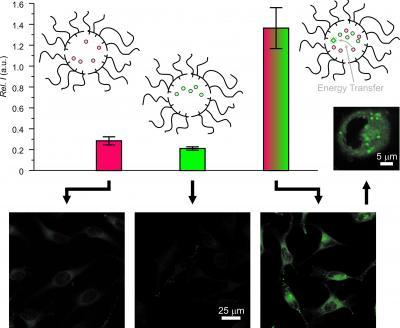
The world of "Fantastic Voyage" is rapidly approaching. Tiny devices are being used in therapeutic applications, and development of nanoparticles that can transport and deliver drugs to target cells in the human body is progressing also.

Recently, researchers created nanoparticles that under the right conditions, self-assemble – trapping complementary guest molecules within their structure. Like tiny submarines, these versatile nanocarriers can navigate in the watery environment surrounding cells and transport their guest molecules through the membrane of living cells to sequentially deliver their cargo.

People with persistent ringing in the ears – a condition known as tinnitus – process emotions differently than those with normal hearing, according to a new paper.

Tinnitus afflicts 50 million people in the United States, according to the American Tinnitus Association, and causes those with the condition to hear noises that aren't really there. These phantom sounds are not speech, but rather whooshing noises, train whistles, cricket noises or whines. Their severity often varies day to day.

For people from eastern states like New York or Boston, California is a dream. People feel like they could just take over and declare themselves King and no one would try to stop them because it would hurt their feelings. It's like Canada, except the women are all in Daisy Duke shorts and bikini tops.

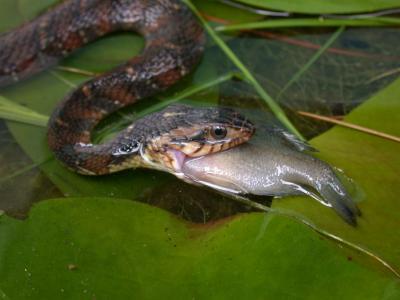
But that passive demeanor isn't good when nature wants to kill you. And she does. Watersnakes, commonly seen in the lakes, rivers and streams of the eastern United States, are invading California waterways and may wipe out native species, according to a new study. 

Field surveys are so 20th century. Satellites are the wave of the future when studying remote penguin populations. Like with space travel, we may someday wonder why we wouldn't send robots or satellites to do a man's work.

Neanderthals from Spain may have consumed more vegetables than previously thought, according to a dietary reconstruction.

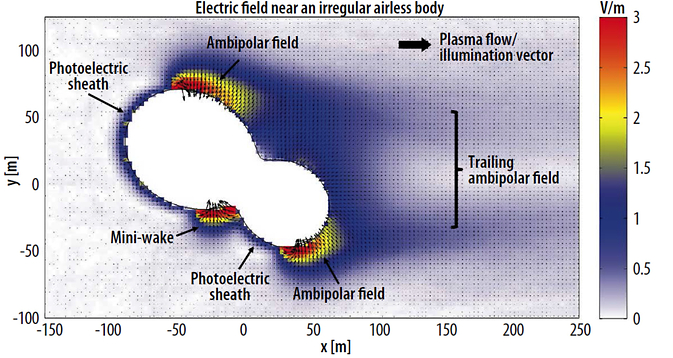
Space looks empty the same way that nature sounds quiet. Unlike nature, space actually is a soundless vacuum, but it's not a void. Invisible to human eyes, space flows with electric activity. NASA is developing plans to send humans to an asteroid, and wants to know more about the electrical environment explorers will encounter there.

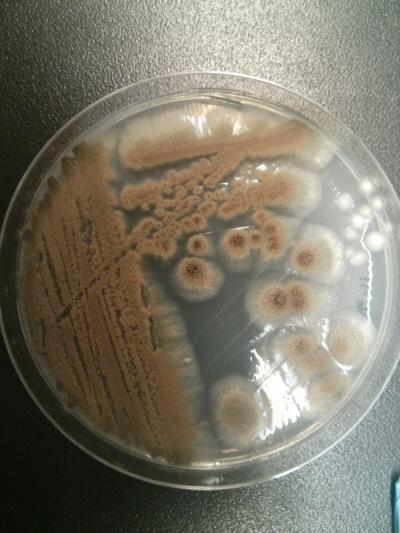
A fungus living in the soils of Nova Scotia may be a secret weapon in the battle against drug-resistant germs that kill tens of thousands of people every year, including one considered a serious global threat.

A team of researchers has discovered a fungus-derived molecule known as AMA is able to disarm one of the most dangerous antibiotic-resistance genes: NDM-1 or New Delhi Metallo-beta-Lactamase-1, identified by the World Health Organization as a global public health threat.  

Discovering the properties of the fungus-derived molecule is critical because it can provide a means to target and rapidly block the drug-resistant pathogens that render carbapenem antibiotics—a class of drugs similar to penicillin—ineffective.