

Exercise is a valuable yet underused component for post-stroke care, according to an American Heart Association/American Stroke Association scientific statement.

The statement, published in the American Heart Association journal Stroke, suggests that stroke survivors should be prescribed exercise because they experience physical deconditioning and lead inactive lifestyles after stroke. That decreases their ability to perform daily living activities and increases their risk of having another stroke.

If you're in a country that has a Vitamin D Winter - 2 to 6 months without sunshine - there may be good news on the way.

Vitamin D is essential. Without it, kids are  at risk of bone diseases like rickets and older children and adults are at risk of bone softening. Some European countries have inadequate sunlight for extended periods, during which time vitamin D cannot be made in the skin. Not many foods are rich in vitamin D so it can be difficult to make up the shortfall through diet.
A new paper from the University of Münster finds that religious communities had a much greater influence on the formation of European welfare states than has previously been known.

This not a secret, churches cared for poor people when European monarchies simply claimed a divine right. But the extent of the welfare state's legacy in religion was not well known. Europeans love the welfare state and are less religious than ever, even though religion is what got the welfare state for them. 

Tuesday, May 20, 2014 (Hamilton, ON) – Researchers at St. Joseph's Healthcare Hamilton and McMaster University have successfully tested an antibody that can improve the quality of life for individuals with asthma by relieving inflammation in the lungs. The research was led by Dr. Gail Gauvreau, associate professor at McMaster University and Dr. Paul O'Byrne, executive director of the Firestone Institute of Respiratory Health (FIRH) at St. Joseph's Healthcare Hamilton and chair, Department of Medicine at McMaster University.

North Carolina State University entomologists are part of a research team that has for the first time sequenced the genome of a member of the termite order, the dampwood termite (Zootermopsis nevadensis). A paper reports the findings today in Nature Communications.

The findings on the genetic blueprint of the dampwood termite, one of the world's most primitive social insects, highlight key differences and similarities with other social insects like ants, wasps and bees, and provide insight into how social insects evolved. The findings could also help researchers pinpoint specific gene functions to devise measures to control unwanted termites.

Some studies have identified mobile phones and related devices as sources of metal sensitization and potential causes of allergic contact dermatitis (ACD). The belief is that many phones on the market release levels of metals, such as nickel and chromium, which are sufficient to induce ACD, according to an article in Pediatric Allergy, Immunology, and Pulmonology.

WASHINGTON D.C. May 20, 2014 -- In a new paper in the Journal of Chemical Physics, produced by AIP Publishing, a research team in the United Kingdom and the United States describes how water molecules "caged" in fullerene spheres ("buckyballs") are providing a deeper insight into spin isomers -- varieties of a molecule that differ in their nuclear spin. The results of this work may one day help enhance the analytical and diagnostic power of nuclear magnetic resonance (NMR) and magnetic resonance imaging (MRI).

Scientists studying brain process involved in sight have found the visual cortex also uses information gleaned from the ears as well as the eyes when viewing the world.

They suggest this auditory input enables the visual system to predict incoming information and could confer a survival advantage.

Professor Lars Muckli, of the Institute of Neuroscience and Psychology at the University of Glasgow, who led the research, said: "Sounds create visual imagery, mental images, and automatic projections.

"So, for example, if you are in a street and you hear the sound of an approaching motorbike, you expect to see a motorbike coming around the corner. If it turned out to be a horse, you'd be very surprised."

A new method of generating mature nerve cells from skin cells could greatly enhance understanding of neurodegenerative diseases, and could accelerate the development of new drugs and stem cell-based regenerative medicine.

The nerve cells generated by this new method show the same functional characteristics as the mature cells found in the body, making them much better models for the study of age-related diseases such as Parkinson's and Alzheimer's, and for the testing of new drugs.

Eventually, the technique could also be used to generate mature nerve cells for transplantation into patients with a range of neurodegenerative diseases.

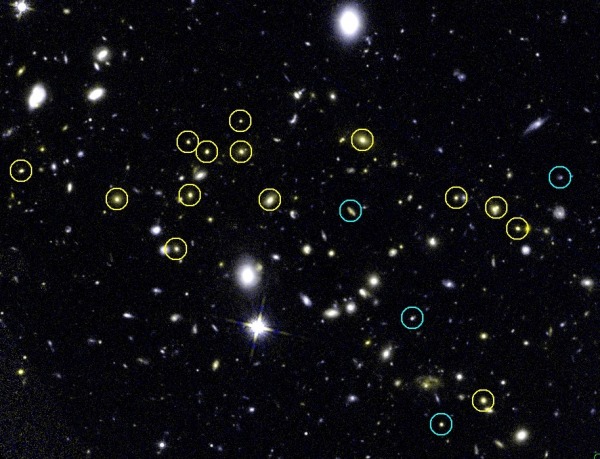
The structures and star populations of massive galaxies appear to change as they age, but much about how these galaxies formed and evolved remains mysterious. Many of the oldest and most massive galaxies reside in clusters, enormous structures where numerous galaxies are found concentrated together. Galaxy clusters in the early universe are thought to be key to understanding the lifecycles of old galaxies, but to date astronomers have located only a handful of these rare, distant structures.

New research from a team led by Carnegie's Andrew Newman has confirmed the presence of an unusually distant galaxy cluster, JKCS 041. It is published in the Astrophysical Journal

