A newly discovered system of two white dwarf stars and a superdense pulsar, all packed into a space smaller than the Earth's orbit around the sun, could allow astronomers to tackle the very nature of gravity itself.
The pulsar is 4,200 light-years from Earth and is spinning nearly 366 times per second – it was found to be in close orbit with a white dwarf star and the pair is in orbit with another, more distant white dwarf.
The three-body system is scientists' best opportunity yet to discover a violation of a key concept in Albert Einstein's theory of General Relativity: the strong equivalence principle, which states that the effect of gravity on a body does not depend on the nature or internal structure of that body.
The cockroach in the genus Ectobius is an invasive organism and the most common cockroach inhabiting a large region from northernmost Europe to southernmost Africa.
Astronomers has discovered the first Earth-mass planet that transits its host star and found that KOI-314c is the lightest planet to have both its mass and physical size measured.
Though it weighs the same as Earth, it is 60 percent larger in diameter, meaning that it must have a very thick, gaseous atmosphere, they note.
The team gleaned the planet's characteristics using data from NASA's Kepler spacecraft. KOI-314c orbits a dim, red dwarf star located approximately 200 light-years away. It circles its star every 23 days. The team estimates its temperature to be 220 degrees Fahrenheit, too hot for life as we know it.
There's no greater feel-good fallacy than the belief that organic food is somehow superior to conventionally farmed food. In reality, organic food isn't more environmentally responsible, it is worse, it isn't better for your health, it is worse and, for the most part, it isn't even grown by small farmers, it is giant conglomerates who, like with gluten-free, fat-free or any other food fad, encourage proponents and the mythology of health benefits because they can charge more money.
Is there such a thing as moral expertise?
Good question, right? I’ve been thinking more about it for a few weeks now as a result of an interesting talk by
Gopal Sreenivasan (Duke University) entitled “Moral expertise and the proto-authority of affect,” which he gave at CUNY’s Graduate Center.
What does science discover when 70 dogs are allowed to relieve themselves in the open country without being on a leash?
That they have something in common; dogs prefer to do their business while in a body-alignment along the magnetic north-south axis - but only during periods of calm magnetic field conditions.
At least they found something. Prior to the discovery, they had to have been frustrated that, in contrast to grazing cows, hunting foxes and landing waterfowl, dogs showed no clear preference for a particular body alignment while doing number one or number two.
The April 10th, 2013 landslide at a Utah copper mine probably was the biggest non-volcanic slide in North America's modern history, and included two rock avalanches that happened 90 minutes apart and surprisingly triggered 16 small earthquakes, according to findings published in
GSA Today.
The landslide moved at an average of almost 70 mph, reached estimated speeds of at least 100 mph and left a deposit so large it "would cover New York's Central Park with about 20 meters (66 feet) of debris," according to the researchers.
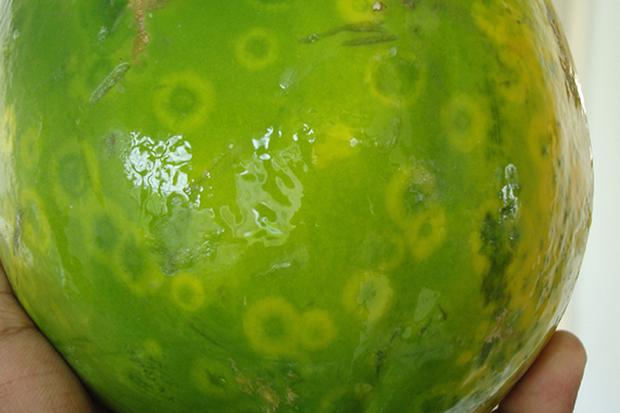
Mexico is considered one of the leading countries in papaya production but its crops are affected by the virus of the ringed spot, which leaves ring marks in the skin of the fruit and causes softening of the papaya, where fungi start to digest it.
More than 80 per cent of the production is exported to the United States and, according to the Mexican Association Industry of Plant Sanitation (AMIFAC), Europe and Asia are possible markets for 2014, so the fruit has to comply with sanitation laws of other countries, being free of microorganisms, and having the right appearance (no spots, indentations or softening of the fruit) is important.
Chronic unemployment, dependence on government welfare and internal social division are the result of Canadian social welfare for natives - despite the substantial resources devoted, according to a new study. The work, jointly performed by the University of Alicante, the University of Granada and Laurentian University, was prepared by University of Alicante lecturer in sociology Raúl Ruiz Callado.
Want yogurt but don't like the exploitation of dairy cows?
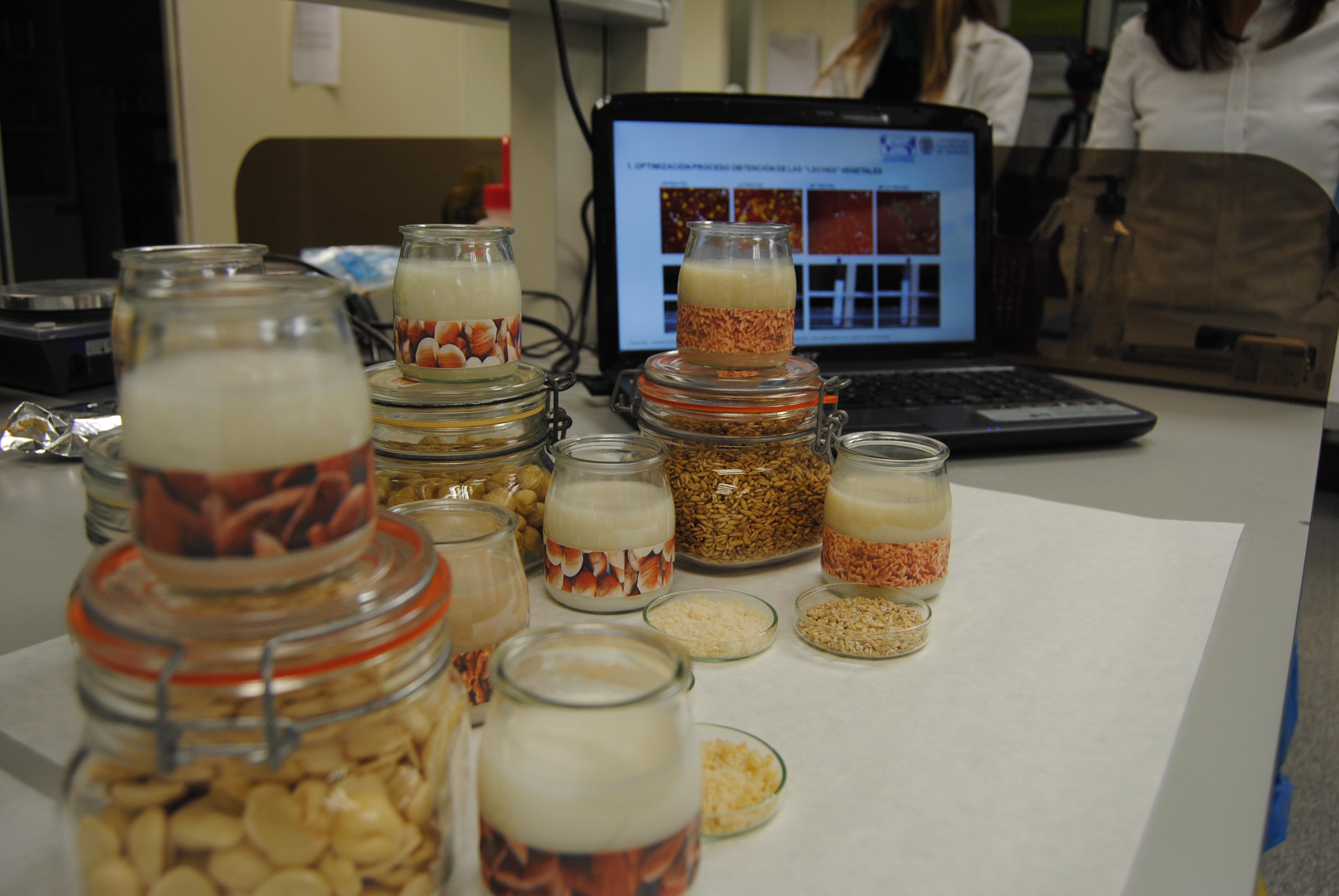
Researchers at the Universitat Politècnica de València have some good news. They have used plant-based “milks” to create products fermented with probiotic bacteria from grains and nuts - an alternative to conventional yogurts. They say the products are ideal for people with allergies to cow milk, lactose or gluten intolerance.