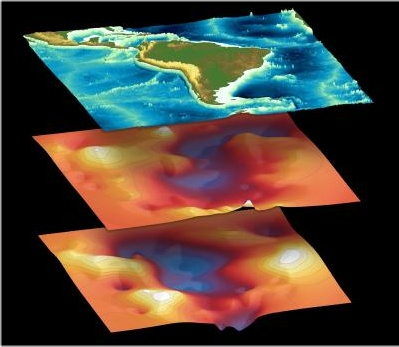




On May 24th of 2013, a magnitude 8.3 earthquake hit deep beneath the Sea of Okhotsk, between Russia's Kamchatka Peninsula and Japan. The main shock of the earthquake was located at 610 kilometers (379 miles) depth, a rupture in the mantle far below the Earth's crust.

By inverting seismic waves that were observed during the earthquake, researchers have found that this initial shock triggered four subsequent shocks. These four shocks were magnitudes 7.8, 8.0, 7.9, and 7.9. A pressure front from the initial earthquake propagated at a speed of approximately 4.0 kilometers (2.5 miles) per second, setting off three subsequent earthquakes in a line south of the main shock. 

The crocodile is a pretty shrewd hunter - they even use lures to hunt their prey, according to Vladimir Dinets, assistant professor in the Department of Psychology at University of Tennessee, Knoxville, and colleagues, who say they have observed two crocodilian species, muggers and American alligators, using twigs and sticks to lure birds, particularly during nest-building time. 

The live vaccine Bacille Calmette-Guérin, used in some parts of the world to prevent tuberculosis, may help prevent multiple sclerosis (MS) in people who show the beginning signs of the disease, according to a new study in Neurology.  

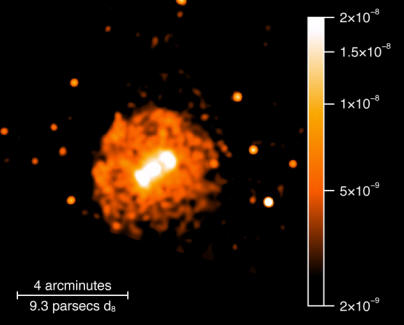
Astronomers have identified the glowing wreck of a star that exploded a mere 2,500 years ago — the blink of an eye in astronomical terms - and revealed an astrophysical novelty of the Milky Way.

Quantum entanglement, the phenomenon of quantum mechanics that Albert Einstein once referred to as "spooky action at a distance," could be even spookier - hypothetically.

Quantum entanglement occurs when a pair or a group of particles interact in ways that dictate that each particle's behavior is relative to the behavior of the others. In a pair of entangled particles, if one particle is observed to have a specific spin, for example, the other particle observed at the same time will have the opposite spin.

Loofahs, those exfoliating things for skin that men pretend they don't use in the shower, may be a new potential tool to advance sustainability efforts of both energy and waste, according to a paper in the journal Environmental Science&Technology.

The study describes the pairing of loofahs with bacteria to create a power-generating microbial fuel cell (MFC). Shungui Zhou and colleagues note that MFCs, which harness the ability of some bacteria to convert waste into electric power, could help address both the world's growing waste problem and its need for clean power. Current MFC devices can be expensive and complicated to make. In addition, the holes, or pores, in the cells' electrodes are often too small for bacteria to spread out in.

The black Périgord truffle is a fungus that grows underground around the roots of oak and hazelnut trees in winter. It has become a staple during holidays in France, where cooks slip bits of it under the skin of roasting turkeys to add a luxurious flavor.

Holiday cooking would not be complete with an examination of why things work and so scientists are revealing the secrets that give the culinary world's "black diamond" its unique, pungent aroma. The results could  also lead to better ways to determine the freshness and authenticity of the pricey delicacy. 

Economists and sociologists have long insisted that abortion and birth control lead to economic growth and a new paper 
in the journal Demography says it's instead education.

All of those are correlated so there is no wrong answer. More economically developed, educated nations suffer population declines to such an extent they have to recruit immigrants to work and pay taxes to support an elderly population that doesn't replace itself. But spending billions of dollars on education rather than birth control would not be the answer - food and energy are. With the ability to grow food and meet basic needs, wealth and culture always flourish and that leads to education which leads to growth.

Raman scattering mode is an optical phenomenon, discovered in 1928 by the physicist Chandrasekhara Venkata Raman, that involves the inelastic scattering of photons - the physical phenomenon by which a medium can modify the frequency of the light impinging on it. 

The difference corresponds to an exchange of energy (wavelength) between the light beam and the medium. In this way, scattered light does not have the same wavelength as incidental light. The technique has become widely used since the advent of the laser in the industry and for research .

A method to model the way proteins fold, and sometimes misfold, has revealed branching behavior that may have implications for Alzheimer's and other aggregation diseases. 

In an earlier study of the muscle protein titin, Rice chemist Peter Wolynes and colleagues analyzed the likelihood of misfolding in proteins, in which domains – discrete sections of a protein with independent folding characteristics – become entangled with like sequences on nearby chains. They found the resulting molecular complexes called "dimers" were often unable to perform their functions and could become part of amyloid fibers.

