



If you have traveled, you know that in some other countries the voltage used in homes and businesses are different than where you live. But not the type of electricity; all countries use alternating current. Yet a lot of appliances and devices then convert it to DC.

In the early days of electricity, the war was on between alternating current and direct, with Westinghouse (and Tesla) advocating the former and Thomas Edison standardizing on the latter. The reason alternating current won is because people didn't want power plants in their neighborhoods and banks of batteries in their homes. And centralized power without extreme line loss meant high frequency, requiring transformers to step the current up and then back down at homes.

Researchers have linked Prevotella copri, a species of intestinal bacteria, to the onset of rheumatoid arthritis, the first demonstration in humans that the chronic inflammatory joint disease may be mediated in part by specific intestinal bacteria.

Everyone has a hypothesis about the 'birthplace of life' and a new paper adds clay to that list.

In simulated ancient seawater, clay forms a hydrogel, a mass of microscopic spaces capable of soaking up liquids like a sponge. Over billions of years, chemicals confined in those spaces could have carried out the complex reactions that formed proteins, DNA and eventually all the machinery that makes a living cell work.

Clay hydrogels could have confined and protected those chemical processes until the membrane that surrounds living cells developed, according to the computer model.

A new study correlates a series of small earthquakes near Snyder, Texas between 2006 and 2011 with the underground injection of large volumes of carbon dioxide (CO2), long before the adoption of current hydraulic fracking and a finding that is relevant to the process of capturing and storing CO2 underground.  

There's good news and there's bad news to deliver. Which do you want to give first? What if you are getting it? The best strategy depends on whether you are the giver or receiver of the bad news, and if the news-giver wants the receiver to act on the information, according to a new paper.

The process of giving or getting bad news is difficult for most people, particularly when news-givers feel unsure about how to proceed with the conversation, psychologists Dr. Angela M. Legg and Professor Kate Sweeny note. "The difficulty of delivering bad news has inspired extensive popular media articles that prescribe 'best' practices for giving bad news, but these prescriptions remain largely anecdotal rather than empirically based."

Researchers in a new paper say that one way to gauge the extent of prescription opioid pain reliever abuse is to count the number of health care providers.

Climate understanding of the past is based primarily on ice cores.  By studying information about Earth's climate and greenhouse gases  in past, scientists can understand better how temperature responds to changes in greenhouse-gas concentrations in the atmosphere and make better predictions about how climate will change in the future. 

Researcher have now identified regions in Antarctica they say could store information from as far back as 1.5 million years, almost twice as old as the oldest ice core drilled to date. 

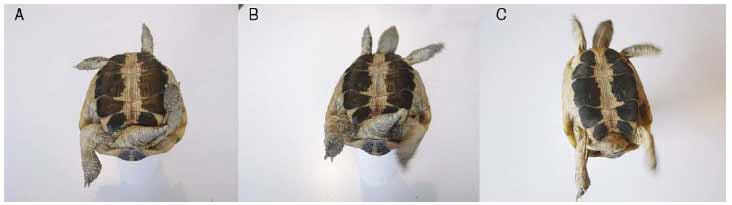
If one were to overturn a tortoise, would it be more likely to right itself (i.e. get back on its feet) to the right or to the left?

To find out, a joint research team from the Comparative Psychology Research Group, University of Padova, Italy and the B.R.A.I.N. Centre for Neuroscience, University of Trieste, Italy, performed a unique set of experiments with 34 overturned tortoises.

When I go to the gym I get easily bored, so I listen to either music or, more likely, audiobooks. Recently, I’ve spent exercise time with a couple of scifi entries by author Robert Sawyer. I started out with Flashforward, then moved to Calculating God.

Both books are based on clever premises, unfold nicely, but are — in my opinion — ruined by the author’s penchant for invoking deus-ex-machina scenarios near the end. And they both preach a bit too much science, to the point of feeling like a lecture to the reader, especially Calculating God. Nonetheless, they do make the time at the gym pass significantly faster...

If you have wondered why a disease like anorexia seems to impact primarily middle class white girls, a new paper in JAMA Pediatrics will shed some new light on the issue.

A new paper analyzed survey responses of 5,527 teenage males from across the U.S.and found that 17.9% of these young men are suffering under the yoke of female body expectations and are extremely concerned about their weight and physique. These boys were found to be more likely to start engaging in risky behaviors, including drug use and frequent binge drinking.


