
These days, when I watch a good working dog hone in on scent — whether it’s a dog locating the scent of human remains or trailing someone who is still alive — I can see him trace its passage in the air until he’s drawn a clear picture with his nose. An experienced dog can distinguish the difference between scent that has lifted in the heat of the day, settled down in the ridges of rough grass, or been pulled hard toward the rushing water of a creek.

I work scent also, though I don’t run as fast or as hard. I can recog­nize urine in the muggy concrete stairwell of a parking garage, mildew liberated from under sheaves of rotted leaves, or the fishy musk of my German shepherd after a swim in the local river in August.

New research marks an important step toward new technology that, if implemented successfully, would increase the dexterity and clinical viability of robotic prosthetic limbs - touch-sensitive prosthetics that could convey real-time sensory information to amputees via a direct interface with the brain. 

“Cotton buds are commonly used to clean the ears, remove wax, in case of itching in the ear, aural toilet in discharging ears and some time as a habit.” – explain Suresh Kumar and  Shamim Ahmed  of the Department of ENT, at Liaquat University of Health Sciences, Jamshoro, Pakistan. They go on to warn that :

They supposedly represent a safe means of cleaning the ear and nose. Insertion of cotton tips is not only unnecessary but also potentially dangerous.

The conclusion of their study, which tracked cotton bud usage in 100 patients at the ENT Department, of Sir Syed Medical College& Hospital Karachi, (July 2005 to January 2007) is that

Neurons that process sensory information such as touch and vision are arranged in precise, well-characterized maps that are crucial for translating perception into understanding.  A new study finds that, in mice brains, the actual act of birth in mice causes a reduction in serotonin, triggering sensory maps to form.

Girls in minority groups and low-income families, who are claimed to be most at risk for cervical cancer, are less likely to get the human papillomavirus (HPV) vaccine. 

Scholars from the University of Colorado School of Medicine and Children's Hospital Colorado interviewed 41 low-income parents of girls ages 12-15 to determine why they didn't get the vaccine or finish the course. The survey interviewed both English and Spanish speakers.

Result: English-speaking parents expressed concerns over the need and safety of the vaccine, while Spanish-speaking parents said health care providers failed to explain that they needed three shots to be fully immunized. They also feared the vaccine would encourage sexual activity.

The brain may have its own way of easing social pain, according to a recent paper, and it involves the brain's natural painkiller system. 

Combining brain scans with questionnaire results, they determined that people who score high on a personality trait called resilience – the ability to adjust to environmental change – had the highest amount of natural painkiller activation. 

The team focused on the mu-opioid receptor system in the brain – the same system that the team has studied for years in relation to response to physical pain. Over more than a decade, U-M work has shown that when a person feels physical pain, their brains release chemicals called opioids into the space between neurons, dampening pain signals.

Researchers have isolated and characterized the progenitor cells that eventually give rise to malignant hepatocellular carcinoma (HCC) tumors – the most common form of liver cancer. The researchers found ways to identify and isolate the HCC progenitor cells (HcPC) long before actual tumors were apparent.

Principal investigator Michael Karin, PhD, Distinguished Professor of Pharmacology and Pathology at the University of California, San Diego School of Medicine, and colleagues report that HcPC take form within dysplastic or abnormal lesions often found in damaged or cirrhotic livers. The liver damage can be due to viral infections like hepatitis or from chronic alcohol abuse. 

Jeremy Leggett, who runs the largest solar power installer in the UK, is celebrating the World Energy Congress in South Korea by selling you a book predicting the demise of his competitors in conventional energy companies.

Well, he is going to be right eventually. Though we supposedly hit Peak Oil in 1992, yet still haven't, the math says they can't be wrong forever. To make his case that fossil fuels are doomed sooner rather than later, he invokes the popular standby of people who want to sound science-y: the brain. 
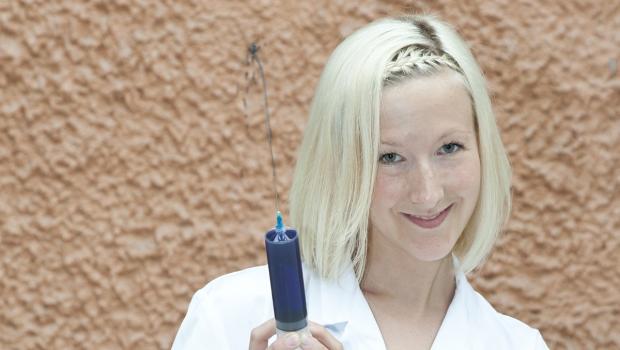
Nothing says weight loss like botulism.

Obesity is a growing problem across the globe. Being overweight can lead to severe diseases and conditions, like diabetes and heart problems. The World Health Organization estimates that obesity is responsible for 2 to 8 percent of health care costs and 10 to 13 percent of deaths in various parts of Europe. 

A new paper suggests that lifestyle advice for people with diabetes should be no different from that for the general public - but diabetes may benefit more from that same advice. 

In the study, the researchers investigated whether the associations between lifestyle factors and mortality risk differ between individuals with and without diabetes.