




It's not as fun as the Martini Diet but more scientific than the Tapeworm Diet.

A new paper says that parasitic worm infections, a major cause of disease and disability throughout much of the developing world, might actually help treat metabolic disorders associated with obesity.   

A study in Nature Medicine shows that, once inside a host, many parasitic worms secrete a sugar-based anti-inflammatory molecule that might actually help treat metabolic disorders associated with obesity. The sugar molecule - glycan - is released by parasites to help them evade the body's immune system. By reducing inflammation, they are better able to hide in tissues, and humans experience fewer symptoms that might reveal their presence.

Some years ago, I was a bit mystified as to the distinction between prebiotics and probiotics. 

These days, one can easily look them up on Wikipedia, and find that prebiotics are meant to encourage the growth of ‘good’ bacteria in the gut, while probiotics are supposed to deliver the bacteria directly. 

In biology, you learned that the penicillin-producing mold fungus Penicillium chrysogenum only reproduces asexually through spores - it has been taught that way for much of the last century. But a group of researchers now say that the fungus also has a sexual cycle, two "genders". 

In 1928, anti-bacterial researcher Alexander Fleming demonstrated (after discovering it serendipitously following years of research) the formation of penicillin in Penicillium chrysogenum. To date, there is no other known producer of that antibiotic.

I just read with interest and awe the nice article appeared today in the arxiv about the search for dark matter annihilation in the sun's core by the Baksan Underground Scintillator Telescope (BUST), a facility operating since December 1978 (!) in the Caucasian valley of Baksan.

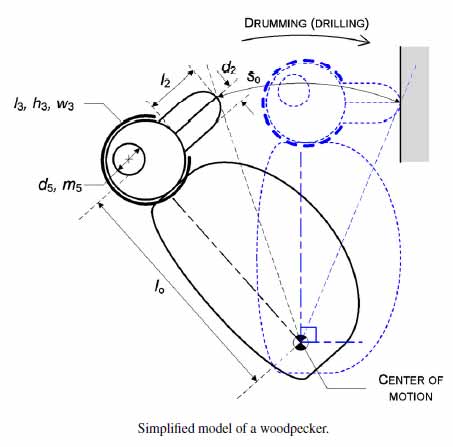
“A woodpecker is known to drum the hard woody surface of a tree at a rate of 18 to 22 times per second with a deceleration of 1200 g, yet with no sign of blackout or brain damage.”

There has been a debate on morality brewing of late over at LessWrong. As readers of this blog know, I am not particularly sympathetic to that outlet (despite the fact that two of my collaborators here are either fans or even involved in major ways with them — see how open minded I am?).
"Cash for clunkers", President Obama's 2009 Car Allowance Rebates System (CARS), was hailed as a huge success by the administration and environmentalists - but it was really just another government boondoggle. Not as expensive as $72 billion wasted in pet energy projects but still a high-profile case of an administration engaged in the Scientization of Politics - prettying up a world view by pretending it is reality-based.

One of the mechanisms involved in hearing is similar to the battery in your car. How do researchers know?  They heard it in a fruit fly love song.

The auditory system of the fruit fly contains a protein that functions as a sodium/potassium pump, often called the sodium pump for short, and is highly expressed in a specialized support cell called the scolopale cell. The scolopale cell is important because it wraps around the sensory endings in the fly's ear and makes a tight extra-cellular cavity or compartment around them called the scolopale space.

New research suggests that racial stereotypes and creativity have more in common than we might think.

In an article published in Psychological Science, psychologists find that racial stereotyping and creative stagnation share a common mechanism: categorical thinking.  "Although these two concepts concern very different outcomes, they both occur when people fixate on existing category information and conventional mindsets," the authors write.
 

In the New York Times, Nobel laureate Paul Krugman


