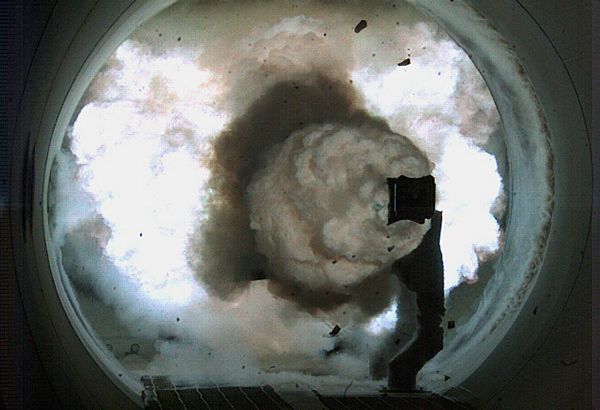
If you have read any science fiction, you know what a railgun is; instead of using a projectile hurled by an explosion, the idea is to use an electomagnetic current to accelerate a non-explosive bullet at several times the speed of sound. The conductive bullet or artillery moves along electrically charged parallel rails out of the barrel at speeds as high as Mach 7.
The result: a weapon that can hit a target 100 miles or more away within minutes, seven times as far as current ship-mounted guns.
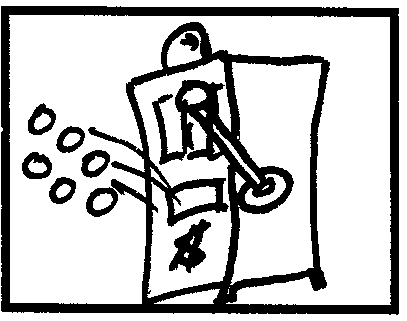
The age-old dilemma: do you take your sig other's hints, buy that electronic picture frame, and load it with family highlights from holidays past (yawn)? Or do you go with your gut and get her the unexpected gift of a new XBox-360?
The atmosphere is a complex system and therefore the exact amount of warming due to greenhouse gases is the subject of scientific debate but it is proven science that clouds amplify the warming effect and a new model provides more insight into specifics, though some prominent climate skeptics have recently been arguing that clouds would act to stabilize the climate, thereby preventing greenhouse gases from causing significant warming.
Most are unaware of it but the evolutionary arms race between plants and plant diseases is always happening around us. Fungi are a major cause of plant diseases and are responsible for large-scale harvest failure in crops like maize and other cereals all over the world.
Researchers analyzed the genetic make-up of Sporisorium reilianum, an important maize parasite. Based on a comparison with the genome of a related fungal species, they succeeded in identifying new genes in maize infestation.
I went to a conference this morning at the Hope Street Group, a DC-based think tank. They had a panel of doctors, PhDs, a lawyer, consultants, John Podesta (Clinton's healthcare czar) and an economist discussing Using Open Innovation to Reinvent Primary Care.
Panel moderator was former Washington Post healthcare policy reporter Ceci Conelley who jumped ship to McKinsey probably for gobs more money.
While no one mentioned the P-word (price) a great deal of the discussion centered around reducing costs.
Some points were really interesting. Among them:
The three problems of humanity were outlined in a talk by Nick Bostrom (of Oxford University, UK) at
TED in April 2009.
In this piece I will continue to examine the "big" problems identified in the TEDTalk.
Problem #2: Existential Risk is a BIG problem.
Paleontologists recently unearthed bones, likely in Montana or Wyoming, of a new dinosaur species dubbed Stochastisaurus. "Based on surrounding species and the fossils themselves, there's an approximately 88% chance that Stochastisaurus was an herbivore," says the lead researcher.
Anyone can be skeptical about a scientific result. It's good to state your skepticism, to make your view known. But are you done once you speak your view? Is that all it takes, a quick skeptical wrench and we shut off the flow of science? Guest writer Dan Krimm neatly captures the useful role of skepticism in the scientific process, below.
Alex
Tuesdays at
The Satellite Diaries and Friday at
The Daytime Astronomer (twitter
@skyday)
The title, “The 2010s will be to the 2060s what the 1960s are to us today” is in a sense the most uplifting quote I have heard in a long while (yeah, I know about all the bad things, too, whatever). Since the 60s also stand for quite some influence of psychoactive substances onto later influential, if not revolutionary science and technology that made especially the "2.0" of Science2.0 possible at all, and since indeed the 2.0 part is taking off right now (as is a new wave of psychoactive activity above and underground), I found these quite fitting to add to the topic of Science2.0.
We've all done it: we've blurted out something we wish we'd bitten back. We've made a face or indicated our displeasure or contempt when it would have been better to maintain the appearance of neutrality. We've all, I'm sure, written something we wish we could take back.