Children are natural psychologists and by the time they reach preschool they understand that other people have desires, preferences, beliefs, and emotions too.
Exactly how they learn this isn't clear but a new study says that one way children figure out another's preferences is by using a topic you'd think they won't formally encounter until college: statistics.
In one experiment, children aged 3 and 4 saw a puppet named "Squirrel" remove five toys of the same type from a container full of toys and happily play with them. Across the children, the toys that Squirrel removed were the same (for example, all five were blue flowers).
What varied, however, were the contents of the container.
Welcome to my first blog entry ever! That the Big Bang is the start of the universe, the mysterious “point of creation”, is stated often still today, even by prominent physicists. It is also not true.
The Big Bang is what you get when you back-extrapolate the today visible expansion of the universe into the past. One gets to the point where there is the so called “reheating” after inflation. The result of reheating is the Big Bang, a hot and dense state for sure, but it is not thought to be the beginning anymore.
The Big Bang is a set of conditions of an extremely hot, dense, expanding Universe that exists after the end of inflation.

The Open Source movement has been an integral part of software development for many years now, and it is starting to explode into the science world. The latest project might even transform brain science communication and understanding to a new level as the new
Whole Brain Catalog is now available for anyone to access.
Proof of aliens within 25 years? What's the basis for this optimism?
Well, of course, it's the Drake equation. It had to be. While it is certainly reasonable that everyone has their own perspective and opinion about the likelihood of alien life, it is not reasonable to pretend that the "Drake equation" provides some sort of inside track.
Researchers at the Buck Institute for Age Research writing in the journal Stem Cells say they have successfully used human induced pluripotent stem cells (iPSCs) to treat rodents afflicted with Parkinson's Disease (PD).
They say the research validates a scalable protocol that the same group had previously developed and can be used to manufacture the type of neurons needed to treat the disease and paves the way for the use of iPSC's in various biomedical applications.
iPSC research has come strongly into play during the last few years because of limitations on human embryonic stem cell research in the Bush and Obama administrations and are a hot topic among scientists focused on regenerative medicine.
Petermann Ice Island (2010) - The Mörner Version
The world of climate science according to wishful thinkers.
I was raised at the seaside. I lived through the 1953 floods which resulted from the North Sea storm surge.
Nils-Axel Mörner seems to have visited the seaside once or twice.
If Big Science complains about U.S. budget skepticism in the future, they are going to have to answer questions about
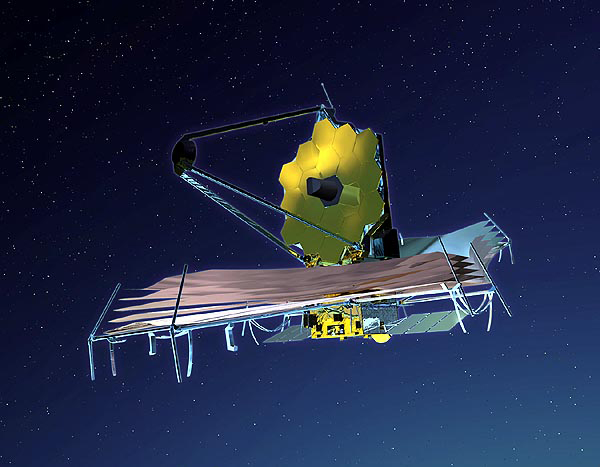
the James Webb telescope. It is currently 3 years and $1.5 billion over budget with no end in sight. The latest projection, 2014 and $5 billion, has been greeted with so much derision that even the people behind the project in government have demanded an outside panel to oversee the boondoggle.
Research presented at the annual meeting of the American Sociological Association had a surprising finding for women and careers - women who are economically dependent on a man are less likely to cheat but in men it is just the opposite. So strippers beware. Your boyfriend who is 'getting his band going' may not be faithful for long.
Alec Baldwin never actually left the United States, even though he said he would if George W. Bush won in 2004. So people make silly threats about politics but do political outcomes have any effect on more serious issues, like suicide?
Suicide risk factors are something sociologists love to think about and a new longitudinal study published in Social Science Quarterly says it analyzed suicide rates at a state level from 1981-2005 and determined that presidential election outcomes directly influence suicide rates among voters.
Belief: Girls tend to hang out in smaller, more intimate groups than boys.
Not really. At least not by the time children reach the eighth grade, says a new Journal of Social and Personal Relationships article.
Jennifer Watling Neal, assistant professor of psychology at Michigan State University, says her study is one of the first to look at how girls' and boys' peer networks develop across grades. Because children's peer-group structure can promote or mitigate negative behaviors like bullying and positive behaviors like helping others, Neal said it's important for researchers to have a better picture of what these groups look like.