

We had some fantastic articles entered this spring into our Writing Competition open to all university grad students, and we are happy to announce the winners based on the votes entered by YOU - our online audience.

Our grand prize winner was Sena Koleva who told us all about The New Science of Love and Attraction.  You thought you knew what made that special someone attractive to you, and what it meant to fall in love?  You probably only know part of the story.  Sena's article breaks it all down for us, from a scientific perspective.
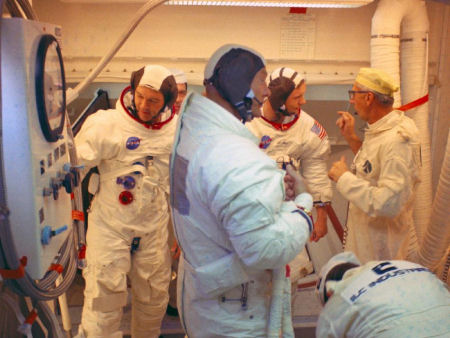
There was a time when kids dreamt of being astronauts - a time when going up to the Moon was sexy and being a spaceman was the coolest job on the planet. As astronauts became global heroes they themselves were only too aware that there were many more heroes whose feet remained firmly on the ground but without whom those Moon missions would never have happened: Guenter Wendt was one of those heroes.
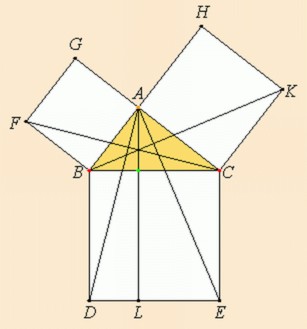
One of the disappointments experienced by most mathematics students is that they never get a course in mathematics. They get courses in calculus, algebra, topology, and so on, but the division of labor in teaching seems to prevent these different topics from being combined into a whole. In fact, some of the most important and natural questions are stifled because they fall on the wrong side of topic boundary lines. Algebraists do not discuss the fundamental theorem of algebra because “that’s analysis” and analysts do not discuss Riemann surfaces because “that’s topology,” for example.
Trees help keep the planet cool, but rising levels of carbon dioxide in the atmosphere are preventing them from performing this very important function.

According to a new study in PNAS, in some regions more than a quarter of the warming from increased carbon dioxide is due to its direct impact on vegetation. This warming is in addition to carbon dioxide's better-known effect as a heat-trapping greenhouse gas.

The new paper highlights the importance of including plants in the models that forecast future climate change.


Watching too much TV may make children fat, bad at math and expose them to all kinds of other evils, say "child experts" writing in the Archives of Pediatrics and Adolescent Medicine. The authors found that television exposure at age two forecasts negative consequences for kids, ranging from poor school adjustment to unhealthy habits.

Since TV exposure encourages a sedentary lifestyle, television viewing must be curbed for toddlers to avoid the maintenance of passive mental and physical habits in later childhood, the researchers conclude.
Scientists at the Georgia Institute of Technology have successfully altered the brain of one type of Cichlid fish to resemble that of another and discovered differences in the general patterning of the brain before neurogenesis occurs.

The findings, published in PNAS, challenge the popular theory known as “late equals large,” first proposed in the mid 1990s to explain the way brains evolve across species.

The brain begins as a blank slate. In early development, the anterior, or front, part of the brain is specified from the posterior, or back, part.


research team were able to alter the brain of an embryonic fish,
A new study of Australian preschoolers and Kalahari Bushman children suggests that overimitation, in which a child copies everything an adult shows them, appears to be a universal human activity, rather than something the children of western middle-class parents pick up. The research, published in Psychological Science, may help shed light on how humans develop and transmit culture.
Charles Darwin was probably correct about the effects of inbreeding in his family, according to a new study in BioScience.

Darwin demonstrated the phenomenon of inbreeding depression in many plants, and was aware of research into the effects of marriage between relatives on the health of resulting children. He feared that his marriage might have been responsible for some of his children's health problems.

The British Naturalist married his first cousin, Emma Wedgwood, and his mother, Susannah Wedgwood, was the daughter of third cousins.
Researchers at the University of Bonn have found evidence indicating that some Sauropod dinosaurs, typically known for their enormous size, were island dwellers and evolved into dwarfs.

By studying the structure of their fossils, researchers confirmed that the sauropod dinosaur Magyarosaurus dacus never grew any larger than a horse. The results appear this week in PNAS.
An international team of researchers has captured an enormous cloud of cosmic gas and dust - BYF73 - in the process of collapsing in on itself, a discovery which could help explain how massive stars form. The team’s findings have been published in the Monthly Notices of the Royal Astronomical Society.

Astronomers have a good grasp of how stars such as our Sun form from clouds of gas and dust, but how heavier stars form is still largely unknown.

