A generation ago it was only a brave eclectic minority of psychologists and neuroscientists who dared to address the arts. Things have changed considerably since then. “Art and brain” is now a legitimate and respected target of study, and is approached from a variety of viewpoints, from reductionistic neurophysiology to evolutionary approaches.
Things have changed so quickly that late 20th century conversations about how to create stronger art-science collaborations and connections are dated only a decade later – everyone’s already doing it! And the new generation of students being trained are at home in both the arts and sciences in a way that was rare before.
Yesterday somebody asked me
here if I could explain how does a muon really decide when and how to decay. I tried to
answer this question succintly in the thread, and later realized that my answer, although not perfectly correct in the physics, was actually not devoid of some didactic power. So I decided to recycle it and make it the subject of an independent post.
Before I come to the discussion of how, exactly, does a muon choose when and how to decay, however, let me make a few points about this fascinating particle, by comparing its phenomenology to that of the electron.
An international research team writing in Science says that a section of the Arctic Ocean seafloor that holds vast stores of frozen methane is showing signs of instability and widespread venting of the powerful greenhouse gas.
The results show that the permafrost under the East Siberian Arctic Shelf, long thought to be an impermeable barrier sealing in methane, is perforated and is leaking large amounts of methane into the atmosphere. Release of even a fraction of the methane stored in the shelf could trigger abrupt climate warming.
A team of researchers has demonstrated for the first time the specific activity of the protein NEIL3, one of a group responsible for maintaining the integrity of DNA in humans and other mammals. The discovery is detailed in the Proceedings of the National Academy of Sciences.
Since it first was identified about eight years ago, NEIL3 has been believed to be a basic DNA-maintenance enzyme of a type called a glycosylase. These proteins patrol the long, twisted strands of DNA looking for lesions—places where one of the four DNA bases has been damaged by radiation or chemical activity.
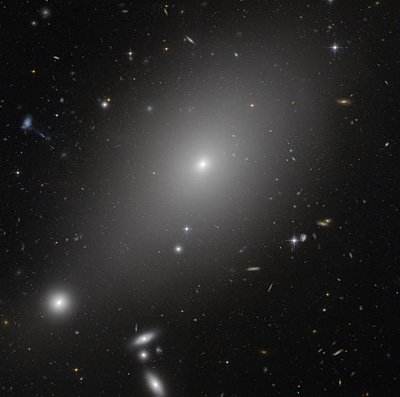
Cosmic oddities have set astronomers onto ‘the case of the missing neighboring galaxies’. Located half a billion light-years from Earth, ESO 306-17 is a large, bright elliptical galaxy in the southern sky known as a fossil group. Astronomers use that term to emphasize the isolated nature of these galaxies but are they really like fossils, the last remnants of a once-active community, or did ESO 306-17 gobble up its next-door neighbors?
Tel Aviv University biologists say a solution to our search for alternative energy may come from an unexpected source ― peas.
Researchers isolating minute crystals of the PSI super complex from the pea plant suggests these crystals can be illuminated and used as small battery chargers or form the core of more efficient man-made solar cells.
To generate useful energy, plants have evolved very sophisticated "nano-machinery" which operates with light as its energy source and gives a perfect quantum yield of 100%. Called the Photosystem I (PSI) complex, this complex was isolated from pea leaves and crystallized, which enabled researchers to describe in detail its intricate structure.
Marketing experts may be able to test a product's appeal while it is still being designed thanks to advanced tools used to see the human brain at work, according to researchers from Duke and Emory Universities.
So-called "neuromarketing" takes tools like the functional MRI and applies them to the somewhat abstract likes and dislikes of customer decision-making.
Though this raises the specter of marketers being able to read people's minds, neuromarketing may prove to be an affordable way for marketers to gather information that was previously unobtainable, or that consumers themselves may not even be fully aware of, says Dan Ariely, a professor of psychology and behavioral economics at Duke University.
A new study of the Atlantic longarm octopus, Macrotritopus defilippi, indicates that the species has exceptional camouflage capabilities. Scientists say the octopus avoids predators in part by expertly disguising itself as a flounder.
While two other species of octopuses are known to imitate flounder, this is the first report of flounder mimicry by an Atlantic octopus, and only the fourth convincing case of mimicry in cephalopods.
The study was published this week in Biological Bulletin.
Preventing mosquitoes from urinating as they feed on blood could prevent the spread of dengue fever, yellow fever and other diseases, say researchers writing in the American Journal of Physiology.
When mosquitoes consume and process blood meals, they must urinate to prevent fluid and salt overloads that can kill them. The research team found that blocking a protein in the renal tubules of Aedes aegypti mosquitoes prevents them from relieving themselves. The work may lead to the development of new insecticides to disrupt the mosquito's renal system, which contributes to a mosquito's survival after feeding on blood.
An asteroid colliding with Earth was responsible for the Cretaceous–Tertiary mass extinction, which wiped out the dinosaurs and more than half of species on Earth, according to a new review published in Science.
Scientists have previously argued about whether the extinction was caused by the asteroid or by volcanic activity in the Deccan Traps in India, where there were a series of super volcanic eruptions that lasted approximately 1.5 million years. These eruptions spewed 1,100,000 km3 of basalt lava across the Deccan Traps, which would have been enough to fill the Black Sea twice, and were thought to have caused a cooling of the atmosphere and acid rain on a global scale.