I have no energy today to put together a detailed discussion of a brand new, exciting search for supersymmetric Higgs boson performed in data collected by the CDF experiment at the Tevatron proton-antiproton collider. All I can do for you is to show the interesting result of the search, and give you some very general ideas of what this is and why it is interesting. Maybe tomorrow or Saturday I will be able to pay more justice to the analysis.
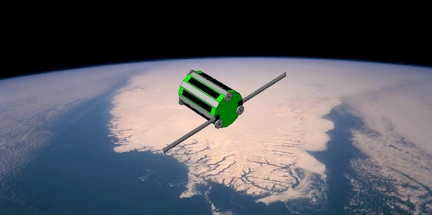
I enjoyed presenting on Project Calliope two weeks ago, at the 215th AAS meeting. I have a partial podcast of my talk in preparation, but in the meantime, here are the visual slides from my presentation (and also up as a PDF at
ProjectCalliope.com. The most important theme I covered was the shift from a tech mindset (build a crack engineering team) to a social mindset (gather a circle of interested people able to talk this up). Though the value of the talk was in the dialog, not the slides, this does provide a useful basic primer on the how and why of launching a personal picosatellite.
Project Calliope
Science&Social Media
Himalayan Hype : Reading Between The Lines
A recent IPCC news release admitting a small instance of bad science has triggered a flurry of news stories and blog articles based on worse science. The IPCC error in question took figures, not from the scientist concerned, Professor Syed Iqbal Hasnain, but from media reports of what he is claimed to have claimed. Those media reports appear to have a common source: a 1999 New Scientist article by Fred Pearce.
2009 was tied for the second warmest year on record, and in the Southern Hemisphere, last year was the warmest on record, according to a new analysis of global surface temperatures by NASA scientists.
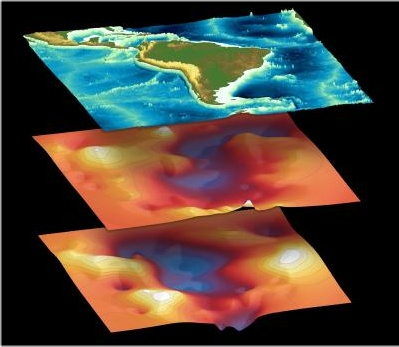
Although 2008 was the coolest year of the decade because of a strong La Nina that cooled the tropical Pacific Ocean, 2009 saw a return to a near-record global temperatures as the La Nina diminished, according to the new analysis by NASA's Goddard Institute for Space Studies (GISS) in New York. The past year was a small fraction of a degree cooler than 2005, the warmest on record, putting 2009 in a virtual tie with a cluster of other years --1998, 2002, 2003, 2006, and 2007 -- for the second warmest on record.
How does an outfielder get to the right place at the right time to catch a fly ball? According to a recent article in the Journal of Vision, the "outfielder problem" represents the definitive question of visual-motor control. How does the brain use visual information to guide action?
To test three theories that might explain an outfielder's ability to catch a fly ball, researchers programmed Brown University's virtual reality lab, the VENLab, to produce realistic balls and simulate catches. The team then lobbed virtual fly balls to a dozen experienced ball players.
Epidemiological studies indicate that obesity comes with an increased risk of developing cancer, and especially certain types such as liver cancer. Now, a group of researchers reporting in Cell say they can explain how obesity acts as a "bona fide tumor promoter."
In the paper, researchers show that liver cancer is fostered by the chronic inflammatory state that goes with obesity, and two well known inflammatory factors in particular. The findings suggest that anti-inflammatory drugs that have already been taken by millions of people for diseases including rheumatoid arthritis and Crohn's disease may also reduce the risk of cancer in those at high risk due to obesity and perhaps other factors as well.
The presumption that children need both a mother and a father may be readily accepted by many people today, but there is little evidence to support the idea, say sociologists from USC and NYU. In a new Journal of Marriage and Family study, the team argues that "fatherless" children are not necessarily at a disadvantage and that men do not provide a different set of parenting skills than women.
Extending their prior work on gender and family, Timothy Biblarz and Judith Stacey analyzed relevant studies about parenting, including available research on single-mother and single-father households, gay male parents and lesbian parents.
What does it take to stop a deadly bioterrorism attack? A strong military? Secured borders? Good Political leaders? If you chose any of the above, you're wrong. The answer is actually llamas--or their proteins to be exact.
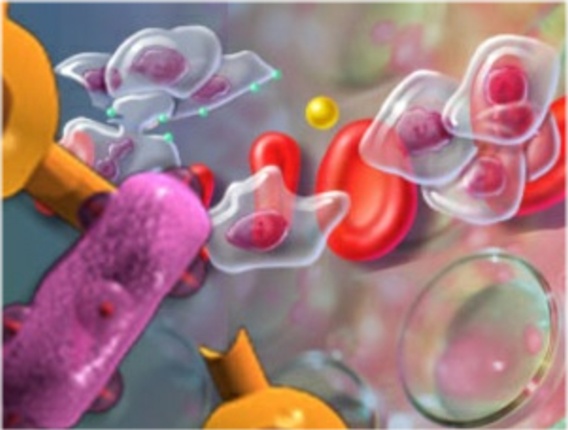
According to a new study in PLoS One, single domain antibodies found in llamas (sdAb) may help scientists detect botulinum neurotoxins (BoNTs), substances 100 billion times more toxic than cyanide, which the Centers for Disease Control says pose a potential bioterror threat.
The natural climate archives recorded in a stalagmite from a limestone cave in southern Arizona link the Southwest's winter precipitation to temperatures in the North Atlantic, according to new research in Nature Geoscience. The finding is the first to document that the abrupt changes in Ice Age climate known from Greenland also occurred in the southwestern U.S.
The stalagmite yielded an almost continuous, century-by-century climate record spanning 55,000 to 11,000 years ago. During that time ice sheets covered much of North America, and the Southwest was cooler and wetter than it is now.
As people age, they gradually lose their ability to filter out irrelevant information. But that may actually give aging adults a memory advantage over their younger counterparts, according to a new study appearing in Psychological Science.
The study demonstrated that when older adults "hyper-encode" extraneous information – and they typically do this without even knowing they're doing it – they have the unique ability to "hyper-bind" the information; essentially tie it to other information that is appearing at the same time.