Readers familiar with this blog know that I am a die-hard skeptic on the issue of physics beyond the Standard Model. However, today I am wearing my fluctuation-enthusiast hat, and I will be trying to argue in favor of the possible signal of new physics that is coming out of the Tevatron data. Please do not get confused: everything is still in order. Maybe.
In reading some posts regarding health care reform, someone made a comment that struck me as unusual regarding the pharmaceuticals, namely that they had a right to make a profit too.
What an interesting phrase; "a right to make a profit". Of course, it isn't even remotely true. Companies aren't even guaranteed a right to be in business, let alone make a profit. One could argue that companies are entitled to make whatever profits they may without interference from the government, but then why should a company have a right that isn't available to ordinary citizens? So where does such a phrase come from and what does it mean?
Researchers believe they have located the original source of malignant malaria; a parasite in chimpanzees of equatorial Africa.
The biologists think the deadly parasite was transmitted to humans from chimpanzees perhaps as recently as 5,000 years ago and possibly through a single mosquito, according to their genetic analysis.
Malaria sickens about 500 million people and kills about 1.5 million each year so any data that may lead to a vaccine is good news. It also furthers understanding of how infectious diseases such as HIV, SARS, and avian and swine flu can be transmitted to humans from animals.
Our cells are controlled by billions of molecular 'switches' that react to our environment. All creatures, from bacteria to humans, must monitor their environments in order to survive. They do so with biomolecular switches, made from RNA or proteins. For example, in our sinuses, there are receptor proteins that can detect different odors. Some of those scents warn us of danger; others tell us that food is nearby.
UC Santa Barbara researchers say they have developed a theory that explains how these molecules work and their findings may significantly help efforts to build biologically based sensors for the detection of chemicals ranging from drugs to explosives to disease markers.
People who engage in 'brain exercise' activities, like reading, writing, and playing card games, may delay the rapid memory decline that occurs if they later develop dementia, according to a study published in Neurology.
So is Texas Hold 'Em the key to a healthy brain in old age? Yes, though crossword puzzles and playing music worked as well. But you can't gloat over a crossword puzzle.
The study involved 488 people aged 75 to 85 who did not have dementia at the start of the study. They were followed for an average of five years and during that time 101 of the subjects developed dementia.
Hydrogen is the most common element in the universe and is an insulating gas. Hydrogen is also the simplest of the elements: it contains one proton and one electron.
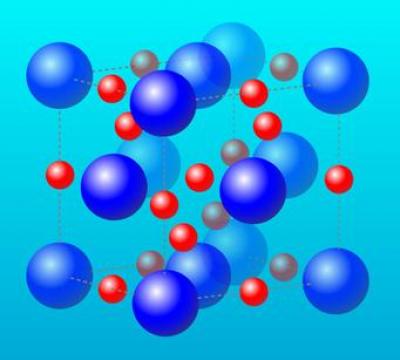
But at high pressures hydrogen may turn into a superconductor and scientists at the Carnegie Institution in Washington D.C., say they have discovered a hydrogen-based compound that could be helpful in the search for metallic and superconducting forms of hydrogen.
Because hydrogen is so light, quantum theory says that it will have a significant energy even when it is cooled to very low temperatures. This is why hydrogen only solidifies at just 14 degrees above absolute zero.
Like Goldilocks and her porridge, people today want their food to be perfect. But when you look at something like a pineapple in a supermarket, how do you know what's 'just ripe' and what is spoiled, or not ripe yet? They all look the same.
New technology that uses volatile components to detect when pineapple is ripe and when it can be delivered to the supermarket may help. The system has been developed by researchers at the Fraunhofer Institutes for Molecular Biology and Applied Ecology IME in Schmallenberg and for Physical Measurement Techniques IPM in Freiburg to check gas emissions, such as in a warehouse.
Many children born outside of marriage are born to parents in unstable relationships and often live apart from their fathers.
New research from the Journal of Marriage and Family says that children born outside of marriage are less likely to be visited by their father when the mother becomes involved in a new romantic relationship. Fathers of illegitimate children are likely to not visit their child at all if the child’s mother forms a new relationship early in the child’s life, especially if the new couple lives together and the new partner becomes involved in childrearing activities.
Scientists say they have discovered a unique 'DNA signature' in human sperm, which may act as a key that unlocks an egg's fertility and triggers new life.
Drs David Miller and David Iles from the University of Leeds, in collaboration with Dr Martin Brinkworth at the University of Bradford, say they have found that sperm writes a DNA signature that can only be recognized by an egg from the same species. This enables fertilization and may even explain how a species develops its own unique genetic identity.
Without the right 'key', successful fertilization either cannot occur, or if it does, development will not proceed normally. Notably, disturbances in human sperm DNA packaging are known to cause male infertility and pregnancy failures.
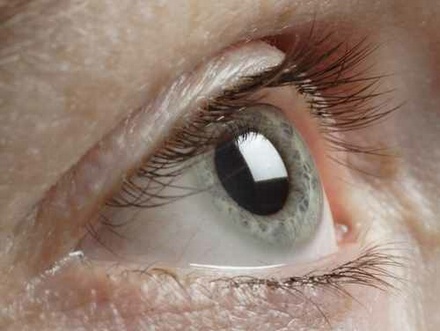
A new class of antibody drugs may help in treatment of childhood eye diseases but specialists need to be alert for the possibility of serious side effects, according to an editorial in the August Journal of American Association for Pediatric Ophthalmology and Strabismus (AAPOS).
In the editorial, Dr. Robert L. Avery discusses issues related to the use of antibodies against vascular endothelial growth factor (VEGF) in pediatric ophthalmology.