





Every day we make a multitude of decisions based on the consequences of our actions; goal-orientated responses.

In an always changing environment this capacity is crucial but, because it is complex, it also requires a lot from the brain. So repeated actions, like to press the elevator button to our floor, become linked to other type of neural responses, which are automatic and so less demanding. And if necessary it is always possible to switch back to the first kind of response.

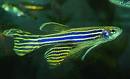
The effects of amphetamines on gene expression in zebrafish have been discovered. This new study, published in BioMed Central's open access journal Genome Biology, provides clues to the genetics that underlie susceptibility to addiction by describing the nad zebrafish mutant, which does not feel the rewarding effects of the drugs.

Ever since graphene was discovered in 2004, this one-atom thick, super strong, carbon-based electrical conductor has been billed as a "wonder material" that some physicists think could one day replace silicon in computer chips.

But graphene, which consists of carbon atoms arranged in a honeycomb lattice, has a major drawback when it comes to applications in electronics: it conducts electricity almost too well, making it hard to create graphene-based transistors that are suitable for integrated circuits.

In Physics World, Kostya Novoselov--a condensed-matter physicist from Manchester University--explains how their discovery of graphane, an insulating equivalent of graphene, may prove more versatile.

Stem cell researchers trying to understand the mechanisms that determine whether stem cells divide or differentiate, and what types of cells they become and how to control them to develop new treatments, may have gotten some much needed help.

Investigators at the Burnham Institute for Medical Research (Burnham) and The Scripps Research Institute (TSRI) have made a comparative, large-scale phosphoproteomic analysis of human embryonic stem cells (hESCs) and their differentiated derivatives. The study was published in the journal Cell Stem Cell.
Comets contained vast oceans of liquid water in their interiors during the first million years of their formation, argue Professor Chandra Wickramasinghe and colleagues at the Cardiff Centre for Astrobiology in a paper published in the International Journal of Astrobiology

The watery environment of early comets, together with the vast quantity of organics already discovered in comets, would have provided ideal conditions for primitive bacteria to grow and multiply, they say. 
Detailed balance is a simple and powerful rule to describe the dynamics of two-state systems.

If you know the probability of a transition from a state A to the other state B of a physical system (in some appropriate time unit), and you also know the probability of the reverse reaction , then you automatically know what is equilibrium condition for N bodies distributed in the two states:

.
Many geeks adhere to Stiff Paper Theory (SPT), holding that frogs made of expensive company letterhead will jump higher than those made of flimsy copy paper. However, while SPT adds giddy-up to any origami amphibian, it also adds weight. The trick is to find a paper that offers the happy combination of high spring at low weight.

In this regard, linen papers tend to under perform; so too do cardboard mailers, as they lead to bulky, bullfrog-esque hoppers.
Previously thought to be indivisible, with negative charge for all, the electron is one of the fundamental building blocks of nature. A new experiment, however, has shown that electrons, if crowded into narrow wires, are seen to split apart.

The electron is responsible for carrying electricity in wires and for making magnets. These two properties of magnetism and electric charge are carried by electrons which seem to have no size or shape and are impossible to break apart.

There has long been an on-again, off-again debate about the health effects of red wine. Is it killing our liver or is it preventing the next pandemic? It appears scientists from Scotland and Singapore have answered this question.

Red wine is healthy because the resveratrol it contains controls inflammation. But how? New research published in the August 2009 print issue of The FASEB Journal (http://www.fasebj.org), not only explains resveratrol's one-two punch on inflammation, but also show how it—or a derivative—can be used to treat potentially deadly inflammatory disease, such as appendicitis, peritonitis, and systemic sepsis.

Plancks Law is a well-established physical law describes the transfer of heat between two objects.

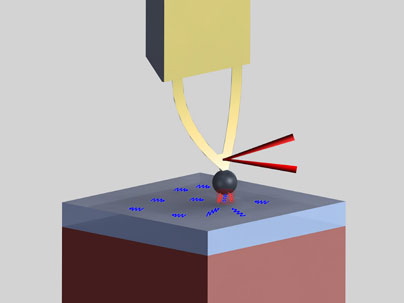
Some physicists have predicted that the law should break down when the objects are very close together but scientists had never been able to confirm, or measure, this breakdown in practice.


MIT researchers say they have now done it but that the heat transfer can be 1,000 times greater than the law predicts.  The new findings could lead to better design of recording heads of the hard disks used for computer data storage,and new kinds of devices for harvesting energy from heat that would otherwise be wasted.

