You may have heard the fairy tale of
The Three Little Pigs. In the original story
(1), they leave home to find their fortune but the first one builds his new place out of straw and the Big Bad Wolf blows it down and eats him.
By the time he got to the third little pig, who built his house of brick, the wolf got his comeuppance, but it still wasn't a great result for the progessive, environmentally-conscious first one.
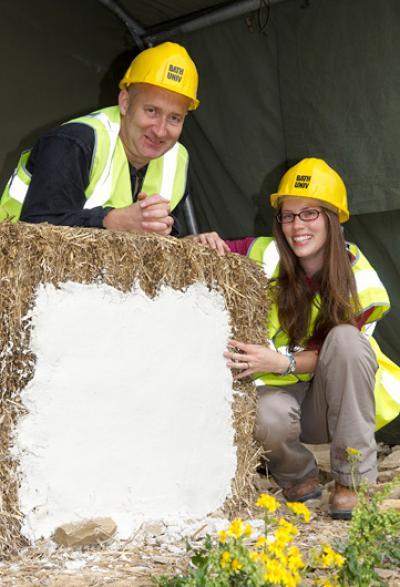
Researchers at the University of Bath say straw in housing has gotten a bad rap and to prove it they are making a "BaleHaus" of prefabricated straw and hemp 'cladding' panels.
Have we learned nothing?
Striking differences in the risk factors for developing heart failure (HF) and patient prognosis exist between men and women, according to a review article published in the August 4, 2009, issue of the Journal of the American College of Cardiology.
Men and women may also respond differently to treatment, raising concerns about whether current practices provide the best care and reinforcing the urgency for sex-specific clinical trials for heart failure.
Genetic disease such as leukemia are a big target in 21st century science thanks to advancements in our understanding of how the body works.
Some of our treatments, like chemotherapy, are rather brute force in their solution. Now scientists from the Université de Montréal and McGill University say they have re-engineered a human enzyme, a protein that accelerates chemical reactions within the human body, to become highly resistant to harmful agents like chemotherapy.
Researchers writing in
BMC Infectious Diseases say their numerical model of influenza transmission and treatment suggests that if a H1N1 Swine Flu pandemic behaves like the 1918 flu, antiviral treatments should be reserved for the young.
They argue that providing the elderly with antiviral drugs would not significantly reduce mortality, and may lead to an increase in resistance. This is not a case of young researchers doing social engineering.
H1N1 swine flu has also impacted the young much more than the old, the reverse of traditional flu.
Depressed people may prefer the dark but it won't be a good thing for their cognitive abilities, say researchers writing in Environmental Health.
They used weather data from NASA satellites to measure sunlight exposure across the United States and linked this information to the prevalence of cognitive impairment in depressed people. Shia Kent, from the University of Alabama at Birmingham, led the team of US researchers who used cross-sectional data from 14,474 people in the NIH-NINDS-funded REGARDS study, a longitudinal study investigating stroke incidence and risk factors, to study associations between depression, cognitive function and sunlight.
Superman's X-ray vision may be closer than you think. The tubes that power X-ray machines are shrinking and also improving in clarity.
A team of nanomaterial scientists, medical physicists, and cancer biologists at the University of North Carolina has developed new lower-cost X-ray tubes packed with sharp-tipped carbon nanotubes for cancer research and treatment. This tiny technology was presented at this year's meeting of the American Association of Physicists in Medicine in Anaheim, California.
The science goal is to image human breast tissue, laboratory animals, and cancer patients under radiotherapy treatment, and to irradiate cells with more control than previously possible with conventional X-ray tubes. The fun goal will be just about anything else.
Most people learn more quickly if they are rewarded for making correct decisions but little is understood about how rewards facilitate the learning process.
Studies have shown that if a decision leads to a successful outcome, it is registered in the brain's reward system. The reward stimulus is then relayed to the area of the brain which was responsible for making the decision. In this way, the brain optimizes its processes for improved performance each time.
Researchers say they directly convert spermatogonial stem cells, the precursors of sperm cells, into tissues of the prostate, skin and uterus, an effective alternative to the medical use of embryonic stem cells.
Scientists may be closer to understanding how to grow replacement bones with stem cell technology.
Many scientists are trying to create bone-like materials derived from stem cells to implant into patients who have damaged or fractured bones or who have had parts of diseased bones removed. The idea is that, ultimately, these bone-like materials could be inserted into cavities so that real bone could meld with it and repair the bone.
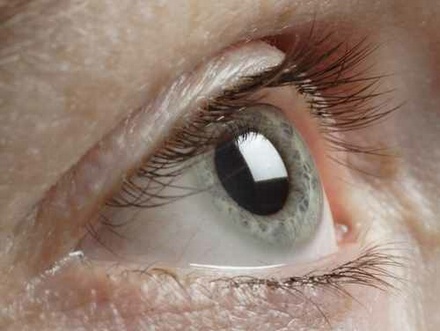
Nearly all species have some ability to detect light and at least three types of cells in the retina allow us to see images or distinguish between night and day. Now, researchers at the Johns Hopkins School of Medicine say they have discovered another type of cell that can sense light and contribute to vision.
Reporting in Nature, the team of neuroscientists say that retinal horizontal cells, which are nerve cells once thought only to talk to neighboring nerve cells and not even to the brain, are light sensitive themselves.