Fluctuating temperatures in Africa have always made reliable agriculture production difficult and global warming could make it even worse. If local varieties of maize and other food staples are unsuitable, the food security of many Africans will depend on farmers in one country gaining access to climatically suitable varieties now being cultivated in other African nations, and beyond, according to a study published in Global Environmental Change.
A new National Institute of Standards and Technology (NIST) assay using a “glow or no glow” technique may soon help the U.S. Department of Homeland Security (DHS) defend the nation against a spectrum of biological weapons that could be used in a terrorist attack.
One very dangerous toxin on the list is ricin, a protein derived from castor beans that is lethal in doses as small as 500 micrograms—about the size of a grain of salt.
People make value judgements about others based on their facial expressions, according to a new study carried out by Spanish and Brazilian researchers. After looking at a face for only 100 milliseconds, we can detect expressions of happiness and surprise faster than those of sadness or fear.
Our brains get a first impression of people's overriding social signals after seeing their faces for only 100 milliseconds (0.1 seconds). Whether this impression is correct is another question. An international research group has carried out an in-depth study into how we process emotional expressions, looking at the pattern of cerebral asymmetry in the perception of positive and negative facial signals.
Darwin didn't miss much, I think we all agree, and came up with a lot given the limited science of his day. One thing he missed, that by this time tomorrow will be the source of outrageous titles from every schlock science publication in existence, was that sexual selection that goes on even after actual sex.
Confusing? It's not so difficult to understand. Some female critters are trampy and have sex with more than one guy, for example (what, you think other parts of the animal kingdom don't have Jenna Jameson?) so there's sperm competition but there are also other factors having to do with the internal workings of the female body (i.e. that magical place), so let's catalog a few of post-copulatory sexual selection's greatest hits:
Now that I am officially a philosopher (i.e., my salary is going to be paid by a philosophy, instead of a biology, department), I can indulge full time in reading philosophy without feeling guilty. I haven’t mastered the skill (of not feeling guilty) yet, but I’m working on it.
This is also why I’m starting an occasional series of blog posts devoted to individual philosophers, picked among those that strike my fancy for one reason or another. Obviously, a blog post is not the appropriate venue for even a superficial look at the entire body of work of a major philosopher, so what I’ll do instead is to briefly comment on a number of major themes relevant to each particular case, and hope to stimulate people to read more about that philosopher.
Below I offer a preview of the slides I will show tomorrow at an invited seminar on the rather technical topic of "The b-jet energy calibration with Z-->bb decays", which I have come to CERN to give at a meeting of the LHCb collaboration. As I mentioned already in the first part of this two-part article, the topic is rather technical, and I do not expect a large audience -but I will nonetheless make an attempt at explaining the meaning of the slides pasted below. Then, of course, I am available to provide some additional light on any specific issue among those dealt below which you may want to understand more about.
Humans aren't all that close to each other in a modern sense but in one way we may be a little closer than previously realized: the way fish learn could be closer to humans, suggests a new research study.
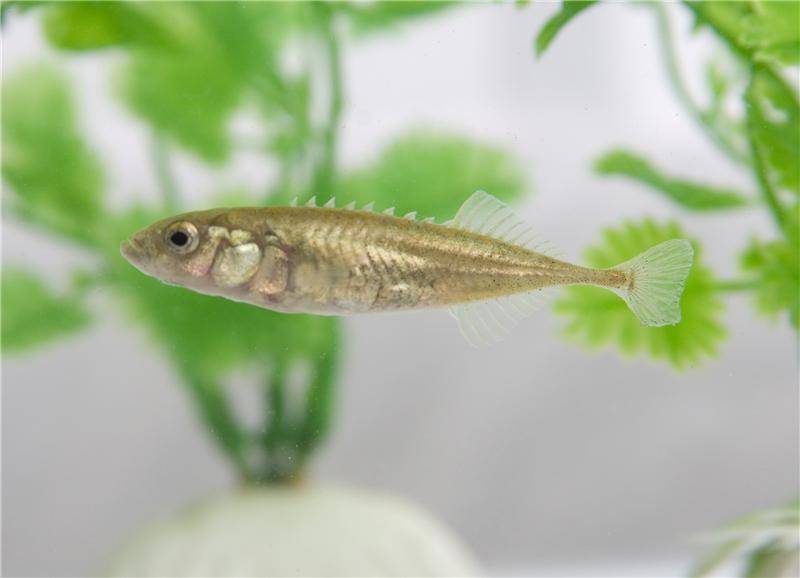
A common species of fish which is found across Europe called the nine-spined stickleback could be the first animal shown to exhibit an important human 'social learning' strategy. Sticklebacks can compare the behavior of other sticklebacks with their own experience and make choices that lead to better food supplies, according to the study by St Andrews and Durham universities.
Can you fly a house with balloons? The recent Pixar movie "Up" does, but it's animated. In the
"Up" production notes, Steve May, the film's supervising technical director, writes
"It was important to the film to have fairly realistic balloon simulations. The balloons behave in a realistic way, although the notion of being able to fly a hosue with balloons is pretty preposterous. We're not physicists but one of our technical directors calculated that it would take on the order of 20 to 30 million balloons to actually life Carl's house. We ended up using [...] 20,622 when it actually lifts off."
Same-sex behavior has been extensively documented in the non-human animal kingdom, concludes a new review of existing research.
Yep, homosexual behavior is common across species, from worms to frogs to birds - but there's a catch. Same-sex 'behaviors' are not the same across species and researchers may be calling qualitatively different phenomena by the same name.
In revisiting a chemical reaction that's been in the literature for several decades and adding a new wrinkle of their own, researchers with Berkeley Lab and the University of California (UC) Berkeley have discovered a mild and relatively inexpensive procedure for removing oxygen from biomass. This procedure, if it can be effectively industrialized, could allow many of today's petrochemical products, including plastics, to instead be made from biomass.
"We've found and optimized a selective, one-pot deoxygenation technique based on a formic acid treatment," said Robert Bergman, a co-principal investigator on this project who holds a joint appointment with Berkeley Lab's Chemical Sciences Division and the UC Berkeley Chemistry Department.