Sanger F, Nicklen S, Coulson AR. 1977. DNA sequencing with chain-terminating inhibitors. Proceedings of the National Academy of Sciences, U S A 74: 5463-7.
This paper describes the most important (IMHO) technical breakthrough in the biological sciences: DNA sequencing using a single-stranded DNA template, a DNA primer, a DNA polymerase, radioactively or fluorescently labeled nucleotides, and modified nucleotides that terminate DNA strand elongation.
Science is great at finding new rules for expectant mothers. They already can’t have alcohol, caffeine, or cigarettes. They also need to stay away from their cat’s litterbox, stay off of planes and rollercoasters, stay off of antidepressants, drop their acne medication, and forgo even a well-considered vegan diet.
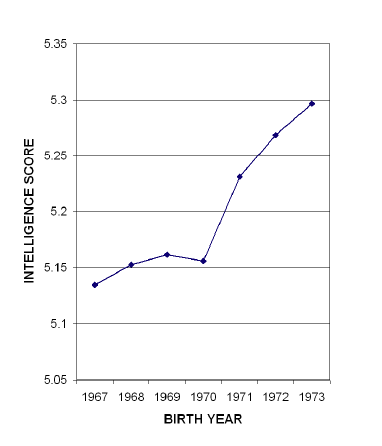
Now they have to avoid the Hong Kong flu, too. The Annals of Neurobiology recently published a study that suggested that exposure to the Hong Kong virus during the first trimester of pregnancy may contribute to decreased adult intelligence.
The Hong Kong flu is fairly easy to avoid now. But it was everywhere in 1969 and 1970. It reached its Norwegian apex in the spring of 1970, affecting up to 40% of the population.
The setup to the classic Melting Ice Cube problem goes something like this: “Fifty grams of ice are melting in a 100-mililiter cup of 35-degree water.” Using simple principles of energy transfer, we can estimate what the final temperature of the water will be, and how much energy transfer was required to make the ice melt.
But what if that ice cube was 20,000 square miles and the cup of water was 300 million cubic miles? What if the ice reflected incoming heat but the water absorbed it? And what if hurricanes, droughts, and forest fires depended on the outcome?
Bora has posted
an interesting draft policy on social media from an unidentified "Big Research Institution" (BRI).
It's already stimulating some good discussion (follow the link for more links) - no surprise, since the policy guidelines contain juicy quotes like these:
All BRI social media output is the intellectual property of BRI.
Whether you are setting up new BRI social media pages within the BRI website or on an existing social media site such as Flickr or Facebook, they need to follow the BRI interactive project process.
New research provides insight into how the brain can execute different actions in response to the same stimulus. The study, published by Cell Press in the April 16 issue of the journal Neuron, suggests that information from single brain cells cannot be interpreted differently within a short time period, a finding that is important for understanding both normal cognition and psychiatric disorders.
If we're going to get a $300 genome sequence any time in the near future, around the cost it will take to have it as part of routine medical care, the process has to get faster.
The obstacles to reaching that goal have been primarily technological: Scientists have struggled to figure out how to accurately read the 3 billion base pairs - the amount of DNA found in humans and other mammals - using current time-consuming and inefficient methods.
Genetic differences can influence one's risk of developing proteinuria, a condition that increases the risk of cardiovascular disease and chronic kidney disease (CKD), according to a study appearing in an upcoming issue of the Journal of the American Society of Nephrology (JASN). The results may be important for determining patients' health risks and for devising new medical treatments.
Approximately 12% of people in the United States have proteinuria (abnormal levels of protein lost in the urine), and African Americans and American Indians have higher risks of developing the condition than other groups. Researchers suspect that genetic variation likely accounts for part of their increased risks.
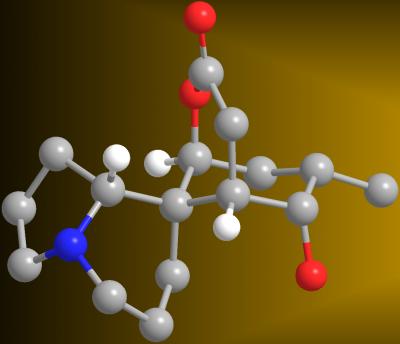
The club moss Lycopodium serratum is a creeping, flowerless plant purportedly used to treat a wide variety of ailments. It contains a brew of alkaloids that have attracted scientific and medical interest because of the use of the moss in homeopathy. However, the plant makes many of these compounds in extremely low amounts, hindering efforts to test their therapeutic value.
That is no longer a problem for what is arguably the most complex of these alkaloids, a compound called Serratezomine A: an alkaloid that could have anti-cancer properties and may combat memory loss. A team of synthetic chemists at Vanderbilt University reported in the Journal of the American Chemical Society that they have created an efficient way to make this molecule from scratch.
Today, five years after the inception of the DECIPHER database, researchers have published a report that reveals the developing role of the database in revolutionizing both clinical practice and genetic research.
The report explores the growing benefits of DECIPHER for researchers, clinicians and patients - highlighting how the data, provided by around 100 centres and shared openly worldwide, can benefit all three groups.
A study of gene expression in chickens, frogs, pufferfish, mice and people has revealed surprising similarities in several key tissues. Researchers writing in BioMed Central's open access Journal of Biology have shown that expression in tissues with a limited number of specialized cell types is strongly conserved, even between the mammalian and non-mammalian vertebrates.