Natural burial is not just a 'green' option for eco-fixated non-religious people, according to researchers at the University of Sheffield. They'll be holding an event called "Natural Burial: Do we need a Headstone?" to be held in Sheffield on March 14 as part of the Economic and Social Research Council's (ESRC) Festival of Social Science.
The largest study of its kind to evaluate the effect of red versus white wine on breast-cancer risk concludes that both are equal offenders when it comes to increasing breast-cancer risk. The results of the study were published in the March issue of Cancer Epidemiology, Biomarkers and Prevention.
The researchers found that women who consumed 14 or more drinks per week, regardless of the type (wine, liquor or beer), faced a 24 percent increase in breast cancer compared with non-drinkers.
Effective stem cell treatment for strokes has taken a significant step forward as scientists writing in
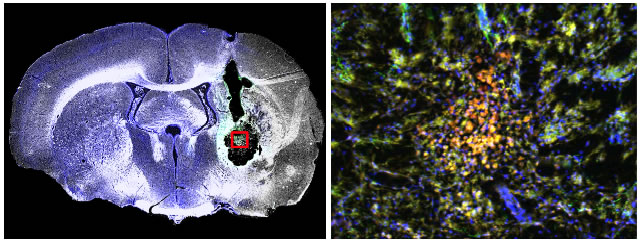
Biomaterials reveal how they have replaced stroke-damaged brain tissue in rats using neural stem cells.
The work, carried out at the King's College London Institute of Psychiatry and University of Nottingham, shows that by inserting tiny scaffolding with stem cells attached, it is possible to fill a hole left by stroke damage with brand new brain tissue within 7 days.
Neural stem cells exist in the adult nervous system of all mammals, though they can also be derived from more primitive embryonic stem cells.
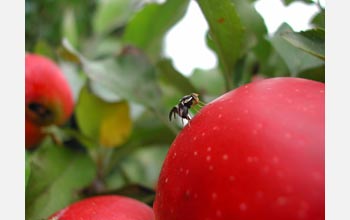
A team of researchers has reported the ongoing emergence of a new species of fruit fly and the sequential development of a new species of wasp. Jeff Feder, a University of Notre Dame biologist, and his colleagues say the introduction of apples to America almost 400 years ago ultimately may have changed the behavior of a fruit fly, leading to its modification and the subsequent modification of a parasitic wasp that feeds on it.
The result is a chain reaction of biodiversity where the modification of one species triggers the sequential modification of a second, dependent species. The National Science Foundation supports the research.
Neuroscientists at New York University and Harvard University say they have identified the neural systems involved in forming first impressions of others. The findings may show how we encode social information and then evaluate it in making these initial judgments, according to the study in Nature Neuroscience.
Making sense of others in a social interaction is not easy—each new person we meet may be a source of ambiguous and complex information. However, when encountering someone for the first time, we are often quick to judge whether we like that person or not. In fact, previous research has shown that people make relatively accurate and persistent evaluations based on rapid observations of even less than half a minute.
Researchers say they have discovered eight similar genes that, when mutated, appear to be responsible for medulloblastoma – the most common of childhood brain cancers.
About 250 Canadian children are diagnosed with various types of brain cancer every year. About 70 per cent of these survive. Brain tumors are the leading cause of childhood cancer deaths. The most common childhood brain cancer is medulloblastoma – a tumour that occurs at the back of the brain in the cerebellum. It is primarily a disease of very young children and is particularly deadly among babies under 18 months of age. In Canada, about 40 children are diagnosed with medulloblastoma every year and half of these will survive.
I have been downloading a cartload of books on my new Kindle lately, since I really enjoy the idea of walking into the subway carrying a rather inconspicuous, very light, yet incredibly large library with me. One of these books is Samir Okasha’s Philosophy of Science: A Very Short Introduction, which I’m reading because I intend to review and promote it.
Cells keep up with the Joneses. The peer pressure of signals from complementary cells tells a stem cell how and when to differentiate and grow.
Dr. Carolyn Bertozzi and her team at Lawrence Berkeley laboratory are using molecular self-organization tendencies to give cells the orderly neighborhoods they desire. However, this microscopic community has an unusual dress code-- the cells display DNA on the outside of their membranes, which allows them to keep each other in line.
No, that isn't a New York Times headline(1), Swedish researchers really do say their studies of twins have showed significant genetic differences between men and women who smoke and develop lung disease - women are more susceptible to the consequences of smoking than men.
The team, led by Professor Magnus Svartengren from the Karolinska Institute, has been looking at the interaction of the environment with the genes of nearly 45,000 twins over 40 years old. They were interested in twins with chronic bronchitis or emphysema.
Pleasure and desire are essential to all human behavior, says Oxford University neuroscientist Morten Kringelbach , and he challenges us to trust our animal instincts in pursuit of those.
Pleasure and our sense of reward are produced by the interaction of many different brain regions, processed consciously or unconsciously. In the day-to-day routine of life, we may feel we are continually fighting our desires for what we really want. But doing so, he argues, is irrational and a huge waste of energy and resources, for it is pleasure and desire that underlie all our decisions and actions, and, therefore, our experiences.