Introducing presumed consent or opt-out system may increase organ donation rates, suggests a new systematic review published in the BMJ (British Medical Journal).
There is currently insufficient supply of donor organs to meet the demand for organ transplantations in the UK but the number of patients registered for a transplant continues to increase. In March 2008, 7,655 patients were on the active transplant list and 506 died in the years 2007-2008 while waiting for their transplant.
At present the UK has an informed consent legislative system where individuals opt-in if they are willing for their organs to be used after death. However, only a quarter of the UK population are on the NHS donor register.
With record low temperatures, winter blizzards and warming that isn't really global, people aren't taking climate change very seriously these days, but that doesn't mean pollution gets a free pass if we want to continue to enjoy nature as we know it. Temperature change in the Arctic can still happen regardless of what is happening in cold spots of the world and it may be happening at a greater rate there than other places in the Northern Hemisphere.
As a result, glacier and ice-sheet melting, sea-ice retreat, coastal erosion and sea level rise could continue even if it doesn't feel warmer in Chicago.
5.
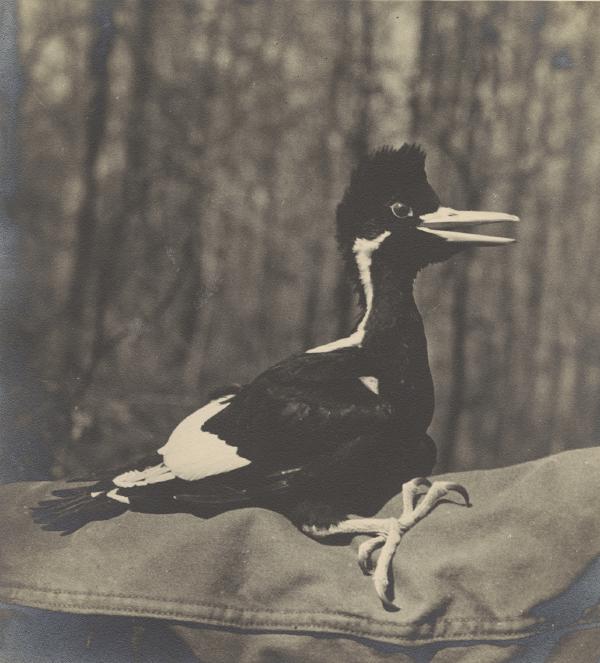
That's how many mated pairs will need to have survived the extensive habitat loss that occurred during the early 1900's for the ivory-billed woodpecker to still be around today.
Do they exist? No one knows, though in the last few years people have claimed to see them. But people have claimed to see Bigfoot too.
Take heart, parents. If your teenager is brandishing a virtual shotgun in their new video game, you're not raising the next Columbine kid. If they're enjoying themselves, it's because of the healthy pleasure of mastering a challenge rather than from a disturbing craving for carnage.
A new Commonwealth Fund study says that the United States should adopt the policies of Switzerland and the Netherlands. Those countries have near-universal coverage, though they have to subsidize up to 40 percent of families since individual health coverage is mandated by law.
The result? Both countries effectively cover all but one percent of their population, compared with 15 percent uninsured in the U.S.
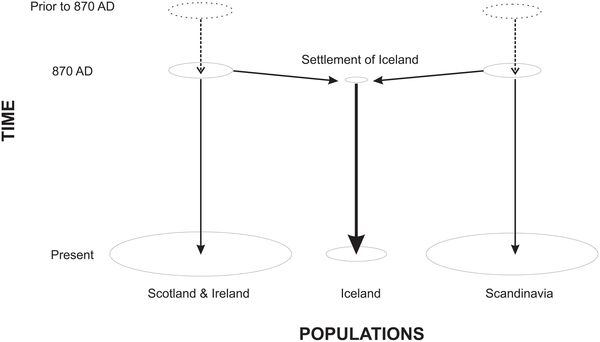
Scientists at deCODE genetics have completed the largest study of ancient DNA from a single population ever undertaken. Analyzing mitochondrial DNA, which is passed from mother to offspring, from 68 skeletal remains, the study provides a detailed look at how a contemporary population differs from that of its ancestors.
The results confirm previous deCODE work that used genetics to test the history of Iceland as recorded in the sagas. These studies demonstrated that the country seems to have been settled by men from Scandinavia – the vikings – but that the majority of the original female inhabitants were from the coastal regions of Scotland and Ireland, areas that regularly suffered raids by vikings in the years around the settlement of Iceland 1100 years ago.
Scientists say they have developed a mathematical model of the mating game to help explain why courtship is often protracted. That's right, there may one day be a numerical model to tell you why women under 30 like the Bad Boys but over age 30 they like men that are employed.
The study by researchers at University College London (UCL), University of Warwick and LSE (London School of Economics and Political Science), says that extended courtship enables a male to signal his suitability to a female and enables the female to screen out the male if he is unsuitable as a mate.
Katy Kao, assistant professor in the Artie McFerrin Department of Chemical Engineering, and Stanford University colleague Gavin Sherlock say their new study of yeast cells has resulted in the most detailed picture of an organism's evolutionary process to date.
Working with populations of yeast cells, which were color-coded by fluorescent markers, they were able to evolve the cells while maintaining a visual analysis of the entire process.
What does that mean? It means the evolutionary process is even more dynamic than initially thought, with multiple beneficial adaptations arising within a population. These adaptations, Kao explained, triggered a competition between these segments, known as "clonal interference."
The ecology is a dynamic, complex system so even small changes, or
small experiments, can have big responses. Some of these responses, including insect outbreaks, wildfire, and forest dieback, may adversely affect people as well as ecosystems and their plants and animals.
Writing in the Journal of Biological Chemistry, a group of researchers found that nutrient deprivation of neurons produced sex-dependent effects. Male neurons more readily withered up and died, while female neurons did their best to conserve energy and stay alive.
That's right, nature has declared female brains should survive with a lot less than males. Take that, glass ceiling!
The idea that the sexes respond differently to nutrient deprivation is not new and revolves around the male preferences to conserve protein and female preferences to conserve fat. However, these metabolic differences have really only been examined in nutrient-rich tissues like muscles, fat deposits, and the liver.