In popular legend, Lucrezia Borgia, Duchess of Ferrara (1480- 1519), stands falsely accused of poisoning her second husband. Victor Hugo portrayed her in thinly veiled fiction as a tragic femme fatale. Buffalo Bill named his gun after her.  

But new research by USC historian Diane Yvonne Ghirardo claims that the only sister of Machiavelli's Prince was less interested in political intrigue than in running a business, undertaking massive land development projects that "stand alone in the panorama of early sixteenth-century projects, not only those initiated by women," Ghirardo says.
Attention Deficit/Hyperactivity Disorder (ADHD) is a complex condition considered by some to have both environmental and genetic causes. It is characterized by developmentally inappropriate levels of inattention, hyperactivity and impulsivity that has an onset in childhood. It has become one of the most commonly diagnosed psychiatric diseases, diagnosed in up to 8 percent of children worldwide.
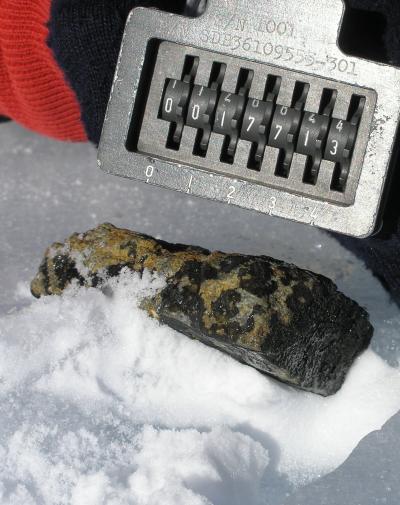
Asteroids are hunks of rock that orbit in the outer reaches of space.  Scientists have generally assumed that their small size limited the types of rock that could form in their crusts but two newly discovered meteorites have changed that.  
 
The two meteorites were discovered during the Antarctic Search for Meteorites (ANSMET) 2006/2007 field season in a region of the Antarctic ice known as the Graves Nunatak icefield. The light-colored meteorites, designated GRA 06128 and GRA 06129, were immediately recognized as being different from previously known meteorites.

What is a bubble? As is often the case with language, one word can embody multiple meanings.  I am referring to the type of bubble emergent from large-scale social phenomena. It is generally a self-reinforcing process, where participants come to believe that by buying in or investing in some underlying thing, they will see increased value from that thing in the future.  It is self-reinforcing, because people who are initially on the sidelines will observe others who are participating making gains, and often feel compelled to join the fray lest they loose out.

It seems obvious, right?   If you are around people who don't think much of you, over time you are more inclined to think less of yourself.  That's self esteem.

Looking at yourself in the mirror every morning, you never think to question whether the person you see is actually you but our interaction with others impacts that also, claims a PLoS ONE study by Dr Manos Tsakiris in Department of Psychology at Royal Holloway, University of London.   He challenges this common-sense notion about our own self image and  says that the image we hold of our own face can actually change through shared experiences with other people's faces. 
Herbicide use should increase crop yields, that's the whole point, and herbicides and pesticides do that, given the output in food production that has matched the population increases over the last two centuries.  But there may be a problem in how some herbicides impact reproduction and tests may not be accounting for that, says a study in the Journal of Environmental Quality.
Scientists can now call up stem cell troops to repair the body using new drug combinations.  They have basically 'tricked' bone marrow into releasing extra adult stem cells into the bloodstream, a technique that they hope could one day be used to repair heart damage or mend a broken bone, according to a new study published today in Cell Stem Cell. 
A study published in Cancer Prevention Research identifies components of black raspberries with chemopreventive potential.  Researchers at the Ohio State Comprehensive Cancer Center found that anthocyanins, a class of flavonoids in black raspberries, inhibited growth and stimulated apoptosis in the esophagus of rats treated with an esophageal carcinogen. 
If you read almost any science blog other than mine, you're probably aware of Brown University biologist Ken Miller's smackdown of Intelligent Design (ID) shill Casey Luskin, posted on Carl Zimmer's Loom: part 1, part 2, and part 3.

At issue is the tired old concept of irreducible complexity, and it's amazing that after all this time, many ID advocates don't understand what the original point of arguing irreducible complexity was. ID advocate Michael Behe, in various publications including his book Darwin's Black Box basically argued that there are molecular systems inside of cells that, even in principle could not have been produced by evolution - systems like the bacterial flagellum and the blood clotting cascade. Such systems, according to Behe, are irreducibly complex - they need all of their parts in order to function, and if you're missing any parts, you have a non-functional system. Thus, without all of the parts there is nothing functional for natural selection to act on.

In other words, the only way evolution could produce a system like the blood clotting cascade would be to have all of the relevant genes suddenly appear at one time by mutation - an event improbable to the point of impossibility (which is one thing ID advocates and evolutionary biologists agree on).
Roystonea, the royal palms, are the most striking palms in the Caribbean, and arguably, in the world (though, granted, a talipot palm in flower comes a close second). The name of the genus was coined by Orator F. Cook, an American botanist, in 1900, in honour of Roy Stone, an American general involved in the capture of Puerto Rico during the Spanish-American war.