







Would you ever have thought there could be anyone considered an expert on the political impact of late-night comedy shows on candidates? Us either, but that's the claim.

American University says Lauren Feldman is that expert and in her real job she is an assistant professor at American University’s School of Communication. Feldman did an analysis of the 2004 election and the results say Tina Fey’s humorous impersonations of vice presidential candidate Sarah Palin on Saturday Night Live (SNL) could be doing real damage to the McCain campaign in the 2008 election. Even if they aren't, it's a good rumor to start.

To get from one cell to a complex organism, cells have to divide, travel around the body and arrange intricate shapes and specialized tissues. The best way to understand these dynamic processes is to look at what happens in the first few hours of life in every part of an embryo. While this is possible with invertebrates with a few hundred cells, like worms, it was previously impossible to achieve for vertebrates.

“Imagine following all inhabitants of a town over the course of one day using a telescope in space. This comes close to tracking the 10 thousands of cells that make up a vertebrate embryo – only that the cells move in three dimensions,” says Philipp Keller. Together with Annette Schmidt he carried out the research in the labs of Jochen Wittbrodt and Ernst Stelzer at the European Molecular Biology Laboratory (EMBL).

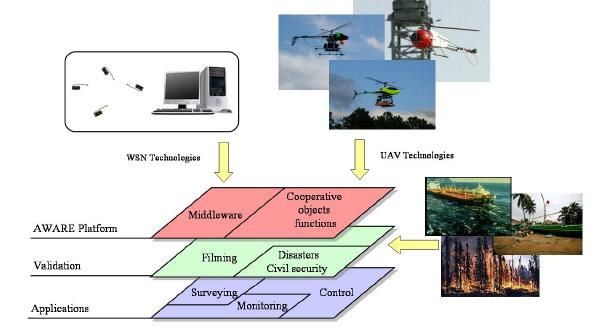
Unmanned helicopters could soon be a key part of emergency relief operations, as well as bringing a new dimension to filmmaking, thanks to innovative work done by European researchers.

When natural disasters happen one of the first casualties is often the communications network. As a result, rapid response crews can be working virtually blind, cut off from each other and the victims they are trying to help. Where there are transport arteries, such as roads, rivers and railways, they are also very often damaged or disrupted, which makes getting medical and relief supplies to survivors extremely difficult.

When such disasters happen in remote areas with little in the way of communications or transport infrastructure to start with, the problem is exacerbated. A solution for both the communications and delivery of supplies problems is now being researched in an EU-funded project, called AWARE, which comprises academic and commercial partners from five European countries.

Humans have a built-in weapon against HIV, but until recently no one knew how to unlock its potential. A study published in Nature reveals the atomic structure of this weapon, an enzyme known as APOBEC-3G, and suggests new directions for drug development.

APOBEC-3G is present in every human cell. It is capable of stopping HIV at the first step of replication, when the retrovirus transcribes its RNA into viral DNA.

The study's authors, led by Xiaojiang Chen of the University of Southern California, were able to show the atomic structure of the active portion of APOBEC-3G.

The Internet is a powerful resource can may help patients make informed treatment decisions but the quality of the content on health-related Web sites is not rigorously monitored and studies have shown that some Web sites present inaccurate information.

More than 110 million adults in the United States have searched online for health information, and two-thirds of these patients seek information through a search engine rather than directly accessing a specific Web site, so helping people to gain an understanding of which types of sites will be most reliable has a great deal of benefit.

LBG J2135-0102 (also known as the "Cosmic Eye" due to its morphological similarity to the Egyptian "Eye of Horus") was discovered from a Hubble Space Telescope (HST) image in an effort to survey high redshift galaxy clusters. This galaxy is a typical star-forming galaxy at z=3 (seen when the Universe was only two billion years old) which has been gravitationally lensed by a factor 28x by a foreground galaxy cluster. The discovery paper can be found in Smail et al. (2007) ApJL 654 33 , whilst the detailed lens modelling used to correct for the lensing distortion is available in Dye et al. (2007) MNRAS 379 308.

This Cosmic Eye has given scientists a unique insight into galaxy formation in the very early Universe.

The rapidity of ejaculation in men is genetically determined, according to research by Utrecht University Neuropsychiatrist Dr. Marcel Waldinger and Pharmacological Researcher Paddy Janssen.

The participants in the study by Waldinger and Janssen were 89 Dutch men who suffer from the primary form of premature ejaculation, in other words, men who always had this problem. A control group of 92 men was also studied. For a month the female partners used a stopwatch at home to measure the time until ejaculation each time they had intercourse.

This year's Nobel Prize in Chemistry goes to three scientists responsible for transforming a green-glowing jellyfish protein into a ubiquitous tool in molecular biology. Green fluorescent protein (or GFP in lab jargon) and its various colored relatives have made many previously impossible experiments cheap and easy, and you would be hard-pressed to find any molecular or cell biologists who have never used some variant of GFP. There is no denying the influence of GFP, but was its discovery Nobel-caliber?


San Diego Beach Scene, Fluorescent E. coli on agar, Nathan Shaner, photography by Paul Steinbach, created in the lab of Nobel Prize winner Roger Tsien, posted under the GNU Free Documentation License

“Fluoridation of drinking water is scientifically untenable, and should not be part of a public health initiative or program,” says the Canadian Association of Physicians for the Environment (CAPE) in a new published statement. CAPE is Canada’s leading voice on environmental health issues.
As promised in my previous post, I would like to bring to people’s attention one of the best reviews of scientific investigations of religion as a social phenomenon, a paper published in Science (3 October 2008) by Ara Norenzayan and Azim Shariff of the University of British Columbia. The article is chock full of fascinating, empirically based, insights into the relationship between religion and prosocial behavior, and is a must read for anyone seriously interested in this topic. Here, I will point to some of the highlights that will hopefully stimulate discussion and direct reading of Norenzayan and Shariff’s paper.


